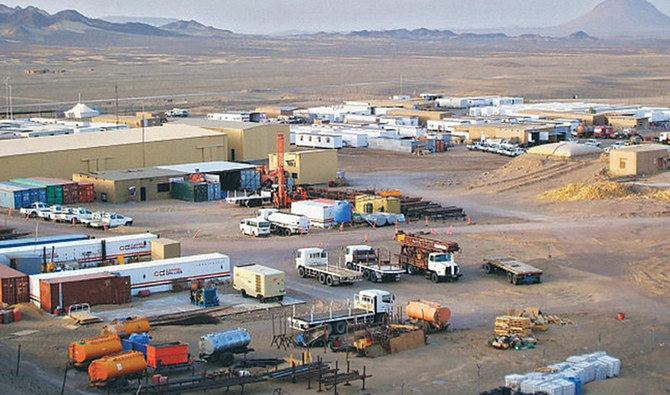
ISLAMABAD: Barrick Gold Corp. CEO Mark Bristow has said there is newfound “interest” from multinational mining firms to develop the $7 billion Reko Diq gold and copper mine in southwestern Pakistan, Bloomberg reported on Thursday.
Barrick Gold owns a 50 percent stake in Pakistan’s Reko Diq mine, with the remaining 50 percent owned by the governments of Pakistan and the province of Balochistan. Barrick considers the mine one of the world’s largest underdeveloped copper-gold areas.
“They have an interest,” Bristow said in an interview to Bloomberg, declining to name the mining companies interested in Reko Diq or what he meant by “interest.”
“Of course, they’re a lot more conservative than I am, but as we open up these areas, whatever way you look at copper, there’s not enough of it.”
Last month Barrick said it was open to bringing in Saudi Arabia’s wealth fund as one of its partners in the Reko Diq project but has dismissed reports it was in talks with fellow Canadian miner First Quantum Minerals on a possible acquisition.
Barrick won’t be diluting its equity in the project but “will not mind” if Saudi Arabia’s Public Investment Fund (PIF) wants to buy out the equity of the Pakistan government, Bristow had said in a Reuters interview.
“There is a strong relationship between Saudi and Pakistan and since we control the project we have the first right of refusal,” the CEO added, saying Barrick would support PIF coming into the mine through Pakistan’s 25 percent equity stake.
In an out of court agreement last year, Barrick Gold ended a long-running dispute with Pakistan, and agreed to restart development on the mine. Under the deal, the company withdrew its case in an international arbitration court, which had slapped a penalty of $11 billion on Pakistan for suspending the contracts of the company and its partners in 2011.
The company’s license to mine the untapped deposits was canceled after the Supreme Court ruled illegal the award granted to it and its partner, Chile’s Antofagasta. Antofagasta had agreed to exit the project, saying its growth strategy was focused on production of copper and by-products in the Americas.
Pakistan’s mineral-rich province of Balochistan is home to separatist militants who have engaged in insurgency against the government for decades, demanding a greater share of the region’s resources.


![]()

Barrick CEO says big miners showing interest in Pakistan’s Reko Diq project
Short Url
https://arab.news/4k56r
Barrick CEO says big miners showing interest in Pakistan’s Reko Diq project
- Barrick owns 50 percent stake in Reko Diq, 50 percent owned by governments of Pakistan, province of Balochistan
- Barrick Gold considers the Reko Diq mine one of the world’s largest underdeveloped copper and gold areas
Latest updates


© 2026 SAUDI RESEARCH & PUBLISHING COMPANY, All Rights Reserved And subject to Terms of Use Agreement.