

Riyadh airport leads with 82% customer commitment rate in August: GACA

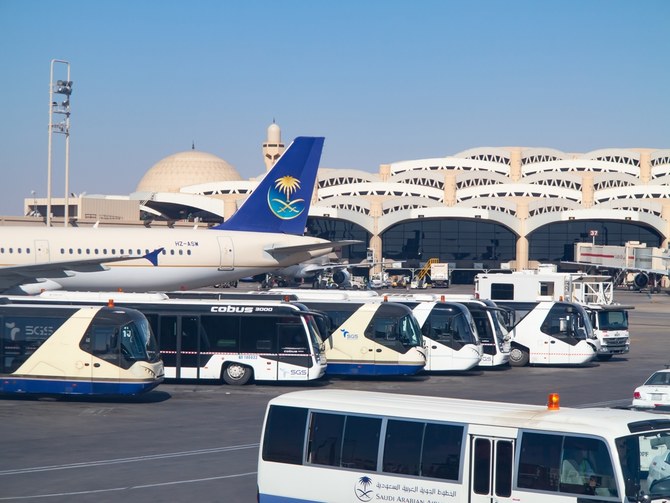
The airport witnessed a rise in commitment rate of 82 percent in August from the 64 percent recorded in April. Shutterstock
Short Url
Updated 17 September 2023
Follow

Riyadh airport leads with 82% customer commitment rate in August: GACA

RIYADH: King Khalid International Airport in Riyadh has outperformed other air terminals in the Kingdom in service levels and the overall travel experience, according to the General Authority of Civil Aviation.

This Riyadh-based airport, categorized as an air base with a capacity to handle over 15 million passengers annually, has secured the first position by achieving a commitment rate of 82 percent in August.

This rate marks a considerable increase from the 64 percent recorded in April.

The authority has set 14 key performance indicators to evaluate the performance of airports. These KPIs encompass various aspects, including passengers’ waiting times during check-in, security procedures and the duration spent at baggage claims.

Additionally, the study evaluated passport and customs screening areas, besides the accessibility of facilities for individuals with special needs. 

According to the monthly report, King Abdulaziz International Airport in Jeddah achieved the second position with a commitment rate of 45 percent, reflecting an increase from the 36 percent recorded in April.

In the second category, which includes international airports in the Kingdom with annual passenger volumes ranging from 5 million to 15 million, Prince Mohammad bin Abdulaziz International Airport in Madinah claimed the top spot with a commitment rate of 82 percent.

Following closely, King Fahd International Airport in Dammam secured a commitment rate of 73 percent, as highlighted in the report.

In the third category, which pertains to international airports in the Kingdom with annual passenger volumes ranging from 2 million to 5 million, King Abdullah bin Abdulaziz International Airport in Jizan claimed the top position with a commitment rate of 88 percent.

The report also showed that Abha International Airport achieved a commitment rate of 75 percent in August.

In the fourth category, AlUla International Airport took the top position. Despite handling fewer than 2 million passengers annually, it achieved a 100 percent commitment rate, surpassing other airports in terms of total average waiting times for departure and flight arrival.

In the fifth category, which encompasses domestic airports, Najran Airport emerged as the leader with a 100 percent commitment rate. It outperformed all competing airports in average waiting time for departure and flight arrival.


SDB signs 11 cooperation agreements at DeveGo 2025

Updated 7 sec ago
Follow

SDB signs 11 cooperation agreements at DeveGo 2025

RIYADH: Saudi Arabia’s Social Development Bank signed 11 cooperation agreements during the Entrepreneurship and Modern Business Practices Forum, or DeveGo 2025, spanning key sectors including finance, education, and energy, as well as healthcare, heritage, the non-profit sector, and freelance work, alongside government ministries and official authorities.

The agreements reflect the bank’s strategy to build an integrated system of financial and non-financial empowerment that meets the needs of entrepreneurs, start-ups, and micro-enterprises, enhancing their capacity for growth in promising sectors.

SDB CEO Sultan bin Abdulaziz Al-Hamidi said the forum serves as a national platform bringing together local and international experts to discuss developments in the entrepreneurship sector, in line with the bank’s mission to support young entrepreneurs and micro and start-up enterprises.

Al-Hamidi added: “We are witnessing a golden era of entrepreneurship in the Kingdom, transitioning from limited support to the largest entrepreneurial movement in the country. The number of enterprises has grown from 430,000 in 2016 to approximately 1.7 million this year.”

The CEO added that since its establishment, the bank has provided total financing of SR166 billion ($44.27 billion), of which more than SR46 billion has supported over 600,000 entrepreneurs, 59 percent of whom are Saudi women.

“These figures demonstrate the bank’s deep impact in empowering human capital, fostering innovation, and building a knowledge-based, diversified economy,” he said.

The agreements include a collaboration with the UN Conference on Trade and Development, known as UNCTAD, to enhance financial and non-financial empowerment of entrepreneurs and enterprises through the global Empretec program until 2030, aligning national efforts with global development goals and boosting the competitiveness of Saudi projects internationally.

SDB also signed agreements with the banking sector, including a joint financing portfolio with the Arab National Bank to support entrepreneurs, and a partnership with STC Bank to launch innovative financing cards for freelancers.

In healthcare, the bank signed an agreement with Fakeeh Group to establish a financing portfolio under corporate social responsibility.

Another agreement with ACWA Power will support entrepreneurs and innovators in the energy and water sectors, contributing to quality jobs and sustainable development in high-potential industries.

On the capacity-building and community development front, SDB signed an agreement with Northern Borders University to provide flexible financing solutions for students.

Cooperation with the Saudi Heritage Commission will launch a joint program to empower artisans and local talents, turning heritage passion into sustainable economic opportunities.

The bank also signed an agreement with the Authority for the Care of People with Disabilities to empower beneficiaries economically and socially through training programs and financing opportunities, enhancing their independence, quality of life, and economic participation.

The forum featured a series of keynote speeches and panel discussions addressing critical issues for the future of entrepreneurship and new work models, with participation from government leaders, international experts, investors, and entrepreneurs.

In a panel with UNCTAD Secretary-General Rebeca Grynspan, discussions focused on empowering small and medium enterprises for sustainable development. 

The panel highlighted the Kingdom’s rapid economic and entrepreneurial transformation, emphasizing the launch of the Empretec fellowship program in partnership with SDB as a strategic step in cultivating a globally competitive generation of entrepreneurs.

Sessions also explored readiness for the future and the new economy, the role of corporate social responsibility as a growth driver, and practical applications of artificial intelligence and advanced technologies.

The forum also addressed entrepreneurship and AI in the MENA region in a keynote by co-founder and CEO of Founder Institute, Jonathan Greechan.

The “Tech Growth Guide” session examined market readiness and digital transformation with participation from government leaders and top technology and investment companies, generating actionable insights on challenges and opportunities in the entrepreneurial economy.

DeveGo 2025 continues over three days with a high-quality program of panel discussions and specialized workshops, engaging a select group of experts, investors, and entrepreneurs from Saudi Arabia and beyond, reinforcing the Kingdom’s growing position as a regional platform for entrepreneurship and new work models.