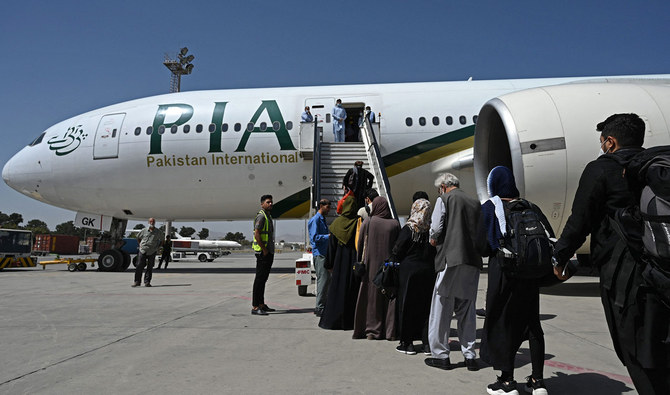
ISLAMABAD: Pakistan’s national air carrier said on Saturday its flight operations were beginning to return to normal just a few days after its management confirmed its decision to ground much of its fleet amid a major financial crisis.
The state-owned enterprise is said to be on the verge of default, as the government refused to provide Rs 23 billion ($76 million) in support of operational expenses, as requested by airline officials.
Authorities had previously allocated substantial funds to assist Pakistan International Airlines (PIA). However, it continued to rack up billions of rupees in arrears and losses over the years.
The caretaker administration of Prime Minister Anwaar-ul-Haq Kakar convened a meeting this month to review PIA’s situation and instructed relevant officials to prepare a restructuring plan to improve the financial situation of the cash-strapped airline.
“PIA flight operations have started to return to normal,” its management announced in a brief statement. “Seventy-two flights will depart from airports across the country [on Saturday]. Eighteen domestic flights have already departed while 54 overseas flights will be flying out soon.”
PIA also issued a statement a day earlier, denying the rumors of its closure due to the ongoing financial situation. Prior to that, media reports suggested the airline’s management was beginning to scale down its flight operations.
The national air carrier confirmed earlier this week it had grounded 14 out of its 31 aircraft due to the financial crisis.
But the Economic Coordination Committee (ECC) of Pakistan turned down its request for a massive bailout package of Rs 23 billion last week without getting a viable plan to deal with its financial crisis.
The ECC asked the Finance Division and the State Bank of Pakistan to assist PIA management, but only after the restructuring plan was finalized and approved.


![]()

Pakistan’s national air carrier says flight operations returning to normalcy amid financial crisis
Short Url
https://arab.news/4292h
Pakistan’s national air carrier says flight operations returning to normalcy amid financial crisis
- According to a PIA statement, 72 flights will depart from airports across the country during the day
- The airline recently requested for a $76 million bailout which was turned down by the government
Latest updates


Recommended


© 2026 SAUDI RESEARCH & PUBLISHING COMPANY, All Rights Reserved And subject to Terms of Use Agreement.