BEIRUT: The International Monetary Fund renewed its criticism of Lebanon Friday for failing to enact reforms demanded by creditors in return for releasing billions of dollars in emergency bailout loans.
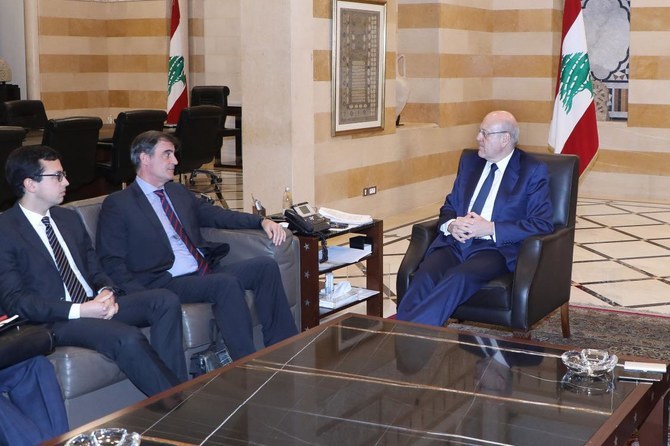
“Lebanon has not undertaken the urgently needed reforms, and this will weigh on the economy for years to come,” said the IMF’s Ernesto Ramirez Rigo in a statement at the end of a visit to Beirut.
since late 2019, Lebanon has been mired in an economic crisis the World Bank has described as one of the worst in recent world history, pushing most of the population into poverty.
In April 2022, Lebanon and the IMF reached conditional agreement on a $3-billion-dollar loan pacakage to bail out the economy.
But politicians have yet to enact the painful reforms demanded to begin the 46-month financing program.
A seasonal uptick in tourism has increased foreign currency inflows, Ramirez Rigo said. Most tourists are Lebanese expatriates returning home for the summer holidays.
“It gives the impression that the economy has bottomed out of the crisis and is leading to complacency. However, receipts from tourism and remittances fall far short of what is needed,” he said.
The IMF deal is conditional on a series of measures, including passing a 2024 budget, unifying Lebanon’s multiple exchange rates, restructuring the banking sector and implementing formal capital controls.
Lebanon has taken some steps, including a belated 2023 budget, but the IMF has said repeatedly that they are not enough.
On July 31, Lebanon’s former central bank chief Riad Salameh, who is wanted for alleged financial crimes in several European countries, left office with no designated successor in place.
First vice-governor Wassim Manssouri has taken over on a temporary basis, but divided politicians have failed to agree on a permanent replacement, creating another power vacuum in a country that also has no president and is ruled by a caretaker government.
In late June, the IMF warned that Lebanon’s failure to implement reforms could have “irreversible” consequences for its economic and social stability.


![]()

IMF criticizes Lebanon for failure to adopt reforms
Short Url
https://arab.news/zec2c
IMF criticizes Lebanon for failure to adopt reforms
- “Lebanon has not undertaken the urgently needed reforms, and this will weigh on the economy for years to come,” said the IMF’s Ernesto Ramirez Rigo
- A seasonal uptick in tourism has increased foreign currency inflows, Ramirez Rigo said


Latest updates


Recommended



© 2026 SAUDI RESEARCH & PUBLISHING COMPANY, All Rights Reserved And subject to Terms of Use Agreement.