

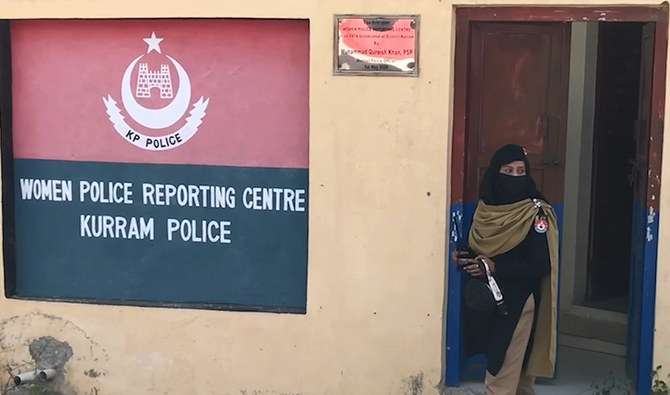

PESHAWAR: Samreen Amir, a Pakistani Christian mother of five, this month became the first woman and member of a minority community, to be appointed as additional Station House Officer (SHO) at a police station in the erstwhile tribal areas, some of the most culturally conservative regions in the country.
The former Federally Administered Tribal Areas (FATA), a mountainous cluster of seven districts and six towns along the Afghan border that resisted efforts at outside control for hundreds of years, were merged into the northwestern province of Khyber Pakhtunkhwa in May 2018. The region had been a byword for unrest since before the days of the British rulers of India, who generally left tribal elders to administer their own justice in a system that continued after Pakistan gained its independence in 1947. Critics widely said the colonial-era laws that governed the tribal regions, especially the use of collective punishment against local people, trampled basic rights, especially of women.
In the past two decades, the economically backward region became known as a haven for militant groups operating on both sides of the border with Afghanistan and tens of thousands died during a years-long campaign by the military to crush the militants. Pakistan’s army spent years fighting insurgents in the region although the military now says its focus has shifted from active combat operations to consolidating government administration.
“Difficulties have come a lot in my way, but I have tried to face them, fought with them, kept them aside and focused on my duty,” Amir, 35, told Arab News in a telephone interview from the main police station in her hometown of Parachinar, the headquarter of Kurram district where she has been posted.
Born to Christian parents, Amir joined the provincial police force as a constable in 2010 and has since had many postings while also raising her children and fulfilling her responsibilities at home.
“I have done hard jobs and even performed my duty on the barricades at night,” the police officer said. “I have performed my duty out of the city as well.”
“My family supported me a lot as there were a lot of domestic problems, but they told me not to think about them and that I should focus on my work and my duty,” Amir added.
She said it was her “commitment to duty” that compelled her superiors to appoint her as an additional SHO of the women police reporting center at the police station in Parachinar. The center was established in 2020 and previously was manned only by male officers, deterring many women from appearing at the center to register their complaints.
Amir said she felt pride that women from her area could now freely walk into the police station with their problems.
“I want to go ahead and work for our women to the maximum extent I can,” she said. “Now, they share their problems easily with us... [Previously] they would not come out of their homes as they feared coming to police stations.”
“Samreen Amir was given the charge after a need was felt, as women in the region are a deprived class and their voices were not reaching us properly,” Muhammad Imran, Kurram district police chief, told Arab News. “The move has been appreciated by the local community.”
Women rights activists said Amir’s career trajectory was “unprecedented” for a woman from the tribal areas.
“It was impossible [in the past] for women to reach this position. Samreen Amir is a resilient woman, she has been serving in the police and working in tough regions like Kurram,” activist Sajida Iqbal told Arab News.
“The appointment of Amir as an additional SHO has not only opened doors for women in Kurram but in all the districts to join the force and work for other women.”
Ramazan Ali, a male tribal elder, also described Amir’s appointment as “very happy news.”
“As per the tribal norms and traditions, women would not feel easy to go to the police station and share their problems with a male police officer,” he said. “This move would give women hope and a space where their voices would be heard.”
Ali called for the appointment of women officers in other police stations as well, saying it would help resolve the issues of women in the district.
Amir too said she hoped more women would follow their ambitions in the male-dominated region.
“I want to encourage other women [in the police force] to go ahead and take action,” she said.
“We are with them.”


