WASHINGTON: A recent wave of extensive economic cooperation between Arab Gulf states and Central Asian republics has the potential to boost economies in both of the oil-rich regions and open up new horizons of cooperation and economic ties.
This was the view of experts during a discussion on Wednesday, organized by the Washington-based Middle East Institute, titled “Gulf States, Central Asia, and the South Caucasus: Is an unprecedented push for economic integration underway?”
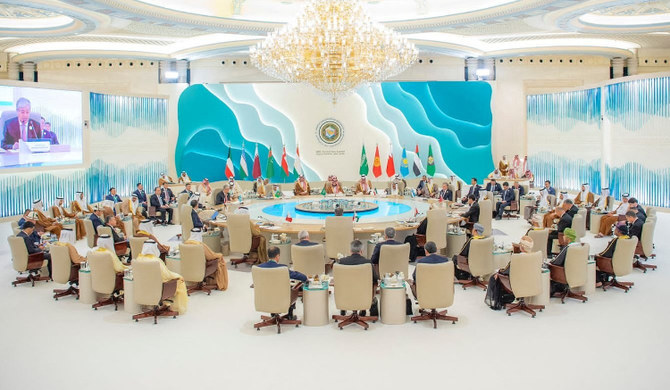
In July, Saudi Arabia hosted a summit that marked the first collective meeting between the Gulf Cooperation Council member states (the Kingdom, the UAE, Bahrain, Qatar, Kuwait and Oman) and the C5 group of Central Asian nations (Uzbekistan, Turkmenistan, Tajikistan, Kyrgyzstan and Kazakhstan), with the aim of boosting trade and economic corporation between the regions.
Akbota Zholdasbekova, an associate professor of international relations at L.N. Gumilyov Eurasian National University in Kazakhstan, said Saudi Arabia and the UAE are leading the way among Gulf states in terms of investment in energy-rich Central Asia, as part of their efforts to diversify investment portfolios and open up new markets for exports.
She said Central Asian countries benefit from such investments because they help spur economic growth and create new avenues for bilateral trade and investment. Saudi Arabia and the UAE have already invested hundreds of millions of dollars in energy companies in Kazakhstan and other countries in the region, she added.
In June, Saudi Arabia and Kazakhstan agreed to establish a framework for cooperation in the energy sector, as part of the Kingdom’s efforts to advance its global energy partnerships. The deal envisions collaboration in the fields of petroleum, gas, refining, petrochemicals, electricity and renewable energy.
Mohammed Al-Sulami, the head of Rasanah, the International Institute for Iranian Studies in Riyadh, highlighted the similarities between the two regional blocs, and said that as Gulf states pursue economic opportunities they have rediscovered the potential of Central Asian states as valuable partners with shared values and objectives.
Gulf nations are also interested in investing in the agriculture, supply-chain projects and skilled labor that Central Asian markets are well-placed to provide, he added.
Al-Sulami also pointed out that Gulf nations are not taking sides in the war between Russia and Ukraine, which is having negative effects on the global economy and regional trade, despite US and European pressure to do so.
“The policy in the Gulf states today is that we want to be a bridge … without the burden of having to take sides,” he added.
Fariz Ismailzade, from ADA University in Baku, said that Azerbaijan has traditionally looked toward Europe for trade and bilateral ties but there is now a broader belief in the country that the Gulf region is more valuable and so Azerbaijan should look “in our neighborhood” for better options for economic growth and development.
Noting that trade between Azerbaijan and Gulf states had increased by a factor of between five and 10 in the past five years, he added: “The larger point is that Azerbaijan is looking at the Gulf region as a strategic partner because it is a source of valuable investment, tourism and economic growth.”
Ismailzade also pointed out that Azerbaijan has signed two large contracts with ACWA and Masdar, energy companies in Saudi Arabia and the UAE, respectively, that have invested heavily in Azerbaijan.
“As a result, Azerbaijan will be able to export clean and renewable energy to Europe, which would spur economic growth in the country,” he added.


![]()

Arab Gulf and Central Asian states continue to pursue economic integration, experts say
Short Url
https://arab.news/584pq
Arab Gulf and Central Asian states continue to pursue economic integration, experts say
- They were taking part in a discussion about the growing ties between the two regions, which was organized by the Washington-based Middle East Institute
- In July, Saudi Arabia hosted the first collective meeting of Gulf nations and five key Central Asian countries, with the aim of boosting trade and economic corporation


Latest updates


Recommended


© 2026 SAUDI RESEARCH & PUBLISHING COMPANY, All Rights Reserved And subject to Terms of Use Agreement.