

IFC doubles investments in Pakistan to $1.5 billion amid economic crisis

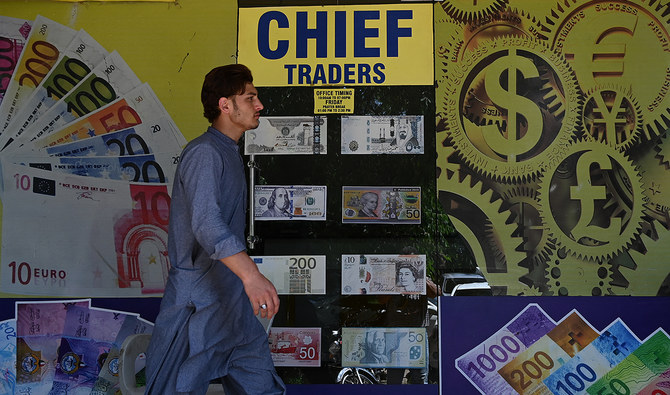
A man walks past a foreign currency exchange market in Islamabad on July 11, 2023. (AFP/File)
Short Url
Updated 13 September 2023
Follow

IFC doubles investments in Pakistan to $1.5 billion amid economic crisis

  • IFC will prioritize job creation, private sector productivity and gender equality in Pakistan in 2023
  • Since 1956, IFC has invested $11 billion in energy, infrastructure, health among other sectors in Pakistan

ISLAMABAD: The International Finance Corporation (IFC) has earmarked approximately $1.5 billion in short and long-term investments for Pakistan in 2023, doubling its investments from last year as the South Asian nation braves an array of economic challenges.

Pakistan has faced one of its most severe economic crises in history in the last one year, with record inflation, diminished foreign reserves, and a significant depreciation of the national currency against the US dollar. 

In July, the International Monetary Fund (IMF) granted Pakistan a $3 billion bailout loan that helped prevent a default on its debt but came with tough reform conditions that have fueled inflation. These include the removal of energy and fuel subsidies, a shift toward a market-based exchange rate system, and an increase in tax rates. The last few weeks have been seen sporadic but nationwide protests and trader strikes against record fuel and electricity prices. 

“The IFC has committed approximately $1.5 billion in short and long-term investments in Pakistan in fiscal year 2023, doubling its investments from the previous year amidst a backdrop of economic challenges in the country,” the IFC said in a statement this week.

IFC’s projects in Pakistan aim to create jobs, increase productivity in the private sector, enhance gender inclusion, and address the impacts of climate change.

Zeeshan Sheikh, IFC Country Manager for Pakistan and Afghanistan, said in the current fiscal year, the organization wanted to increase its focus on facilitating access to finance, particularly for Micro, Small, and Medium Enterprises, sustainable and digital infrastructure, as well as support to export-oriented industries that help create jobs and are critical for economic growth.

Since 1956, IFC has invested approximately $11 billion in Pakistan and supported diverse sectors such as renewable energy, financial inclusion, infrastructure development, agribusiness, manufacturing, housing, health care, and trade, among others.


Pakistani president arrives in Iraq to deepen trade, energy cooperation

Updated 20 December 2025
Follow

Pakistani president arrives in Iraq to deepen trade, energy cooperation

  • Visit follows recent high-level contacts as Islamabad seeks to expand limited commercial ties with Baghdad
  • Talks are expected to cover investment, manpower and facilitation of Pakistani pilgrims visiting holy sites in Iraq

ISLAMABAD: President Asif Ali Zardari arrived in Iraq on Saturday on an official visit aimed at expanding cooperation in trade, energy and investment, as Pakistan seeks to deepen ties with Baghdad after years of limited engagement.

Pakistan and Iraq established diplomatic relations in 1947 and have traditionally maintained cordial ties, though commercial links remain modest, with officials and business groups identifying scope for cooperation in construction services, pharmaceuticals, manpower and agricultural exports.

“President Asif Ali Zardari arrived in Baghdad on a four-day official visit to Iraq,” his office said in a post on X. “He was received by Culture Minister Dr. Ahmed Fakkak Al-Badrani. During the visit, meetings with senior Iraqi leadership are expected to advance cooperation and further strengthen Pakistan-Iraq relations.”

Zardari’s visit follows a series of recent high-level contacts between the two countries, reflecting efforts to broaden bilateral engagement beyond traditional diplomatic ties and explore collaboration across economic, political and people-to-people domains.

According to Pakistan’s foreign office, the president is expected to hold meetings with Iraq’s senior leadership to discuss cooperation in various areas such as trade and investment, energy, technology, education and manpower.

He is also expected to discuss regional and international issues with Iraqi officials.

Earlier this month, Pakistan’s Interior Minister Mohsin Naqvi met his Iraqi counterpart, Abdul Ameer Al-Shammari, on the sidelines of meetings in Brussels, where both sides agreed to enhance cooperation on security and facilitate travel for Pakistani Shia pilgrims to Najaf and Karbala.

The two officials discussed measures to ensure the smoother movement of these pilgrims and their compliance with visa regulations.