

IFC doubles investments in Pakistan to $1.5 billion amid economic crisis

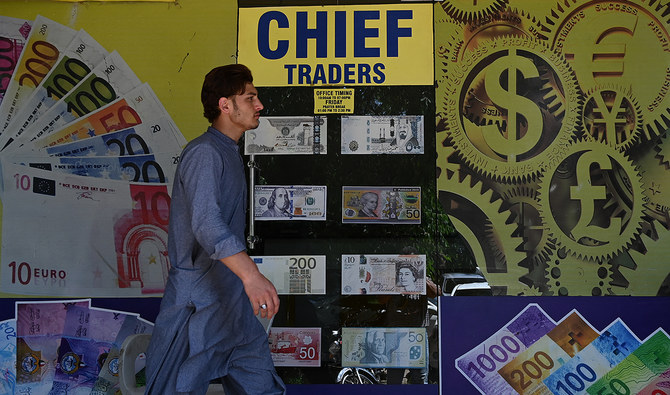
A man walks past a foreign currency exchange market in Islamabad on July 11, 2023. (AFP/File)
Short Url
Updated 13 September 2023
Follow

IFC doubles investments in Pakistan to $1.5 billion amid economic crisis

  • IFC will prioritize job creation, private sector productivity and gender equality in Pakistan in 2023
  • Since 1956, IFC has invested $11 billion in energy, infrastructure, health among other sectors in Pakistan

ISLAMABAD: The International Finance Corporation (IFC) has earmarked approximately $1.5 billion in short and long-term investments for Pakistan in 2023, doubling its investments from last year as the South Asian nation braves an array of economic challenges.

Pakistan has faced one of its most severe economic crises in history in the last one year, with record inflation, diminished foreign reserves, and a significant depreciation of the national currency against the US dollar. 

In July, the International Monetary Fund (IMF) granted Pakistan a $3 billion bailout loan that helped prevent a default on its debt but came with tough reform conditions that have fueled inflation. These include the removal of energy and fuel subsidies, a shift toward a market-based exchange rate system, and an increase in tax rates. The last few weeks have been seen sporadic but nationwide protests and trader strikes against record fuel and electricity prices. 

“The IFC has committed approximately $1.5 billion in short and long-term investments in Pakistan in fiscal year 2023, doubling its investments from the previous year amidst a backdrop of economic challenges in the country,” the IFC said in a statement this week.

IFC’s projects in Pakistan aim to create jobs, increase productivity in the private sector, enhance gender inclusion, and address the impacts of climate change.

Zeeshan Sheikh, IFC Country Manager for Pakistan and Afghanistan, said in the current fiscal year, the organization wanted to increase its focus on facilitating access to finance, particularly for Micro, Small, and Medium Enterprises, sustainable and digital infrastructure, as well as support to export-oriented industries that help create jobs and are critical for economic growth.

Since 1956, IFC has invested approximately $11 billion in Pakistan and supported diverse sectors such as renewable energy, financial inclusion, infrastructure development, agribusiness, manufacturing, housing, health care, and trade, among others.


Pakistani court sentences TLP leader for 35 years over incitement against ex-chief justice

Updated 11 sec ago
Follow

Pakistani court sentences TLP leader for 35 years over incitement against ex-chief justice

  • The case stems from a 2024 speech targeting former Chief Justice of Pakistan Qazi Faez Isa over a blasphemy ruling
  • Conviction follows the government’s move to proscribe Tehreek-e-Labbaik Pakistan after clashes with police this year

ISLAMABAD: A Pakistani court this week sentenced a leader of the religio-political party Tehreek-i-Labbaik Pakistan (TLP) to 35 years’ imprisonment on multiple charges for inciting hate against former Chief Justice of Pakistan Qazi Faez Isa.

Peer Zaheer ul Hasan Bukhari made the remarks in a 2024 speech at the Lahore Press Club against the former chief justice for issuing a judgment in a case involving a man named Mubarak Sani under the blasphemy laws, a member of a minority religious community whose death sentence was overturned.

Authorities said Bukhari’s comments amounted to incitement to violence, after which police registered a case against him under various terrorism-related provisions as well as charges of inciting hatred.

The cleric was handed multiple jail terms on a range of charges, with the longest being 10 years of rigorous imprisonment, amounting to a total of 35 years.

“All the sections of imprisonment awarded to the convict shall run concurrently,” Anti-Terrorism Court Judge Arshad Javed said in a letter to the Kot Lakhpat Central Jail superintendent.

A collective fine of Rs600,000 ($,150) was also imposed on the TLP party leader under the provisions of the Anti-Terrorism Act.

The move follows Pakistan’s decision in October to ban the TLP and designate it a proscribed organization under the Anti-Terrorism Act after violent clashes between its supporters and law enforcement in Punjab.

The unrest erupted as demonstrators attempted to travel from Lahore to Islamabad, saying they wanted to stage a pro-Palestine rally outside the US Embassy.

However, officials said TLP supporters were armed with bricks and batons, arguing their intention was to stir violence similar to earlier marches toward the federal capital.

The clashes between TLP supporters and police resulted in the deaths of five people, including two policemen, and injured more than 100 officers and dozens of protesters.

Led by Saad Hussain Rizvi, the TLP is known for its confrontational street politics and mass mobilizations.

Since its emergence in 2017, the party has repeatedly organized sit-ins and marches toward Islamabad, often triggering violent confrontations and prolonged disruptions on major routes to the capital.