

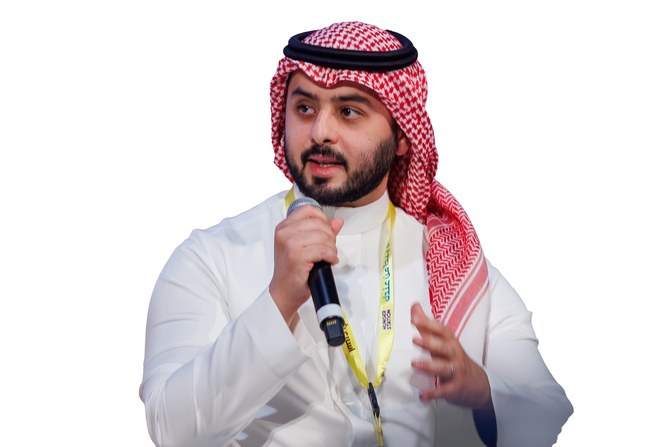
HungerStation names Ali Aldamanhori as new CEO

Short Url
Updated 11 September 2023
Follow

HungerStation names Ali Aldamanhori as new CEO

HungerStation has announced the appointment of Ali Aldamanhori as its new chief executive, effective from Sept. 30. Aldamanhori has served as chief operating officer of the company for almost two years, and previously managed logistics and quick commerce in the MENA region for HungerStation’s parent company, Delivery Hero, since 2019. The announcement follows the departure of Assad Numan, HungerStation’s previous CEO, after three years in the role. Under the guidance of Numan and alongside the rest of the management team, the team grew the company by 2.5x and maintained its position as the leading delivery service in Saudi Arabia. Numan will be stepping down to seek new opportunities.

Pieter-Jan van Depitte, COO of Delivery Hero, said: “Assad’s leadership has taken HungerStation to incredible heights, enabling the company to become a center of innovation and excellence in Saudi Arabia’s startup scene. We are deeply grateful for his work and wish him all the best in his next chapter. We are now excited to welcome Ali, whose operational and commercial expertise and deep local knowledge will be key to the next stage of HungerStation’s journey. We are very excited to continue investing in HungerStation and the Kingdom of Saudi Arabia, with Ali at the helm.”

Aldamanhori said: “HungerStation was one of the first food delivery platforms in the Kingdom of Saudi Arabia, and has carved a reputation for being both dynamic and deeply focused on the needs of its customers. It is an honor to be asked to step into this role, and I am very grateful to the team at Delivery Hero for their trust. The HungerStation team worked to achieve incredible things under Assad, and we are all thankful for his steadfast leadership. 

Now, we are excited to continue on our journey, break new boundaries and explore new opportunities for innovation so we can play our part in the Kingdom’s Vision 2030. We’re just getting started.”

Given his close ties to HungerStation’s parent company Delivery Hero, Aldamanhori’s appointment will open the door to even greater collaboration with the Delivery Hero Group, a global network of more than a dozen restaurant delivery and quick commerce brands. The closer relationship will enable all brands to share expertise and innovative developments, collectively building the gold standard for local delivery services around the world.


BYD launches 2nd-gen Blade Battery and FLASH charging technology

Updated 11 March 2026
Follow

BYD launches 2nd-gen Blade Battery and FLASH charging technology

BYD, a global tech leader and pioneer in new energy vehicles, has unveiled the second generation of its Blade Battery alongside its new ultra-fast FLASH charging technology. The announcement marks a significant leap in electric vehicle innovation, further enhancing the appeal of EVs in markets witnessing rapid growth in adoption. Among these markets is Saudi Arabia, which is increasingly emerging as one of the most promising markets in the Middle East for electric mobility, driven by the Kingdom’s vision for a more sustainable future and its commitment to adopting advanced transportation technologies.

Combining a driving range exceeding 1,000 km on a single charge with ultra-fast charging capabilities, the new technology offers a practical and reliable driving experience for EV users in the Kingdom. The second-generation Blade Battery opens new possibilities for long-distance electric travel while significantly reducing the need for frequent charging. The new battery supports ultra-fast charging, enabling vehicles to charge from 10 percent to 70 percent in just five minutes, and reach 97 percent within nine minutes.

The technology also maintains strong performance under extreme weather conditions. Charging from 20 percent to 97 percent at –30°C requires only three additional minutes compared to charging at room temperature.

In a statement, BYD said: “The combination of long driving range and ultra-fast charging represents one of the most important advantages of BYD’s new generation of batteries. With this technology, electric vehicles can travel longer distances with ease. Some models equipped with the second-generation Blade Battery can exceed 1,000 km of range, making this battery particularly suited to the long-distance travel patterns and road networks in Saudi Arabia.”

The second-generation Blade Battery relies on an innovative ion-transfer system known as FlashPass, which combines three advanced technologies designed to enhance charging speed and battery performance. The Flash-Release Cathode enables rapid lithium-ion release, while the Flash-Flow Electrolyte, developed using artificial intelligence, improves ionic conductivity. The Flash-Intercalate Anode enables faster and more efficient lithium-ion insertion, further improving overall battery performance.

The battery also features an advanced restructuring of its electrode design. Graphite particles within the anode are arranged vertically in a structured formation, reducing resistance to lithium-ion transfer and enabling faster, more efficient charging while increasing energy density by more than 5 percent compared with the first-generation Blade Battery.

In addition, the battery incorporates an ultra-thin and highly durable solid electrolyte interface layer, which supports high ionic conductivity while maintaining chemical stability. A dynamic self-repair mechanism further helps preserve battery performance over time.

In terms of safety, the second-generation Blade Battery exceeds the requirements of China’s new national EV battery safety standard GB 38031-2025 and has passed a range of rigorous tests. These include the world’s first combined ultra-fast charging and nail penetration safety test, completed without thermal runaway, smoke, or fire. The battery also successfully passed thermal runaway testing following simultaneous short-circuiting in four battery cells without fire or explosion, as well as undercarriage impact testing at energy levels 10 times higher than those required by the new national safety standard.

Technical innovations in the new battery have also helped reduce capacity degradation by 2.5 percent, improving long-term operational life and efficiency.

Alongside the battery technology, BYD introduced its FLASH ultra-fast charging system, which includes one of the most powerful mass-produced charging units in the world, delivering up to 1,500 kW per charging port.

The company has also developed an integrated energy storage and charging system that operates both as an energy storage unit that helps reduce pressure on the power grid and as a power booster capable of delivering high-capacity charging to vehicles. This approach enables ultra-fast charging while maintaining grid stability and improving overall energy efficiency.

BYD has also introduced an innovative FLASH charger design focused on user convenience. The charger features the world’s first T-shaped cable reel system, which allows the charging cable to remain suspended and prevents contact with the ground. It also includes a “gravity-free” charging connector that can be easily operated with one hand.

In addition, the system supports Plug and Charge functionality with automatic payment, allowing users to simply connect their vehicle and begin charging immediately after initial registration through the application.

As part of its broader strategy to support the growth of electric mobility, BYD is actively building a large network of FLASH charging stations. As of March 5, the company had established 4,239 charging stations across China, with plans to expand the network to 20,000 stations by the end of 2026.

The launch of these new technologies builds on BYD’s long-term vision first introduced in 2006 under the concept of “Three Green Dreams.” This vision focuses on developing an integrated ecosystem that includes solar energy, energy storage, and charging infrastructure, helping accelerate the global transition to electric mobility and support a more sustainable future.