

Pakistan Gasport evaluating interest for LNG cargo from sellers in Oman, US, UAE

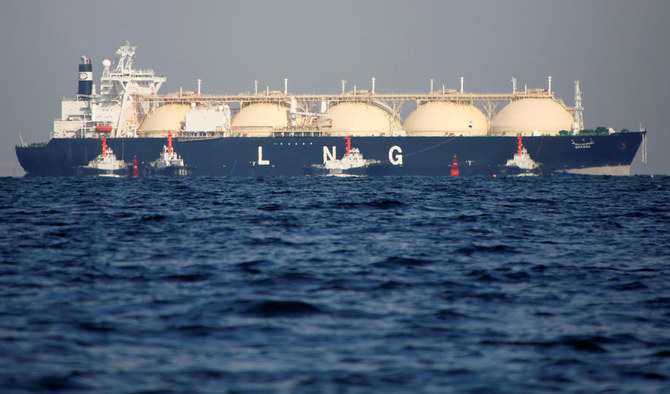
A liquefied natural gas (LNG) tanker is tugged towards a thermal power station in Futtsu, east of Tokyo, Japan, on November 13, 2017. (Photo courtesy: REUTERS/File)
Short Url
Updated 08 September 2023
Follow

Pakistan Gasport evaluating interest for LNG cargo from sellers in Oman, US, UAE

  • The LNG cargo would be the first shipped in by a private sector company in Pakistan
  • Pakistan Gasport owns country’s largest LNG import, regasification terminal at Port Qasim

SINGAPORE: Pakistan Gasport is looking to buy a spot liquefied natural gas (LNG) cargo for November delivery, its chairman Iqbal Ahmed told Reuters on Thursday, which would be the country’s first spot LNG deal since June 2022.

The south Asian country, facing a severe economic and foreign exchange crisis, has struggled to purchase the super-chilled fueled following a surge in prices after Russia’s invasion of Ukraine last year.

LNG is crucial for Pakistan, where natural gas accounts for over a third of power generation and local gas reserves are insufficient to address growing electricity demand in a country of over 230 million, leading to frequent power cuts.

Pakistan Gasport is evaluating interest for a cargo from sellers in Oman, the United States and the United Arab Emirates, Ahmed said.

“We’ve got different countries which have offered us different options. We are extremely encouraged by what we’ve heard today,” Ahmed told Reuters.

Pakistan Gasport owns the country’s largest LNG import and regasification terminal at Port Qasim, but LNG imports have historically been facilitated by Pakistan LNG, a state-run firm that last bought a spot cargo in June 2022 from PetroChina.

A cargo would be the first shipped in by a private sector company in Pakistan, said Ahmed, who expects LNG prices to fall in coming years, making spot purchases more attractive.

Ahmed said 12 percent to the Brent slope was the “price to beat” for a cargo to Pakistan. That works out to nearly $11 per mmbtu, a discount of a sixth to current average Asian LNG prices of $13.

“If the government or anybody else can bring LNG at a price of 12 percent of Brent or lower, there is a market. The minute you cross that barrier, there is resentment,” he said.

Ahmed said he expects Pakistan’s LNG demand to grow to 30 million metric tons in 5 years, from about 10-12 million tons now.

Importers of all commodities to Pakistan have faced increased financing costs and higher processing times due to the ongoing economic and foreign exchange crisis. LNG traders have said sellers to Pakistan could demand a premium because of the country’s low credit rating.

Pakistan Gasport plans to avert such challenges by not seeking a letter of credit from banks, financing the deal with internal funds, Ahmed said.

“I plan to use a currency other than the dollar to facilitate the payment and also use a semi-barter system to settle,” he said.


Pakistan PM orders action against fuel hoarding amid Iran conflict supply fears

Updated 10 sec ago
Follow

Pakistan PM orders action against fuel hoarding amid Iran conflict supply fears

  • Sharif asks authorities to shut down petrol pumps involved in any attempt to create artificial shortages
  • Government says it holds adequate fuel stocks despite shipping risks as Strait of Hormuz tensions rise

ISLAMABAD: Prime Minister Shehbaz Sharif on Friday ordered authorities to take strict action against fuel hoarders and shut down petrol pumps involved in any attempt to create artificial shortages, as anxiety grows over potential supply disruptions from the widening conflict involving Iran.

Sharif issued the directive during a high-level meeting on petroleum supplies, where officials briefed him that Pakistan currently holds sufficient fuel reserves to meet domestic demand despite the volatile regional situation.

The move comes as Pakistan steps up contingency measures following fears of supply disruptions linked to the escalating conflict involving Iran, the United States and Israel.

The concerns stem partly from disruptions in tanker traffic after the Strait of Hormuz — a key global oil chokepoint between Iran and Oman through which much of Pakistan’s imported crude typically transits — was shut following rising hostilities in the Gulf.

“The prime minister directed provincial governments to take strict legal action against hoarders of petroleum products,” Sharif’s office said in a statement after the meeting.

“Any petrol pump involved in the reprehensible practice of creating artificial shortages should be immediately shut down, its license revoked and legal action initiated,” it added.

Earlier this week, Pakistan’s Oil and Gas Regulatory Authority (OGRA) allowed oil marketing companies to temporarily regulate supplies to retail outlets to discourage hoarding and maintain stability in fuel distribution.

Sharif instructed the petroleum minister to visit provinces and coordinate with their administrations to develop a strategy for conserving petroleum products and ensuring their uninterrupted supply to the public.

The prime minister further ordered the creation of a digital dashboard to monitor the movement of petroleum products and share real-time data with provincial authorities to improve oversight of fuel transportation and distribution.