

Tunisia’s bad economy hits coeliac sufferers with rice shortage

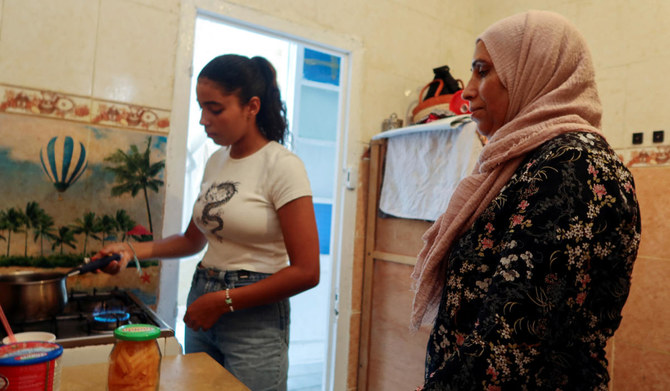
Siwar Derbeli, an 18-year-old Tunisian with coeliac disease, stands with her mother, Hasna Arfaoui, as they prepare a gluten-free pasta meal in their kitchen, in Tunis, Tunisia August 30, 2023. (REUTERS)
Short Url
Updated 05 September 2023
Follow

Tunisia’s bad economy hits coeliac sufferers with rice shortage

  • The government has denied that shortages are due to the crisis in public finances, with talks for a foreign bailout stalled and credit ratings agencies warning that Tunisia may default on sovereign debt

TUNIS: For Siwar Derbeli a national rice shortage is not just another inconvenient symptom of Tunisia’s stretched national finances but a source of hunger because the coeliac disease she suffers from means it is one of the few staples she can comfortably eat.
Shortages of imported goods sold at subsidised rates have been increasing in Tunisia since last year, with wheat, sugar, cooking oil and dairy products periodically disappearing from supermarket shelves along with some medicines.
Although rice is not the most common staple in Tunisia, where bread, pasta and couscous are more frequently eaten, its lack of gluten makes it indispensable for the country’s estimated 100,000 people with coeliac disease — an autoimmune condition that prompts a dangerous response to gluten.
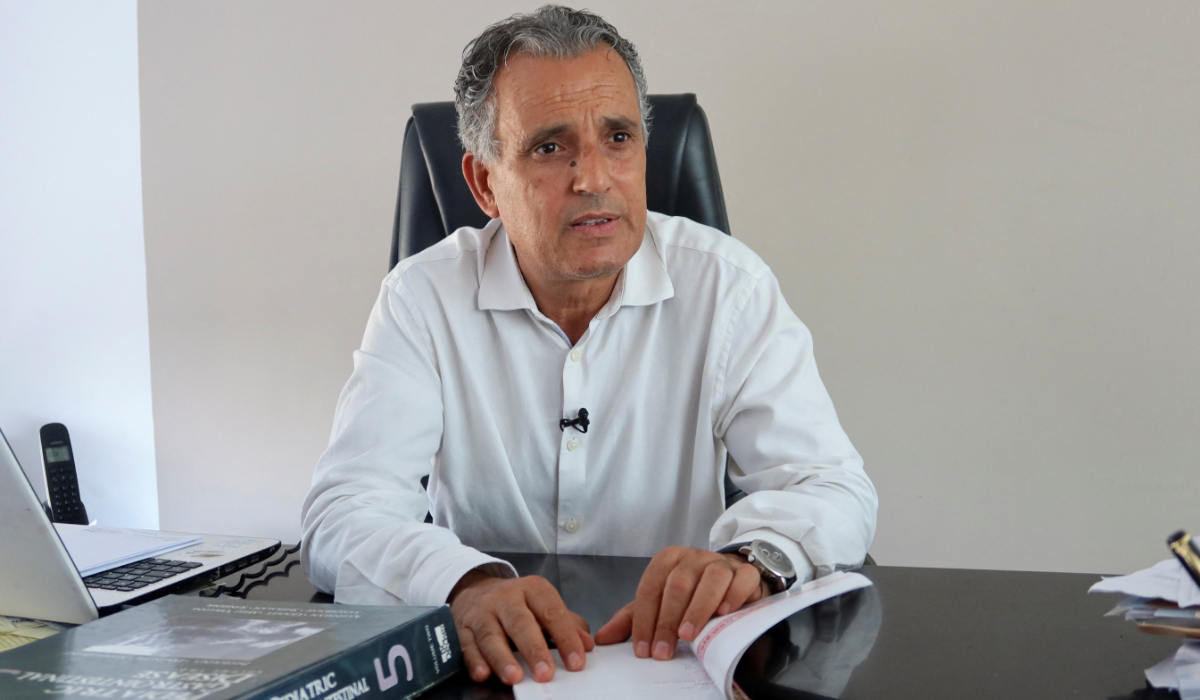


Monji ben Hriz, president of the Tunisian Association for Coeliac Disease, attends an interview with Reuters in Tunis, Tunisia August 29, 2023. (REUTERS)

“You come home and can’t find the basic food you need to eat. It’s a very unfortunate situation,” said Derbeli, 18.
Her mother, Hasna Arfaoui, was cooking Derbeli’s evening meal with expensive gluten-free pasta that is hard to afford for Arfaoui, an unemployed widow with three children who used to work as a cleaner.
“We have been facing difficulties with her diet, and it has been very tiring for us. The specialized food she needs is expensive and we often struggle to afford it. Basic ingredients like rice are missing,” she said.


A view shows rice for donation at the headquarters of Tunisian Association for Coeliac Disease, in Tunis, Tunisia August 29, 2023. (REUTERS)

The government has denied that shortages are due to the crisis in public finances, with talks for a foreign bailout stalled and credit ratings agencies warning that Tunisia may default on sovereign debt.
However, economists, political analysts and Tunisia’s influential labor union have all said the government is delaying or stopping imports of subsidised goods to help cope with a $5 billion budget deficit despite public hardship.
Monji ben Hriz, president of the Tunisian Association for Coeliac Disease, said no ship was due to offload rice until December and that state-held stocks had already run out.
Some privately imported rice is available, but at a much higher cost that is prohibitive for many Tunisians.
“People are now enduring real difficulties sourcing rice and there are those who have changed their diet for this reason, jeopardizing their health,” he said.


Israel bars Al-Aqsa imam from entering mosque in Ramadan

Updated 4 sec ago
Follow

Israel bars Al-Aqsa imam from entering mosque in Ramadan

  • ‘This ban is a grave matter for us as our soul is tied to Al-Aqsa, Al-Aqsa is our life’

JERUSALEM: A senior imam of the Al-Aqsa Mosque in East Jerusalem said on Tuesday that Israeli authorities had barred him from entering the compound, just days before the start of the holy month of Ramadan.

“I have been barred from the mosque for a week, and the order can be renewed,” Sheikh Muhammad Al-Abbasi said.
He said he was not informed of the reason for the ban, which came into effect from Monday.

FASTFACT

A Waqf source said 33 of its employees had been barred from entering the compound in the week leading up to Ramadan.

“I had only returned to Al-Aqsa a month ago after spending a year in the hospital following a serious car accident,” Abbasi said. “This ban is a grave matter for us, as our soul is tied to Al-Aqsa. Al-Aqsa is our life.”
On Monday, Israeli police said they had recommended issuing 10,000 permits for Palestinians from the occupied West Bank, who require special permission to enter Jerusalem.
Arad Braverman, a senior Israeli police officer in occupied Jerusalem, said forces would be deployed “day and night” across the compound.
He said thousands of police would also be on duty for Friday prayers, which draw the largest crowds of Muslim worshippers.
The Palestinian Jerusalem Governorate said it had been informed that permits would again be restricted to men over 55 and women over 50, mirroring last year’s criteria.
It added that Israeli authorities had prevented the Islamic Waqf — the Jordanian-run body that administers the site — from carrying out routine preparations, including installing shade structures and setting up temporary medical clinics.
A Waqf source said 33 of its employees had been barred from entering the compound in the week leading up to Ramadan.
Under long-standing arrangements, Jews may visit the Al-Aqsa compound —  but they are not permitted to pray there.
Palestinians fear the status quo it is being eroded.
In a separate development, Israeli NGOs have raised the alarm over a settlement plan signed by the government which they say would mark the first expansion of Jerusalem’s borders into the occupied West Bank since 1967. Palestinians view East Jerusalem as the capital of their future state.
The proposal, published in early February but reported by Israeli media only on Monday, comes as international outrage mounts over creeping measures aimed at strengthening Israeli control over the West Bank.
Critics say these actions by the Israeli authorities are aimed at the de facto annexation of the Palestinian territory.
The planned development, announced by Israel’s Ministry of Construction and Housing, is formally a westward expansion of the Geva Binyamin, or Adam, settlement situated northeast of Jerusalem in the West Bank.
In a statement, the ministry said the development agreement included the construction of around 2,780 housing units for the settlement, with an investment of roughly $38.7 million.
But the area to be developed lies on the Jerusalem side of the separation barrier built by Israel in the early 2000s, while Geva Binyamin sits on the West Bank side of the barrier, and the two are separated by a road.
Israeli settlement watchdog Peace Now said there would be no “territorial or functional connection” between the area to be developed and the settlement.
“The new neighborhood will be integral to the city of Jerusalem,” Lior Amihai, Peace Now’s executive director, said.
“What is unique about that one is that it will be connected directly to Jerusalem, but it will be beyond the annexed municipal border. So it will be in complete West Bank territory, but just adjacent to Jerusalem,” he said.