Ex-PM Khan hires acclaimed British barrister for cases against Pakistan ‘rights abuses’

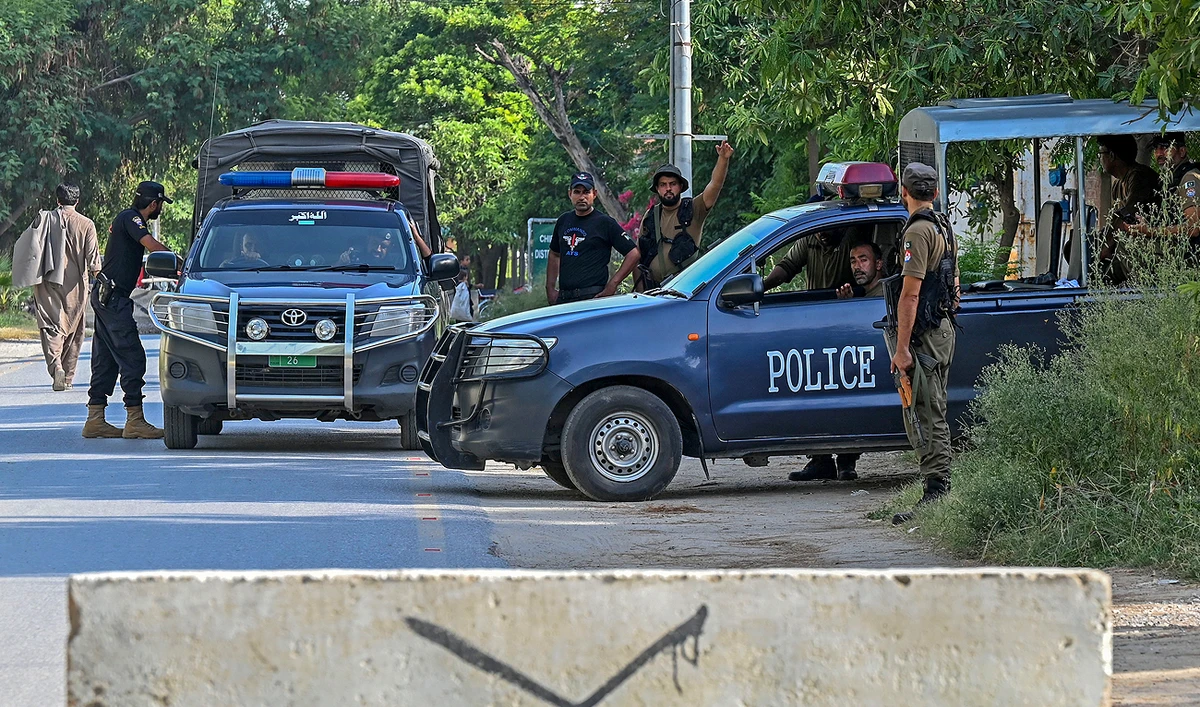
Security personnel stand guard at the Attock prison post where Pakistan's former Prime Minister Imran Khan remains imprisoned despite receiving bail in Attock on August 29, 2023. (AFP/File)
Short Url
Updated 02 September 2023
Follow

Ex-PM Khan hires acclaimed British barrister for cases against Pakistan ‘rights abuses’

  • Geoffrey Ronald Robertson is a barrister, academic, author and broadcaster and founder of Doughty Street Chambers
  • Among his clients are heavyweight boxing champion Mike Tyson, Dow Jones and WikiLeaks founder Julian Assange

ISLAMABAD: The Pakistan Tehreek-i-Insaf party said on Friday its leader former Prime Minister Imran Khan had hired the internationally renowned barrister Geoffrey Ronald Robertson to represent the politician in international courts in cases related to “unlawful detention and human rights abuses.”

The PTI party has faced a countrywide crackdown since Khan’s first brief arrest on May 9 for suspected graft sparked widespread protests that saw mobs ransacking state installations, including military assets. Khan was subsequently released on bail but convicted in a graft case last month and jailed for three years in a fresh setback to the 70-year-old former cricket hero's political career. He faces a long legal battle before he can make a political comeback ahead of a national election expected early next year.

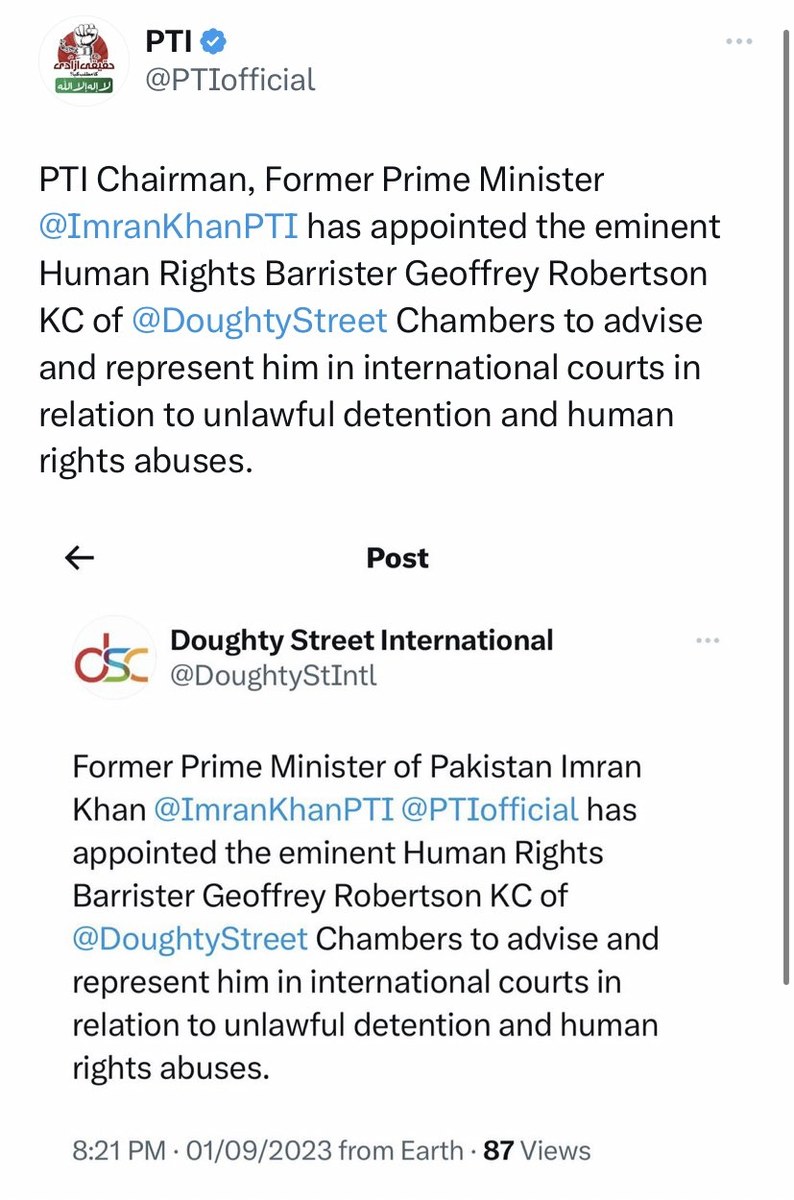
“PTI Chairman, Former Prime Minister @ImranKhanPTI has appointed the eminent Human Rights Barrister Geoffrey Robertson KC of @DoughtyStreet Chambers to advise and represent him in international courts in relation to unlawful detention and human rights abuses,” the PTI said.
Dozens of top and mid-tier leaders in the PTI have been arrested alongside hundreds of Khan supporters since the violent protests of May 9. Many have quit the party after being released while other leaders have gone on the run to avoid arrest.

Khan himself faces a slew of cases, including one for leaking state secrets, which carries the death sentence. Prior to his arrest, he had accused the military of trying to dismantle his party and end his political career. The army denies involvement.

Robertson, a barrister since 1973, has successfully represented The Guardian, Washington Post and the Wall Street Journal, among other media outfits. His clients include heavyweight boxing champion Mike Tyson, Dow Jones and Julian Assange, the founder of WikiLeaks.

He has appeared in cases before the European Court of Human Rights and in other courts around the world and has been on several human rights missions on behalf of Amnesty International, including in Mozambique, Venda, Czechoslovakia, Malawi, Vietnam and South Africa.

In 2015, Robertson represented Armenia with barrister Amal Clooney at the European Court of Human Rights and since 2016 has been representing Lula da Silva, the current president of Brazil.
Pakistan says multilateralism in peril, urges global powers to prioritize diplomacy over confrontation

Updated 8 sec ago
Follow

Pakistan says multilateralism in peril, urges global powers to prioritize diplomacy over confrontation

  • The country tells the UN international security system is eroding, asks rival blocs to return to dialogue
  • It emphasizes lowering of international tensions, rebuilding of channels of communication among states

ISLAMABAD: Pakistan warned the world community on Monday that multilateralism was “in peril” amid rising global tensions, urging major powers to revive diplomacy and dialogue to prevent a further breakdown in international security.

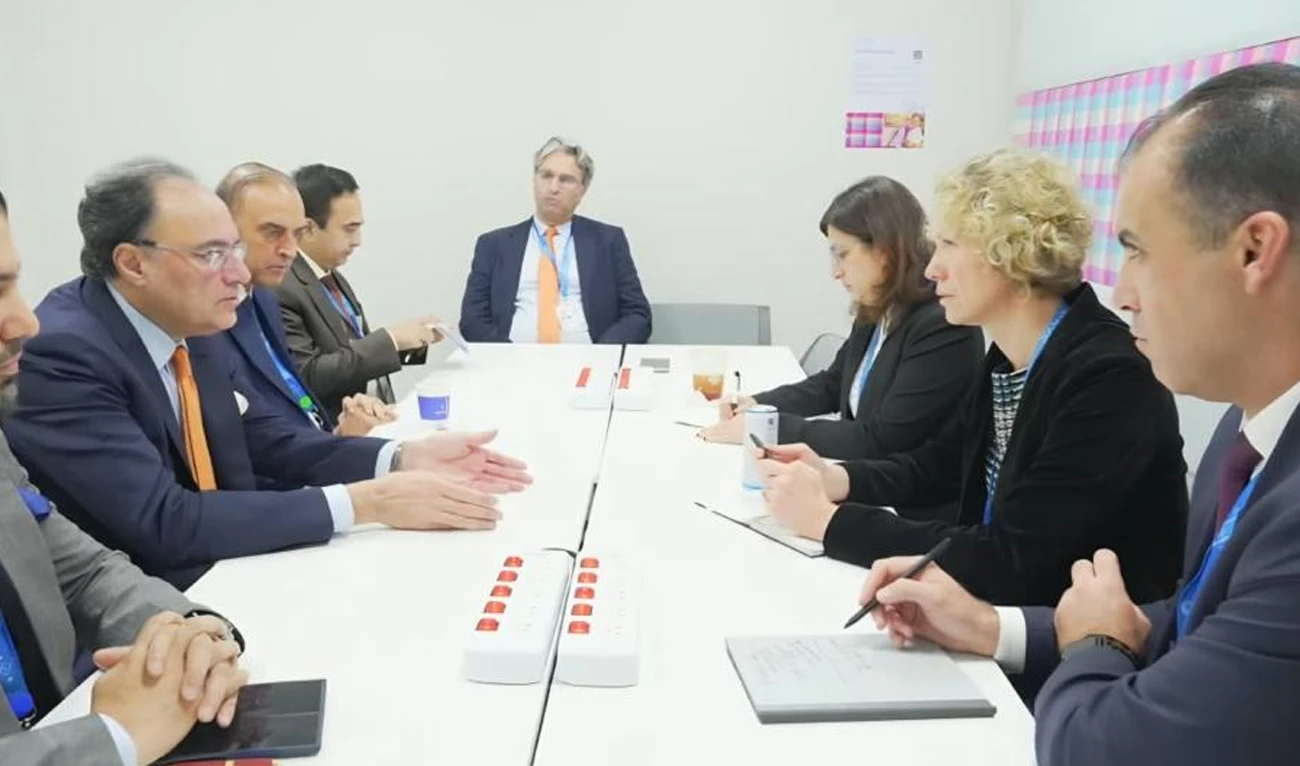
Speaking at a UN Security Council briefing, Pakistan’s ambassador to the UN, Asim Iftikhar Ahmad, said the world was drifting toward confrontation at a time when cooperative mechanisms were weakening.

His comments came during a session addressed by Finland’s foreign minister Elina Valtonen, chairing the Organization for Security and Co-operation in Europe (OSCE), the world’s largest regional security body.

Formed out of the 1975 Helsinki Final Act, the OSCE was designed during the Cold War to reduce tensions, uphold principles of sovereignty and human rights and promote mechanisms for peaceful dispute resolution.

“Today, the foundational ethos of international relations, multilateralism, cooperation and indivisible security, as envisaged in the preamble of Helsinki Final Act, is perhaps facing its biggest challenge in decades,” Ahmed said. “The OSCE, too, is navigating a difficult geopolitical landscape, with conflict raging in the heart of Europe for nearly four years, depletion of trust and unprecedented strains on peaceful co-existence.”

He said a return to the “Helsinki spirit” of dialogue, confidence-building and cooperative security was urgently needed, not only in Europe but globally.

“This is not a matter of choice but a strategic imperative to lower tensions, rebuild essential channels of communication, and demonstrate that comprehensive security is best preserved through cooperative instruments, and not by the pursuit of hegemony and domination through military means,” he said. “Objective, inclusive, impartial, and principle-based approaches are indispensable for success.”

Ahmed’s statement came in a year when Pakistan itself fought a brief but intense war after India launched missile strikes at its city in May following a militant attack in Indian-administered Kashmir. New Delhi blamed Pakistan for the assault, an allegation Islamabad denied while calling for a transparent international investigation.

The Pakistani diplomat said the international system was increasingly defined by bloc politics, mistrust and militarization, warning that such trends undermine both regional stability and the authority of multilateral institutions, including the UN itself.

He urged member states to invest more in preventive diplomacy and the peaceful settlement of disputes as reaffirmed by the Council in Resolution 2788.

Ahmad said Pakistan hoped the OSCE would continue reinforcing models of cooperative security and that the Security Council would back partnerships that strengthen international law and the credibility of multilateral frameworks.

The path forward, he added, required “choosing cooperation over confrontation, dialogue over division, and inclusive security over bloc-based divides.”