What’s in a name: In Pakistan’s Multan, a famous biryani dish that is actually pulao 

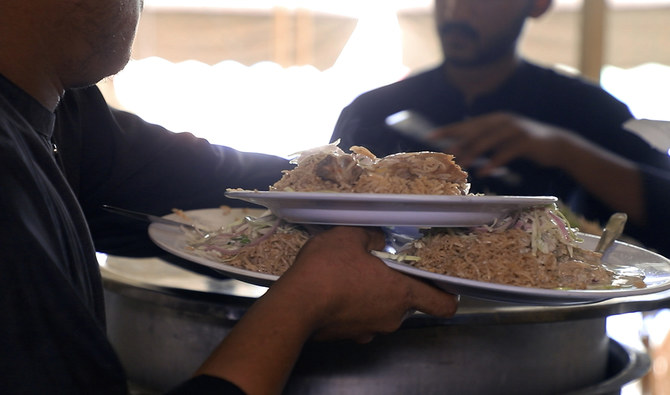
A server holds plates of rice ready to be served at Naveed Chicken Biryani shop in Multan, Pakistan, on August 31, 2023. (AN Photo)
Short Url
Updated 03 September 2023
Follow

What’s in a name: In Pakistan’s Multan, a famous biryani dish that is actually pulao 

  • Multan’s Ghanta Ghar Chowk is daily crowded with eager customers waiting to buy special ‘Multani Biryani’
  • The biryani looks like pulao, is prepared using same methods as pulao but customers only care about the taste

MULTAN: Every day from 12-4pm, the busy Ghanta Ghar roundabout in the eastern Pakistani city of Multan is crowded with eager customers waiting to get their hands on Multani Biryani.

The plateful of steaming rice boiled in seasoned broth, topped with a large piece of chicken, two shami kebabs and thinly sliced onions, and served alongside a generous helping of cucumber yogurt, looks more like pulao than biryani.

But what’s in a name? 

At ‘Naveed Chicken Biryani,’ a popular spot for Multani Biryani, customers like Muhammad Tayyab, 25, are only there for the taste. 

“We love its taste so much that we have traveled 15 kilometers to have it here,” Tayyab told Arab News as he waited for his order. “I come here usually with friends but I also bring my family since everyone loves it.”
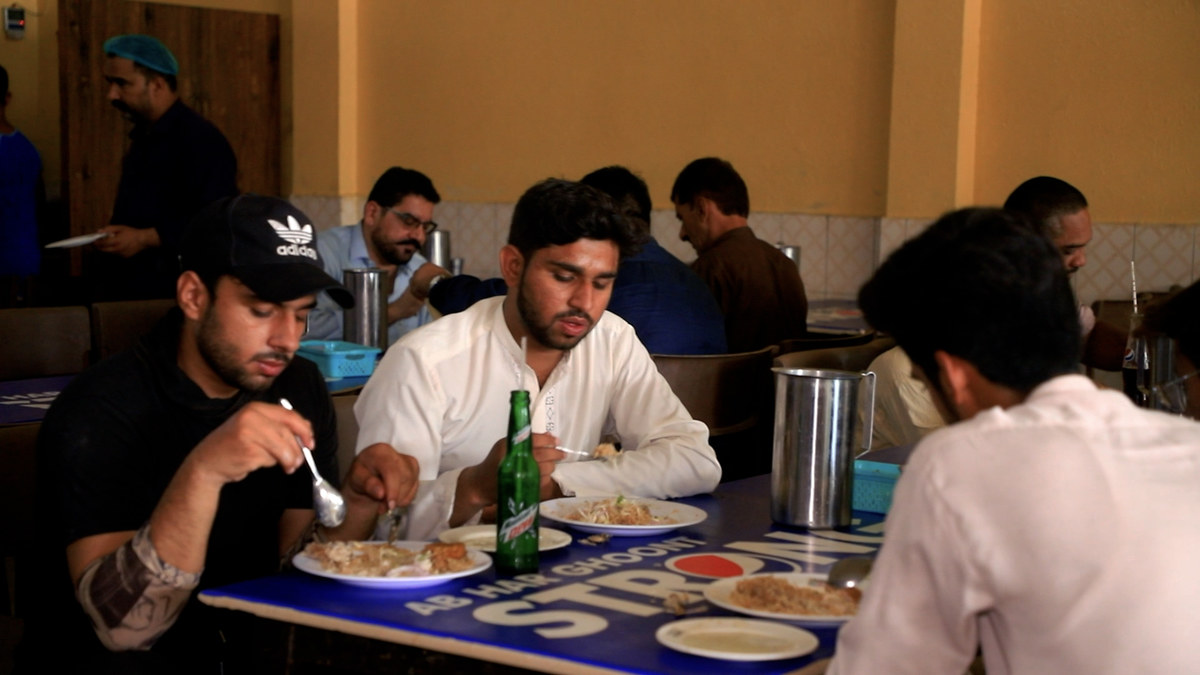


The photo taken on August 31, 2023, shows customers eating rice at Naveed Chicken Biryani shop in Multan, Pakistan. (AN Photo)

Biryani and pulao are both popular rice dishes in South Asia. Pulao is cooked by boiling rice in a seasoned broth, while biryani is made by layering cooked rice with meat and vegetables and a flavorful sauce or masala. Pulao is also typically made with fewer spices compared to biryani.

Naveed Akhtar, the owner of the crowded eatery, agreed that the biryani he served was prepared like pulao.

“This is my mother’s recipe and is prepared with the usual [pulao] spices,” Akhtar told Arab News as waiters around him spooned rice and meat out of huge steel pots and piled them onto plates and takeaway boxes. 

“Everything we use to make it is fresh.”
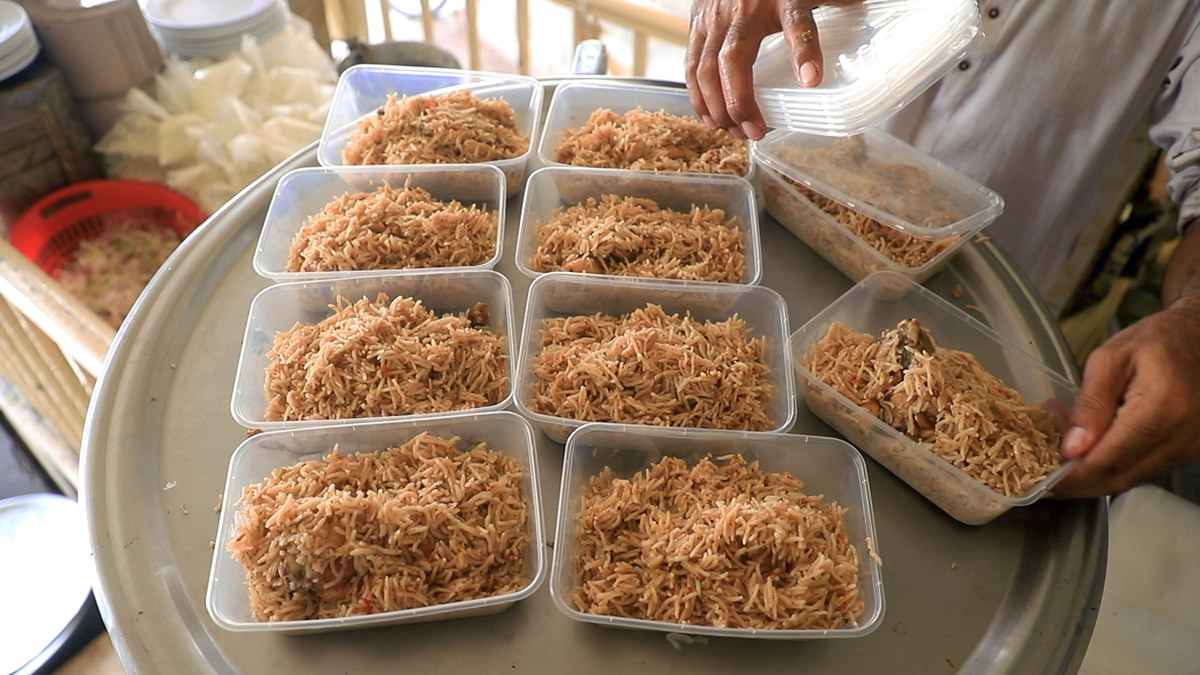


Boxes of rice being prepared for delivery at Naveed Chicken Biryani shop in Multan, Pakistan, on August 31, 2023. (AN Photo)

August is typically a hot month in Multan, a city famous for its unrelenting heat, but Naveed Chicken Biryani was filled to capacity earlier this week. 

“We have had biryani all over Punjab but the taste of the Multani Biryani is something different,” customer Muhammad Zeeshan, 24, told Arab News. 

“We love its taste very much,” said Tayyab, as he finished off his plate of rice. “If we have had biryani from elsewhere, then it is as if they were 50 and this is 100.”


Pakistan vaccinates over 44.3 million as last polio drive of 2025 enters final day

Updated 4 sec ago
Follow

Pakistan vaccinates over 44.3 million as last polio drive of 2025 enters final day

  • Anti-polio drive is being conducted simultaneously in Pakistan and Afghanistan, say health authorities
  • Pakistan has vaccinated over 22.9 million children in Punjab and 10.4 million in Sindh provinces

ISLAMABAD: Pakistani health volunteers have vaccinated a total of 44.3 million children against the poliovirus disease in the last six days, health authorities said on Sunday as the nationwide drive against the disease enters its last day today.
 
The seven-day anti-polio campaign was launched on Dec. 15, targeting children under the age of five. It is being conducted simultaneously in Pakistan and Afghanistan, according to Pakistan’s National Emergency Operations Center (NEOC) which oversees eradication efforts.

Pakistan and neighboring Afghanistan are the only two countries where wild poliovirus transmission has never been interrupted, keeping global eradication efforts at risk. The virus, which can cause irreversible paralysis, has no cure and can only be prevented through repeated oral vaccination.

“Today is the final day of the last national polio campaign of 2025,” the NEOC said in a statement. “In six days, over 44.3 million children have been vaccinated.”

Giving a breakdown of the numbers, the EOC said approximately 22.9 million children have received polio drops in Pakistan’s eastern Punjab province, over 10.4 million in Sindh, 7.1 million in the northwestern Khyber Pakhtunkhwa (KP) province and around 2.54 million children in Balochistan. 

In Pakistan’s capital Islamabad, over 450,000 children received polio drops while in the northern Gilgit-Baltistan region, over 274,000 children have been vaccinated, the EOC said. 

In Azad Jammu & Kashmir, over 714,000 children received polio drops.

Pakistan has logged 30 polio cases so far in 2025, underscoring the fragility of progress against the virus. The country recorded 74 cases in 2024, a sharp rise from six cases in 2023, reflecting setbacks caused by vaccine hesitancy, misinformation and access challenges in high-risk areas.

Health officials say insecurity remains a major obstacle. Polio workers and their security escorts have repeatedly been targeted in militant attacks, particularly in parts of Khyber Pakhtunkhwa and Balochistan, complicating efforts to reach every child. 

Natural disasters, including flooding, have further disrupted vaccination campaigns in recent years.

“Parents and communities are urged to welcome polio workers at their doorsteps,” the EOC said.