

What’s in a name: In Pakistan’s Multan, a famous biryani dish that is actually pulao 

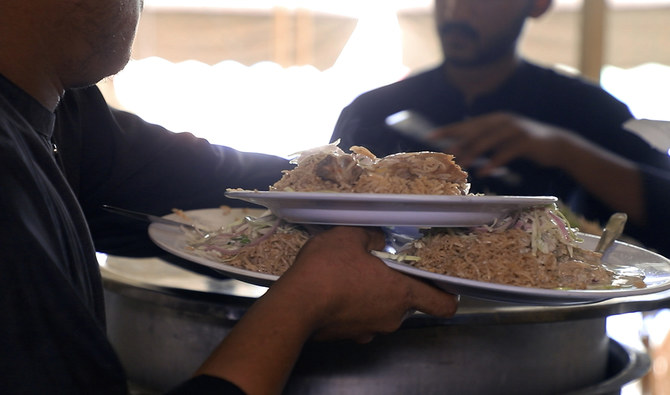
A server holds plates of rice ready to be served at Naveed Chicken Biryani shop in Multan, Pakistan, on August 31, 2023. (AN Photo)
Short Url
Updated 03 September 2023
Follow

What’s in a name: In Pakistan’s Multan, a famous biryani dish that is actually pulao 

  • Multan’s Ghanta Ghar Chowk is daily crowded with eager customers waiting to buy special ‘Multani Biryani’
  • The biryani looks like pulao, is prepared using same methods as pulao but customers only care about the taste

MULTAN: Every day from 12-4pm, the busy Ghanta Ghar roundabout in the eastern Pakistani city of Multan is crowded with eager customers waiting to get their hands on Multani Biryani.

The plateful of steaming rice boiled in seasoned broth, topped with a large piece of chicken, two shami kebabs and thinly sliced onions, and served alongside a generous helping of cucumber yogurt, looks more like pulao than biryani.

But what’s in a name? 

At ‘Naveed Chicken Biryani,’ a popular spot for Multani Biryani, customers like Muhammad Tayyab, 25, are only there for the taste. 

“We love its taste so much that we have traveled 15 kilometers to have it here,” Tayyab told Arab News as he waited for his order. “I come here usually with friends but I also bring my family since everyone loves it.”
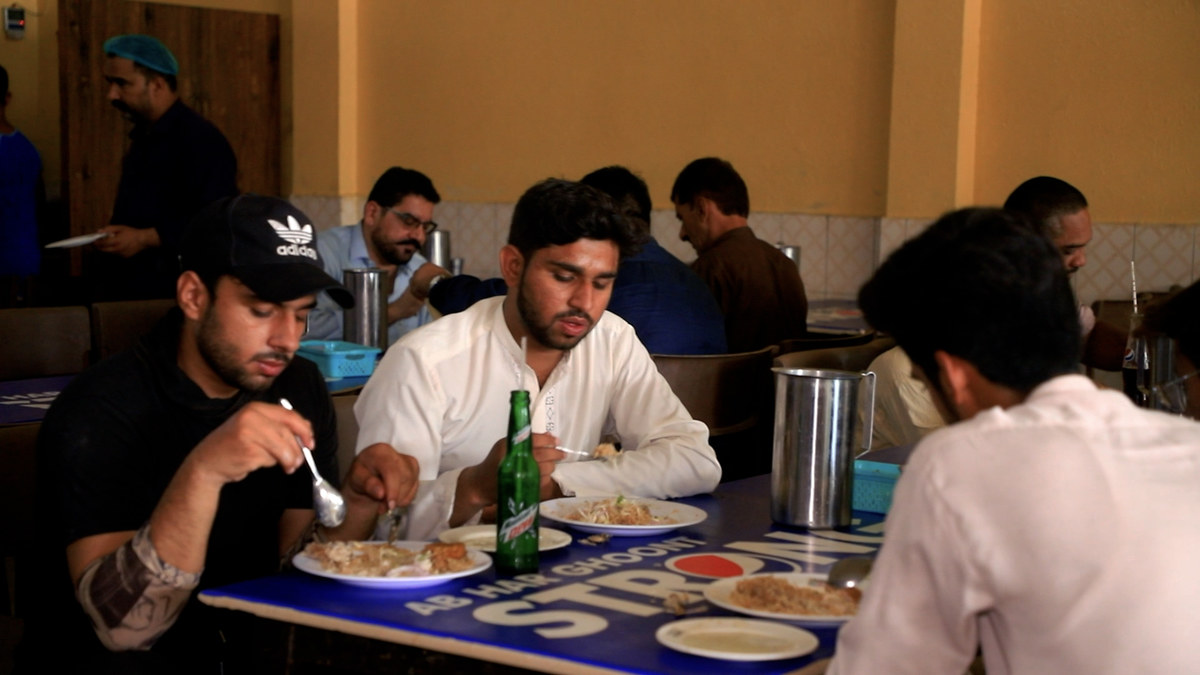


The photo taken on August 31, 2023, shows customers eating rice at Naveed Chicken Biryani shop in Multan, Pakistan. (AN Photo)

Biryani and pulao are both popular rice dishes in South Asia. Pulao is cooked by boiling rice in a seasoned broth, while biryani is made by layering cooked rice with meat and vegetables and a flavorful sauce or masala. Pulao is also typically made with fewer spices compared to biryani.

Naveed Akhtar, the owner of the crowded eatery, agreed that the biryani he served was prepared like pulao.

“This is my mother’s recipe and is prepared with the usual [pulao] spices,” Akhtar told Arab News as waiters around him spooned rice and meat out of huge steel pots and piled them onto plates and takeaway boxes. 

“Everything we use to make it is fresh.”
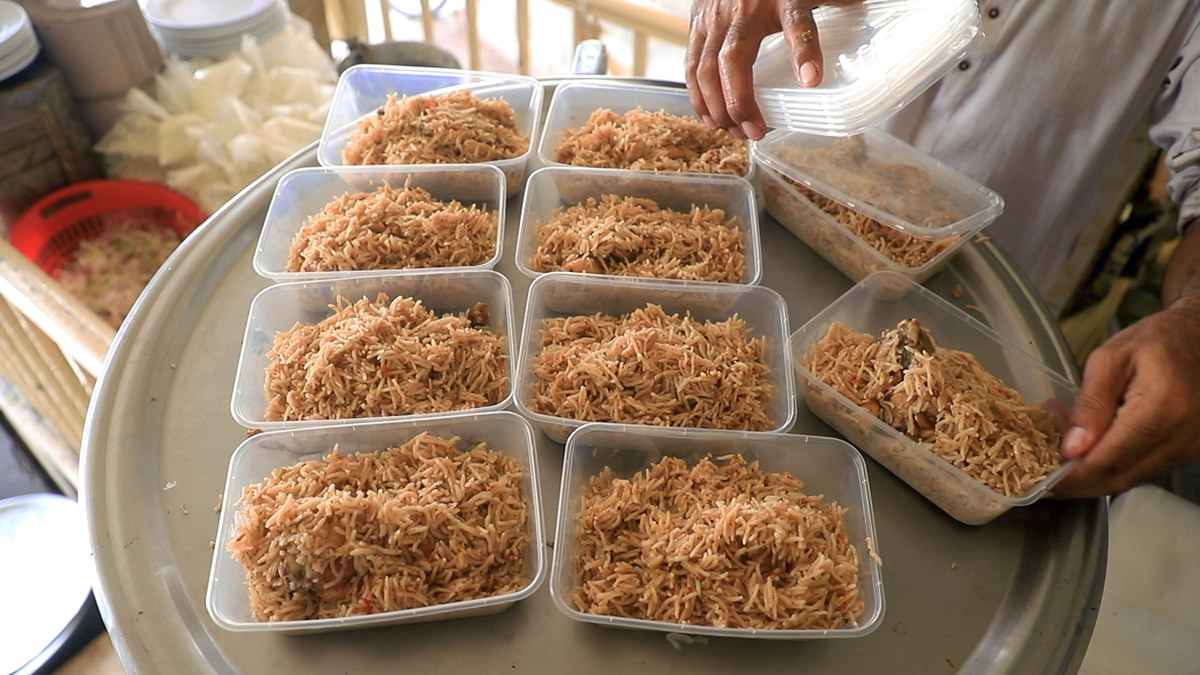


Boxes of rice being prepared for delivery at Naveed Chicken Biryani shop in Multan, Pakistan, on August 31, 2023. (AN Photo)

August is typically a hot month in Multan, a city famous for its unrelenting heat, but Naveed Chicken Biryani was filled to capacity earlier this week. 

“We have had biryani all over Punjab but the taste of the Multani Biryani is something different,” customer Muhammad Zeeshan, 24, told Arab News. 

“We love its taste very much,” said Tayyab, as he finished off his plate of rice. “If we have had biryani from elsewhere, then it is as if they were 50 and this is 100.”


Pakistan bank enables Shariah-compliant digital payment facility for passengers at Islamabad airport

Updated 9 sec ago
Follow

Pakistan bank enables Shariah-compliant digital payment facility for passengers at Islamabad airport

  • Pakistan is a cash-dominated market where a significant portion of transactions in the informal sector are made without any taxes, officials say
  • The move comes amid Pakistan’s efforts to introduce a cashless model at airports under which only digital service providers can provide services

KARACHI: Aik, Pakistan’s first Islamic digital bank, has enabled fully digital payments at Islamabad International Airport to offer travelers and passengers secure, Shariah compliant digital transaction facility.

The development comes amid Pakistan’s efforts to introduce a cashless model at airports across the country, under which only digital service providers can provide services to customers.

Aik, a subsidiary of Bank Islami, said it has onboarded merchants across the Islamabad airport and integrated QR code deployments at key touchpoints to allow passengers and visitors to make secure, seamless, and Shariah-compliant digital transactions at all counters, retail outlets, and service points.

It said the implementation complies with the regulations and framework set by the State Bank of Pakistan (SBP) and is a working model for a large-scale adoption of cashless systems in public infrastructure.

“This deployment reflects our commitment to building practical digital infrastructure that improves everyday transactions,” Aik Chief Officer Ashfaque Ahmed said in a statement.

“By enabling a fully cashless environment at a major national gateway, we are supporting efficiency, transparency, and financial inclusion at scale. This is not only a project; it is a foundation for Pakistan’s cashless future.”

Pakistan is a cash-dominated market where a significant portion of transactions, particularly in the informal sector, are conducted in cash. Officials say many of these transactions are aimed at avoiding taxes.

In recent years, the SBP has taken steps to ensure a transition toward a more cashless economy so that transactions are more traceable, reducing chances of tax evasion and corruption.

By digitizing Islamabad airport, aik said it continues to invest in secure and accessible financial solutions that “expand digital participation and support national economic modernization.”