Amstel Quartet and vocalist Anass Habib’s ‘Stories of the Soul’ comes to Dhahran

1 / 4
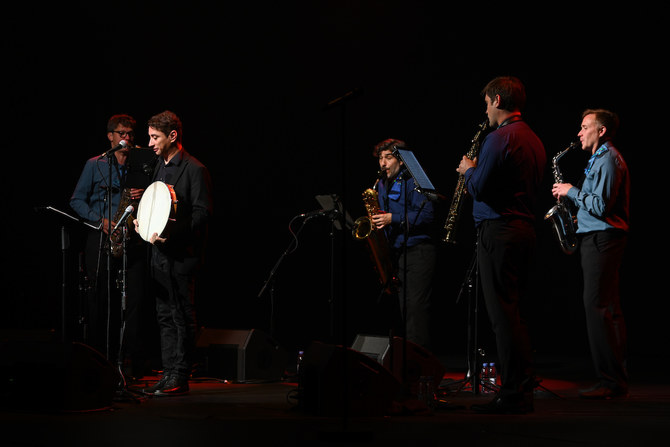
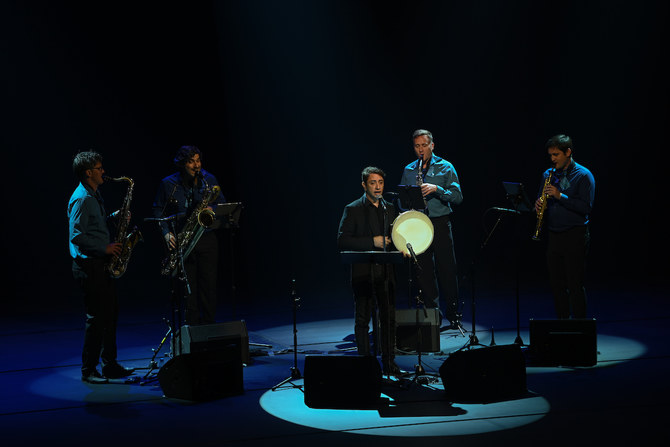
Music lovers in Dhahran had three opportunities to experience a fusion of sounds when Amsterdam’s Amstel Quartet joined Moroccan singer Anass Habib on stage at the King Abdulaziz Center for World Culture. (Supplied)
2 / 4
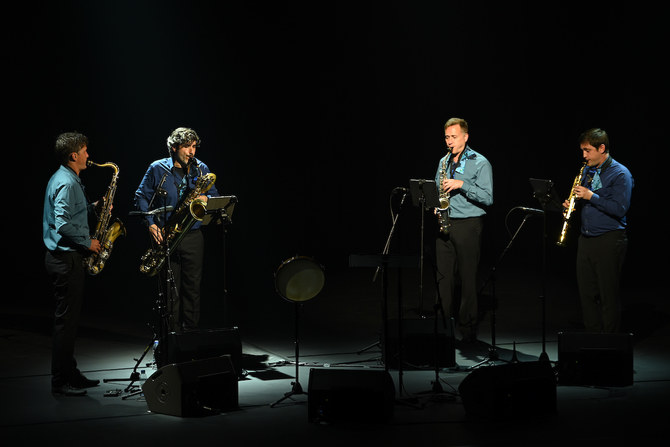
Music lovers in Dhahran had three opportunities to experience a fusion of sounds when Amsterdam’s Amstel Quartet joined Moroccan singer Anass Habib on stage at the King Abdulaziz Center for World Culture. (Supplied)
3 / 4
Music lovers in Dhahran had three opportunities to experience a fusion of sounds when Amsterdam’s Amstel Quartet joined Moroccan singer Anass Habib on stage at the King Abdulaziz Center for World Culture. (Supplied)
4 / 4
Music lovers in Dhahran had three opportunities to experience a fusion of sounds when Amsterdam’s Amstel Quartet joined Moroccan singer Anass Habib on stage at the King Abdulaziz Center for World Culture. (Supplied)
Short Url
Updated 27 August 2023
Follow

Amstel Quartet and vocalist Anass Habib’s ‘Stories of the Soul’ comes to Dhahran

  • “Stories of the Soul,” which began on Aug. 24, has been a sonic exploration rooted in the revival of classic Arabic songs — and with a jazzy twist

DHAHRAN: Music lovers in Dhahran had three opportunities to experience a fusion of sounds when Amsterdam’s Amstel Quartet — self-described as “the most colorful saxophone quartet in the world” — joined Moroccan singer Anass Habib on stage at the King Abdulaziz Center for World Culture.
“Stories of the Soul,” which had its final showing at Ithra on Aug. 26, has been a sonic exploration rooted in the revival of classic Arabic songs — and with a jazzy twist.
A member of the quartet said at the start of the show: “We are thrilled to be at Ithra tonight, on our first tour in Saudi Arabia.


In their captivating musical events at Ithra, the ‘stories of the soul’ performers
played favorites from sayid Darwish, Layla Mourad, Fairuz, Rabih Abou Khalil, and others. (Supplied)

“We really love it here; thank you so much for your hospitality. This project is quite unusual, the combination of four saxophones and a Moroccan singer to play Arabic music. I don’t think it has ever been done before.”
The quartet’s journey weaving sounds to Arabic vocals began about five years ago when they listened to a song by Umm Kulthum — which is why they decided to start the show with her “Al-Nil” classic.

FASTFACTS

• The Amstel Quartet’s journey weaving sounds to Arabic vocals began about five years ago when they listened to a song by Umm Kulthum.

• Anass Habib, the 43-year-old classically trained singer from Fez, Morocco, typically sings in Arabic, Aramaic and Greek.

During a 26-year career, the award-winning saxophone quartet has made a habit of collaborating with composers from around the world. The musicians’ versatility has been key in communicating a wide range of styles as they have connected to audiences in a variety of genres, and languages.


In their captivating musical events at Ithra, the ‘stories of the soul’ performers
played favorites from sayid Darwish, Layla Mourad, Fairuz, Rabih Abou Khalil, and others. (Supplied)


Habib, the 43-year-old classically-trained singer from Fez, Morocco, typically sings in Arabic, Aramaic and Greek, but chose only Arabic songs for the show.
Habib introduced himself to the audience, and said: “I’m very happy to be here this evening with all of you in this journey with the songs (that are) pillars of Arabic music.
“If you know the song and you want to sing along or to clap, feel free to do that.”
Although he gave the crowd full permission to join in, only a few hushed voices were audible for the first songs and applause was reserved until after the song was complete.
However, when Habib started singing Saudi Mohammed Abdu’s “Al-Amaken” in the middle of the set, the crowd found its voice and joined in.
The performers also played favorites from Sayid Darwish, Layla Mourad, Mahmoud Sobyh and Rabih Abou-Khalil. They also featured some Philip Glass and Abdelrahim Al-Masloub, and Fairuz, the “Cedar of Lebanon.”
The Dutch ensemble comprised Vitaly Vatulya on soprano saxophone, Olivier Sliepen on alto sax, Bas Apswoude on tenor saxophone and Harry Cherrin on baritone. The group originally met in 1997 after a tour with the National Youth Orchestra.
The repetitive notes that kept playing on loop almost put the audience in a sort of trance, while Habib’s vocals provided the main feature.
After the 11th and final song of the set, the crowd wanted more. A lone voice shouted “One more, one more” and Habib cheerfully huddled with the quartet to discuss what they could play next. They did two more songs, to the pure delight of the receptive fans who cheered through the entirety of the encore. At times, it turned into an impromptu singalong.
Habib ended the show by saying he was humbled by the passionate reception from the enthusiastic audience, and while it was his first trip to Saudi, it surely will not be his last.


Saudi hospital pioneers preventive type 1 diabetes treatment

KFSH&RC has introduced a groundbreaking preventive treatment aimed at slowing the progression of type 1 diabetes. (SPA)
Updated 59 min 11 sec ago
Follow

Saudi hospital pioneers preventive type 1 diabetes treatment

  • The new therapy is designed for adults and children aged eight years and older who are diagnosed at stage two of the disease

RIYADH: King Faisal Specialist Hospital and Research Center introduced a groundbreaking preventive treatment aimed at slowing the progression of type 1 diabetes, the Saudi Press Agency reported on Wednesday.
The new therapy is designed for adults and children aged eight years and older who are diagnosed at stage two of the disease. It marks the first time such a treatment has been implemented in the Kingdom.
The initial application involved two patients who met all the criteria outlined in the approved protocol. The step represents a major advance in early preventive care for one of the most common autoimmune conditions affecting children and adolescents.
Both cases were treated at the hospital’s Department of Pediatrics. For families already managing type 1 diabetes, the innovation brings new hope.
Siblings of affected children often face increased risk due to shared genetic and immune factors. Preventive options like this could significantly lower those risks in the future.
The treatment targets the early, pre-type 1 diabetes stage when insulin-producing pancreatic cells begin to deteriorate. Through early intervention, doctors can slow this damage, delay the onset of symptoms and help extend the time before full disease progression.
Implementing the therapy required careful preparation. The drug was compounded in the hospital pharmacy under a precise protocol, while nursing teams received training on administration, monitoring and managing possible reactions.
Medical staff were also briefed on patient selection and follow-up criteria based on the latest clinical guidelines.
According to the SPA, experts expect the program to inspire national research focused on the early stages of the disease and on developing preventive approaches that enhance quality of life for at-risk groups.
KFSH&RC continues to gain recognition on the global stage. It was ranked first in the Middle East and Africa, and 15th worldwide among the top 250 academic medical centers for 2025.
The hospital was also named the most valuable healthcare brand in Saudi Arabia and the Middle East by Brand Finance 2025.
Additionally, Newsweek included KFSH&RC on its lists of the World’s Best Hospitals (2025), the World’s Smartest Hospitals (2026) and the World’s Best Specialized Hospitals (2026).