
ISLAMABAD: The Securities and Exchange Commission of Pakistan (SECP) has issued the first-ever Shariah-compliant certificate to two real estate investment trusts (REITs), facilitating them to carry out all lending activity under an interest-free system, as stated in an official statement on Friday.
The development came after the country’s Federal Shariah Court issued a judgment earlier this year, directing the previous administration of Shehbaz Sharif to comply with the Islamic principle of interest-free financial transactions, based on profit and loss sharing.
Following the court order, the SECP issued its 2023 guidelines related to Islamic financial services while highlighting its intent to facilitate conventional institutions who wanted to embrace Shariah-compliant business models.
Since the issuance of the guidelines, several financial entities applied for certification to position themselves as Shariah-compliant companies in the market.
“The Securities and Exchange Commission of Pakistan (SECP) has issued the first-ever certificate of Shariah compliance to two real-estate investment trusts (REITs), namely Signature Residency REIT and Rahat Residency REIT,” the official statement said.
It added that Signature Residency was a close-end developmental trust with a fund size of Rs825 million and a four-year indicative life, adding it aimed to build apartments and retail units and generate income for investors by selling them to customers.
The SECP revealed Rahat Residency had a fund size of Rs1,650 million and an indicative life of five years.
“The issuance of Shariah compliance certificates to REIT developments is a significant step towards connecting the real estate industry with Islamic financial markets and providing Shariah-conscious investors with a regulated transparent investment alternative,” the statement added.
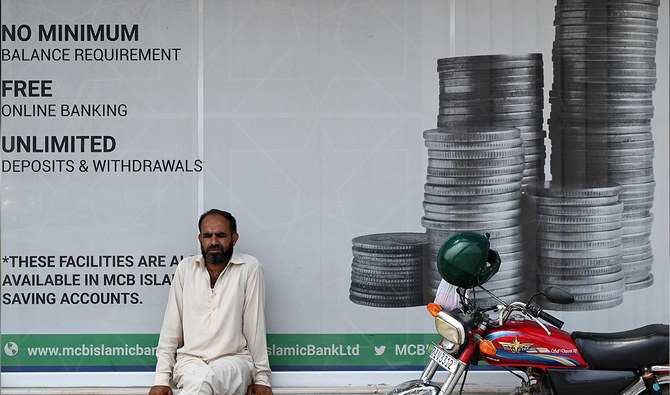
With the second-largest Muslim population in the world, many of Pakistani citizens are cautious about the religious dimension of their banking and financial transactions.
According to the World Bank, only 21 percent of the country’s adult population had a bank account in 2017, with 13 percent citing religious reasons for not having them.