AUSTIN, Texas: Temperatures have soared in the central US, leading to deaths in some states as more dangerous heat is expected, a national weather service official said Wednesday.
The harsh heat wave has broken records, damaged roads and water lines, and forced the evacuation of a nursing home this week as some cities brace for triple digit temperatures through August. There have been 25 heat-related deaths this summer in Louisiana, officials said Tuesday, and in Nebraska, a 1-year-old left in a hot van died.
The heat is expected to become “dangerous to the average person” if they don’t have air conditioning, said Alex Lamers, warning coordination meteorologist at the National Weather Service’s Weather Prediction Center.
It has felt hotter than 110 degrees in cities in Texas and Louisiana more often than at any time since World War II, Lamers said. The brunt of the enduring heat has hit states from Florida to New Mexico, he said.
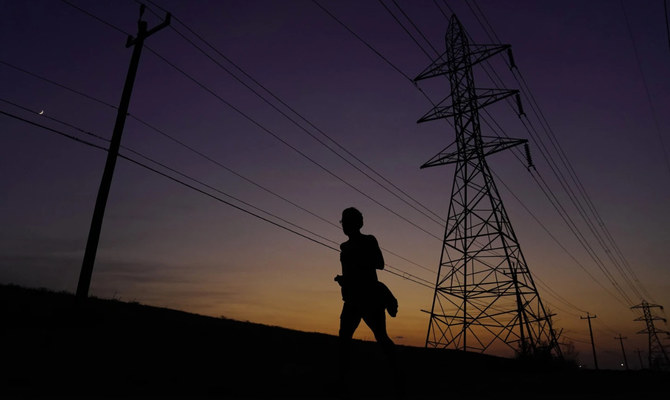
The Electric Reliability Council of Texas asked residents twice last week to conserve energy because of high demand and low reserves. The agency issued a weather watch from Wednesday to Aug. 27.
The council hasn’t had an outage all summer despite unrelenting heat and high demand, said Alison Silverstein, a Texas-based independent energy analyst and former adviser to the state’s energy regulator.
But there are risks the longer this drags on, Silverstein said, comparing it to a car overheating.
“At least your car on a long trip has a chance to rest overnight and cool off,” she said. “A lot of these plants have been running nonstop, or pretty close to it, since June.”
Experts warn infrastructure like roads can buckle under the extreme strain of enduring and recurring heat waves brought on by climate change. Union Pacific has imposed more speed restrictions this summer across its network of more than 32,000 miles (51,499 kilometers) of Western track as a “precaution to reduce the impact on the rail when it gets hot,” spokeswoman Kristen South said Tuesday.
Costs in the US for road maintenance and replacement due to rising temperatures could reach $26.3 billion by 2040, with most of the damage expected to hit Texas, California and Illinois, according to a 2017 study by University of Arizona and Arizona State University researchers.
The heat has already caused an unusual number of Texas water line breaks and roadway issues.
Texas officials are monitoring the heat, roadways and tips from residents to address issues as quickly as possible, said transportation department spokesman Danny Perez. Houston officials learned of likely heat-related damage to a road Sunday after about 10 other similar reports in June, he said.
Houston’s high temperatures and a lack of rain have caused the ground to shift and damage the city’s aging pipes. Residents’ top service request is for water leaks, according to city data. Reports of water leaks from the past month were up 25 percent from the same period last year.
Demand and leaks are both increasing, and the city is using emergency purchase orders to add contractors for repairs, said Erin Jones, Houston Public Works spokeswoman.
San Antonio Water Systems has already tallied more breaks this month than in all of July, said the agency Wednesday. Customers need to cut back on outdoor watering, the agency said.
Cooling systems are also under strain. Missouri firefighters helped remove 117 patients from a Kansas City nursing facility Tuesday after the air conditioning failed in temperatures that felt as high as 115 degrees (46.1 C). Most Parkview Healthcare nursing facility residents were taken to other facilities, but seven who had COVID-19 were taken to hospitals, authorities said.
At least 20 complaints have been made against the facility in the past five years, since August 2018, according to the Missouri Department of Health and Senior Services.
Denise Oates, whose mother lives at the facility, told television station WDAF that it was upsetting to learn through social media that the air conditioning failed. She called and couldn’t get any answers about what was happening, Oates said.
“I’m just like, ‘Call me and let me know before you move her. I need to know where she moves to,’” Oates said.
The facility and owner, Cor Healthcare Partners based in Baltimore, did not immediately respond to requests for comment.
Not everywhere has been feeling the heat. In North Dakota, the city of Dickinson set a record of 60 degrees (15.6 C) for Aug. 20, beating the benchmark of 62 in 1974. On the same day, Bismarck tied its record of 62, set in 1966. The temperatures on Sunday were due to
An unseasonably cool air mass, clouds and rain helped bring temperatures down Sunday, but warmer temperatures are forecast in the coming days, said Corey King, an emergency response specialist with the National Weather Service in Bismarck.

Deadly heat wave in the central US strains infrastructure, transportation
Short Url
https://arab.news/nvbkt
Deadly heat wave in the central US strains infrastructure, transportation
- Experts warn infrastructure like roads can buckle under the extreme strain of enduring and recurring heat waves brought on by climate change
’Made in Europe’ or ‘Made with Europe’? Buy European push splits bloc
- Everyone in Europe agrees the EU needs to rescue its industry but the bloc is split over how far it should push a ‘Buy European’ approach in order to do so
BRUSSELS: Everyone in Europe agrees the EU needs to rescue its industry but the bloc is split over how far it should push a ‘Buy European’ approach in order to do so.
The European Commission, the EU’s executive arm, will next week propose new rules that are expected to include a requirement for companies in strategic sectors to produce in Europe if they want to receive public money.
But the definition of “European preference” has triggered debate, with calls especially from France for more “Made in Europe,” while other EU states such as Germany call for “Made with Europe.”
- Protecting Europe or European protectionism? -
French President Emmanuel Macron insisted the new rules would be about “protecting our industry” without “being protectionist,” by defending “certain strategic sectors, such as cleantech, chemicals, steel, cars or defense.”
Otherwise, he warned, “Europeans will be swept aside.”
But other EU countries, which are proponents of free trade, oppose the plans.
Swedish Prime Minister Ulf Kristersson said Europe should compete based on quality and innovation, not because it wanted to protect European markets.
“We do not want to protect European businesses that are basically not competitive,” Kristersson told the Financial Times newspaper last week.
But EU leaders during talks Thursday appeared to reach a consensus on the issue, pushing for the measure in certain specific sectors since they say Europe faces unfair competition from China and other countries.
“We are in favor of open markets,” German Finance Minister Lars Klingbeil said Monday. “But I also want to be very clear: if China changes the rules of the game, if we are confronted with overcapacity, subsidies, and the fact that markets in Europe are flooded, then Europe must defend itself.”
- In Europe or with Europe? -
Supporters want “Made in Europe” to be strictly defined, and only for industrial goods made from components manufactured in the European Economic Area, made of the EU’s 27 states as well as Iceland, Liechtenstein and Norway.
Critics say this definition would be too restrictive and instead call for a more flexible measure, like Germany’s Merz, who calls for “Made with Europe” not “Made in Europe.”
They also argue it would be difficult to apply in practice and risks destabilising European supply chains.
“Typically, even a vehicle assembled in Europe incorporates hundreds of specialized components sourced from all over the world. Many critical inputs cannot be competitively produced at scale in Europe,” Japanese carmaker Honda said.
Britain and Turkiye, for whom the EU is an important trading partner, have also privately expressed concern to Brussels about keeping their countries out.
Some EU capitals are worried about potential retaliatory measures from supplier countries, which would drag Europe into showdowns at a moment when it needs to strengthen its exports.
- What will the rules look like? -
The EU executive insists it has balanced the need to be open and protect firms.
The measure will be “targeted in three ways,” said the office of EU industry chief Stephane Sejourne — who is spearheading the push.
It will affect:
-- a limited number of critical components
-- a limited number of strategic sectors
-- only when public funding is involved.
The final proposal, which will be announced on February 25, could end up only touching a handful of sectors: the auto industry and those playing an essential role in the green transition and confronted by what the EU says unfair Chinese competition, such as solar panels, wind turbines and batteries.
Sejourne’s office insisted companies producing in the EU would be considered European and there will be “reciprocal commitments” with trusted partners.
A draft document seen by AFP says products made in countries outside the EU with rules similar to the bloc will be treated like those made in Europe.
Non-EU countries however remain watchful until the real proposal lands.
For example, there are still many unknowns including what the percentages of European or equivalent components will be required from manufacturers if they wish to continue accessing public money.
The European Commission, the EU’s executive arm, will next week propose new rules that are expected to include a requirement for companies in strategic sectors to produce in Europe if they want to receive public money.
But the definition of “European preference” has triggered debate, with calls especially from France for more “Made in Europe,” while other EU states such as Germany call for “Made with Europe.”
- Protecting Europe or European protectionism? -
French President Emmanuel Macron insisted the new rules would be about “protecting our industry” without “being protectionist,” by defending “certain strategic sectors, such as cleantech, chemicals, steel, cars or defense.”
Otherwise, he warned, “Europeans will be swept aside.”
But other EU countries, which are proponents of free trade, oppose the plans.
Swedish Prime Minister Ulf Kristersson said Europe should compete based on quality and innovation, not because it wanted to protect European markets.
“We do not want to protect European businesses that are basically not competitive,” Kristersson told the Financial Times newspaper last week.
But EU leaders during talks Thursday appeared to reach a consensus on the issue, pushing for the measure in certain specific sectors since they say Europe faces unfair competition from China and other countries.
“We are in favor of open markets,” German Finance Minister Lars Klingbeil said Monday. “But I also want to be very clear: if China changes the rules of the game, if we are confronted with overcapacity, subsidies, and the fact that markets in Europe are flooded, then Europe must defend itself.”
- In Europe or with Europe? -
Supporters want “Made in Europe” to be strictly defined, and only for industrial goods made from components manufactured in the European Economic Area, made of the EU’s 27 states as well as Iceland, Liechtenstein and Norway.
Critics say this definition would be too restrictive and instead call for a more flexible measure, like Germany’s Merz, who calls for “Made with Europe” not “Made in Europe.”
They also argue it would be difficult to apply in practice and risks destabilising European supply chains.
“Typically, even a vehicle assembled in Europe incorporates hundreds of specialized components sourced from all over the world. Many critical inputs cannot be competitively produced at scale in Europe,” Japanese carmaker Honda said.
Britain and Turkiye, for whom the EU is an important trading partner, have also privately expressed concern to Brussels about keeping their countries out.
Some EU capitals are worried about potential retaliatory measures from supplier countries, which would drag Europe into showdowns at a moment when it needs to strengthen its exports.
- What will the rules look like? -
The EU executive insists it has balanced the need to be open and protect firms.
The measure will be “targeted in three ways,” said the office of EU industry chief Stephane Sejourne — who is spearheading the push.
It will affect:
-- a limited number of critical components
-- a limited number of strategic sectors
-- only when public funding is involved.
The final proposal, which will be announced on February 25, could end up only touching a handful of sectors: the auto industry and those playing an essential role in the green transition and confronted by what the EU says unfair Chinese competition, such as solar panels, wind turbines and batteries.
Sejourne’s office insisted companies producing in the EU would be considered European and there will be “reciprocal commitments” with trusted partners.
A draft document seen by AFP says products made in countries outside the EU with rules similar to the bloc will be treated like those made in Europe.
Non-EU countries however remain watchful until the real proposal lands.
For example, there are still many unknowns including what the percentages of European or equivalent components will be required from manufacturers if they wish to continue accessing public money.
© 2026 SAUDI RESEARCH & PUBLISHING COMPANY, All Rights Reserved And subject to Terms of Use Agreement.


