

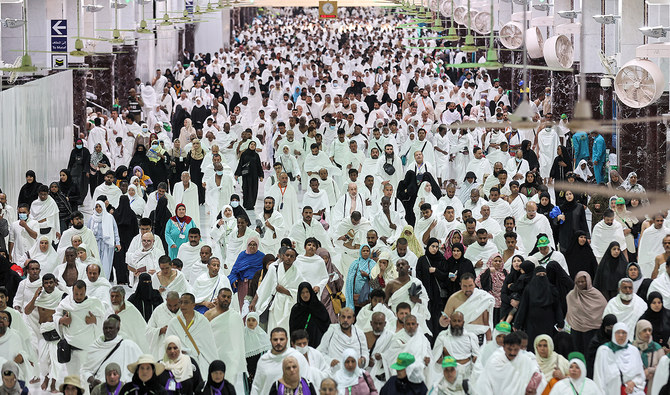

KARACHI: The Saudi Tourism Authority (STA) launched the Nusuk digital platform in Pakistan on Tuesday to increase the number of visitors from the South Asian state, a day after officials belonging to the two countries signed an agreement to enhance the number of bilateral flights.
Nusuk is the kingdom’s first official planning, booking and experience platform to create Hajj or Umrah itineraries to Makkah, Madinah and beyond. It allows travelers from all over the world to easily organize their visit to Saudi Arabia by facilitating e-visa process along with flight and hotel bookings.
The launch of Nusuk is part of Saudi Vision 2030 which aims to promote religious and cultural sites in the kingdom to diversify its economy and reduce its reliance on oil.
Saudi Minister for Hajj and Umrah Tawfiq bin Fawzan Al-Rabiah, who arrived in Pakistan on a four-day visit on Sunday, told journalists the kingdom was trying to increase the number of visitors through better facilitation and enhanced flight operations while addressing a ceremony to launch the app.
Al-Rabiah mentioned an agreement signed between the aviation sectors of Pakistan and Saudi Arabia on Monday to enhance the number of flights between the two countries.
“We are very keen to provide all the facilities that can attract greater number of visitors,” he said. “During my visit to Pakistan, we have worked on increasing the number of flights and signed an understanding, or an agreement rather, between the Saudi Airlines and the Pakistani Airlines to increase the number of flights.”
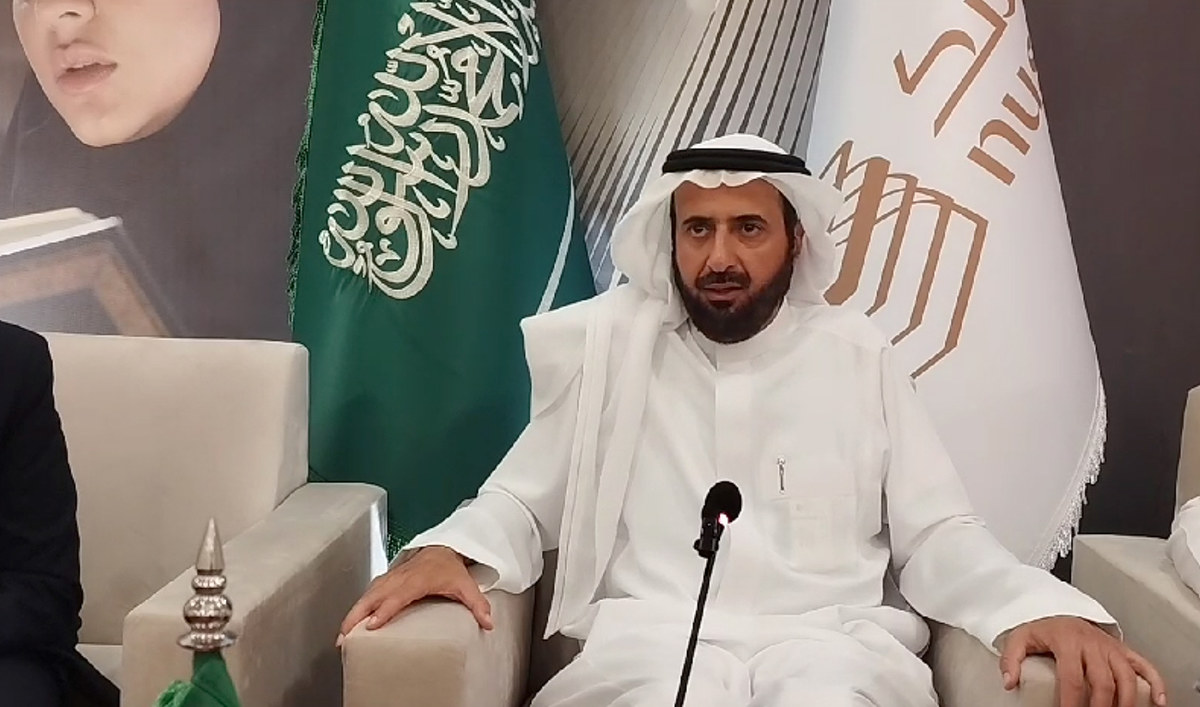
Saudi Minister for Hajj and Umrah, Dr. Tawfiq Al-Rabiah, gestures during a media briefing in Karachi on August 22, 2023. (AN Photo)
The minister said a Saudi budget air carrier, Flyadeal, would soon begin its flight operations between the two countries to increase traveling but to bring down its cost.
“We have approved the airlines called Flyadeal as a carrier company from Pakistan and this [agreement] has been reached yesterday,” he informed. “So, the number of flights will increase and with a lower cost and the opportunities to collaborate are huge.”
Al-Rabiah, reiterated that Kingdom has extended its Umrah visa duration from 30 to 90 days for pilgrims who can avail the opportunity to visit other historical sites.
“The kingdom has attempted to provide abundant facilities,” the minister said. “For example, the Umrah visa, it became from 30 days to 90 days, and the issuing of visas is becoming much easier now and it can be issued in less than 24 hours.”
Discussing the reforms undertaken by the Saudi government, he said the kingdom had also eased the Mahram condition for female visitors, allowing them to perform Hajj and Umrah without a male guardian.
He noted the transit visa holders could also avail a free four-day window to perform Umrah during their brief stay in the Kingdom.
“We have launched the visa, the transit visa, which allows to transit, to travel via the kingdom, and to stay in the kingdom for four days and the Saudi airline provides one night for free,” he added.
The minister said the kingdom had expanded tourism destinations and increased the capacity of hotels in Makkah and Madinah to accommodate increasing number of pilgrims.
“The capacity of housing has been increased, both of the grand mosques [in the two holy cities] have now been expanded, airports have been expanded as well,” Al-Rabiah said, adding: “All of these expansions are to accommodate larger number of people who want to perform Umrah.”
The Saudi minister said the government had developed and opened more than 100 historical, archaeological, and religious sites to promote tourism.
“Makkah and Madinah have a lot of historical sites like the Hira Cave, the Thour Mountain, the Uhud area, Jabal Al-Rumah, and other very important places that everyone loves to see,” he continued.
Earlier, while addressing a gathering, the Saudi minister said that about 1.6 million Pakistanis visit Saudi Arabia every year.
Fahd Hamidaddin, chief executive officer of the Saudi Tourism Authority, also expressed hope that the launch of the Nusuk platform, which is also available in Urdu, would increase the number of visitors from Pakistan to the kingdom to about two million.


