


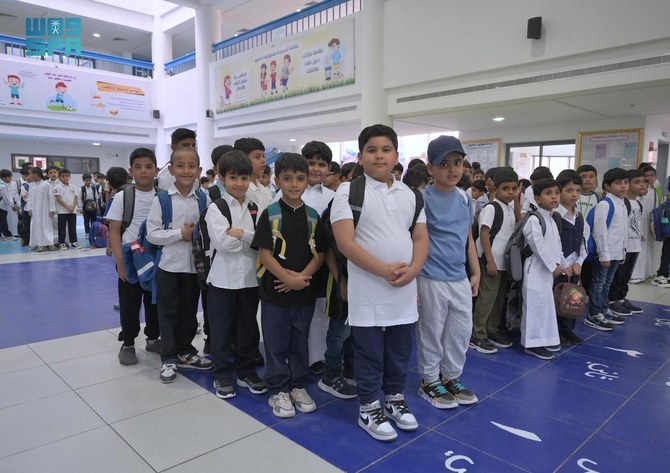


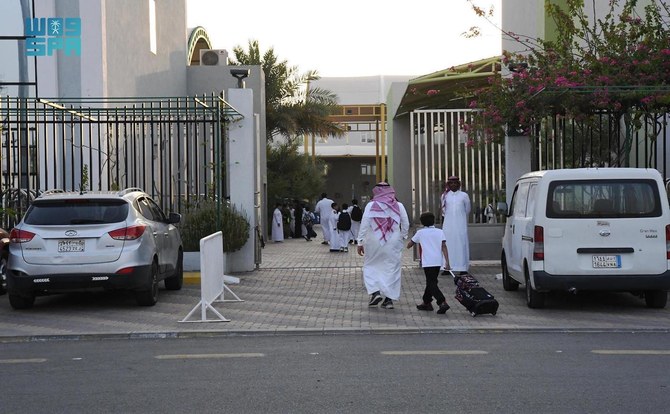

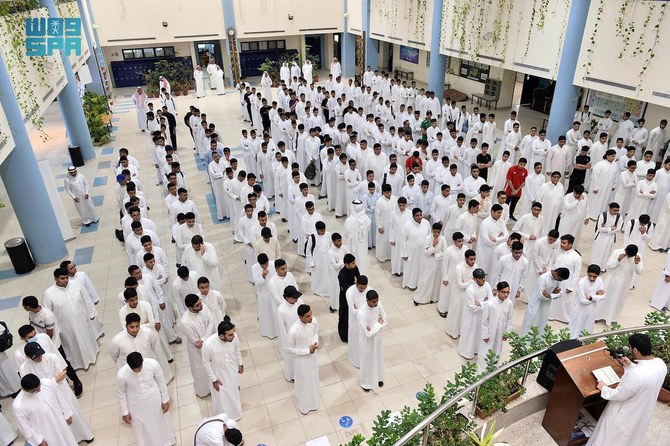
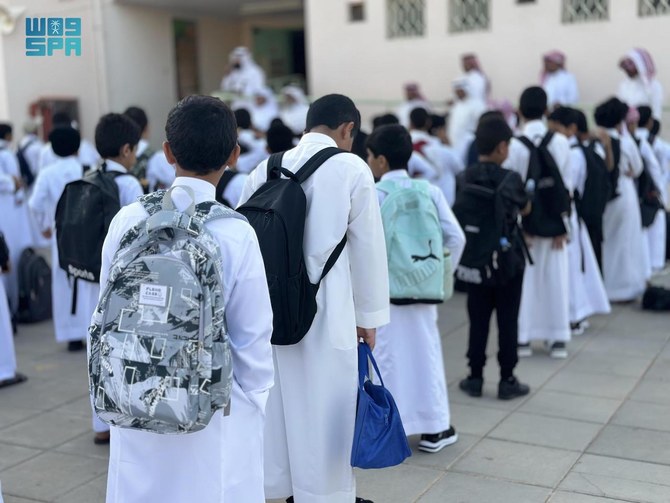
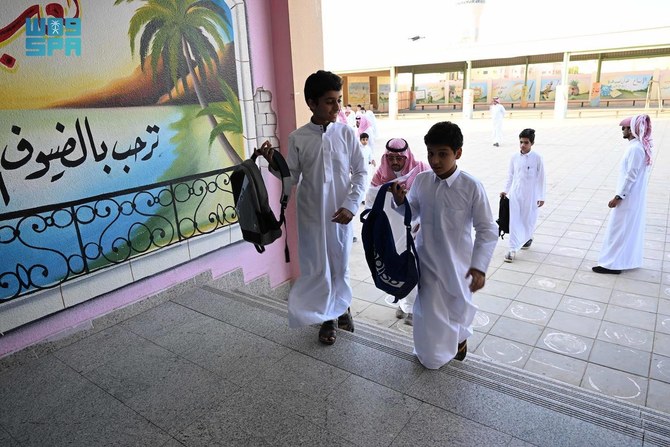
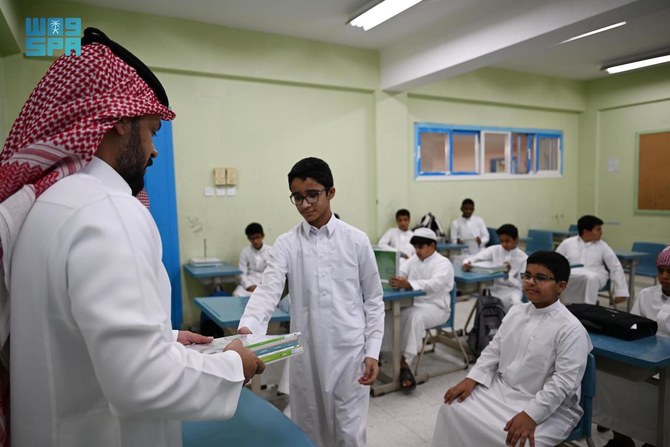


MAKKAH: More than 7 million students in Saudi Arabia returned to school on Sunday, resuming their studies after a two-month summer vacation.
According to a report, over 6 million students enrolled in general education and 1,360,000 students in higher education and technical and vocational training started the new academic year.
More than half a million male and female teachers as well as administrative staff and supervisors also resumed their duties.
The Ministry of Education and the Technical and Vocational Training Corp. started preparations early for the academic year in coordination with local education departments.
HIGHLIGHT
According to a report, over 6 million students enrolled in general education and 1,360,000 students in higher education and technical and vocational training started the new academic year.
The ministry stressed the role of parents in motivating their children to fully engage with the curriculum and achieve their potential. It also emphasized the importance of early preparations, including setting up curricula and daily class schedules, to ensure a strong start to the academic year.
The General Directorate of Education in Riyadh completed its preparations to receive more than 1.2 million students in all education levels across over 6,000 schools.
Riyadh has the highest number of students, followed by Jeddah with 700,000 students; the Eastern Province with 500,000; Makkah with 422,000; Madinah with 350,000; Asir with 280,000; Tabuk, Taif, and Qassim each with 200,000; Jazan with 190,000; Najran with 161,000; and the Northern Borders region with 100,000.
Dr. Naif Al-Zari, director general of education in Riyadh, said that 95 new schools and nurseries will be opened this year, benefitting hundreds of thousands of students.
Abdul Salam Al-Thumairi, spokesman for the Riyadh Education Department, confirmed the readiness of all departments for the new school year. “Over 63,000 teachers are preparing to receive the students. The administration has developed a training plan for the teachers’ return, including 81 diverse training programs covering curriculum for new teachers, educational supervision management programs, and electronic supervision methods.”
Al-Thumairi said that school administrations have begun distributing books to students upon the return of administrative and educational staff. The General Directorate of Education in Riyadh has established admission committee offices to facilitate the admission process for students and their parents.
Dr. Hamed Al-Jamah, an official of the Makkah Education Department, emphasized the importance of a strong start in order to achieve positive outcomes and impart a range of skills to students.
Dr. Mohammed Al-Duaiji, an educational expert, said that learning is a lifelong journey.
“The start of the school year is a crucial stage that sets the tone for the rest of the year,” he said. “According to Prof. Thomas R. Guskey, students often feel uncertain about themselves and their perspective on school after the summer break. Their perceptions of themselves as learners and their academic potential are often influenced by their performance on early assessments, such as quizzes and exams. For instance, scoring a C on a math test may lead students to view themselves as C students, which can be challenging to change.
“Educational systems worldwide are measured by metrics like adherence to schedules and truancy rates, reflecting the commitment of school leadership, teachers, students, and parents to prioritize learning,” he continued. “Saudi Vision 2030, aligned with these values, emphasizes discipline and perseverance through initiatives like the Human Capital Development Program. The Ministry of Education has implemented measures such as converting the academic calendar into three semesters and developing the curriculum plan.”
According to the new academic calendar, the first semester will continue until Nov. 16, while the second semester will start on Nov. 26 and will end on Feb. 22, 2024. The third semester will start on March 3 and will end on June 10.


