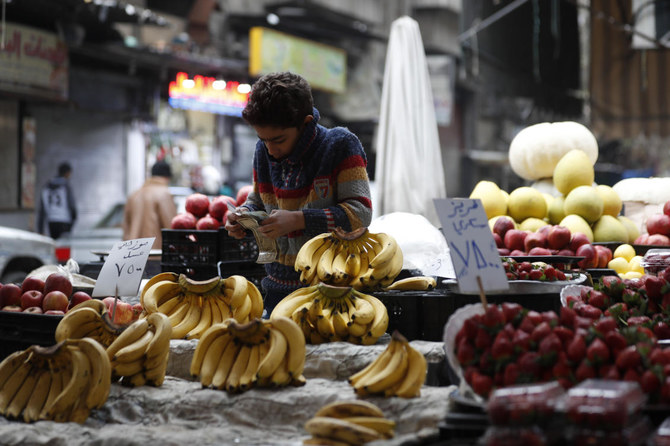
DAMASCUS: Syrian President Bashar Assad has decreed a 100-percent pay rise for civil servants and pensioners while fuel subsidies were lifted in a country ravaged by 12 years of war.
The Syrian economy has been battered by the conflict that has killed more than 500,000 people and displaced millions since it began in 2011.
In two decrees issued late Tuesday, Assad doubled the salaries and pensions of those currently and formerly employed in the civil service and military, as well as contract workers.
Prior to the decision, the monthly salary of civil servants had been between around $10 and $25, depending on the Syrian pound’s street value.
The presidential decrees also set the minimum monthly wage in the private sector at 185,940 Syrian pounds, or about $13 on the black market.
In a separate statement late Tuesday, the commerce ministry announced the total lifting of subsidies on petrol and a partial lifting of subsidies on fuel oil.
As a result the price of petrol has risen to 8,000 pounds from 3,000 previously, and fuel oil to 2,000 pounds from 700 previously, according to the ministry.
The Syrian pound was trading at around 14,300 to the US dollar on Wednesday, according to unofficial monitoring websites, compared with the official rate of 8,542.
The currency has lost most of its value since the start of the war, when it was worth 47 against the greenback.
Most of the population has been pushed into poverty, according to the United Nations.

Syria doubles pay for civil servants, military personnel
https://arab.news/cr4a7
Syria doubles pay for civil servants, military personnel
- The Syrian economy has been battered by the conflict that has killed more than 500,000 people and displaced millions since it began in 2011
Lebanon’s government approves a deal to transfer Syrian prisoners back to Syria
- Lebanon and Syria have a complicated history with grievances on both sides
- A key obstacle to warming relations has been the fate of about 2,000 Syrians in Lebanese prisons
BEIRUT: Lebanon’s Cabinet on Friday approved an agreement to transfer Syrian prisoners serving their sentences in Lebanon back to their home country.
The issue of prisoners has been a sore point as the neighboring countries seek to recalibrate their relations following the ouster of former Syrian President Bashar Assad in a lightning offensive by Islamist-led insurgents in December 2024. Former insurgent leader Ahmad Al-Sharaa is now Syria’s interim president.
Lebanon and Syria have a complicated history with grievances on both sides. Many Lebanese resent the decades-long occupation of their country by Syrian forces that ended in 2005. Many Syrians resent the role played by the Lebanese militant group Hezbollah when it entered Syria’s civil war in defense of Assad’s government.
A key obstacle to warming relations has been the fate of about 2,000 Syrians in Lebanese prisons, including some 800 held over attacks and shootings, many without trial. Damascus had asked Beirut to hand them over to continue their prison terms in Syria, but Lebanese judicial officials said Beirut would not release any attackers and that each must be studied and resolved separately.
The deal approved Friday appeared to resolve that tension. Lebanese Information Minister Paul Morcos said other issues remain to be resolved between the two countries, including the fate of Lebanese believed to have been disappeared into Syrian prisons during Assad’s rule and the demarcation of the border between the two countries.
Lebanon’s Deputy Prime Minister Tarek Mitri told reporters after the Cabinet meeting that about 300 prisoners would be transferred as a result of the agreement.
Protesters gathered in a square below the government palace in downtown Beirut ahead of the Cabinet vote to call for amnesty for Lebanese prisoners, including some who joined militant groups fighting against Assad in Syria. Some of the protesters called for the release of Sunni cleric Ahmad Al-Assir, imprisoned for his role in 2013 clashes that killed 18 Lebanese army soldiers.
“The state found solutions for the Syrian youth who are heroes and belong to the Syrian revolution who have been imprisoned for 12 years,” said protester Khaled Al- Bobbo. “But in the same files there are also Lebanese detainees. ... We demand that just as they found solutions for the Syrians, they must also find solutions for the people of this country.”


