Afghan students in UK fear forced return to Taliban-controlled homeland after graduation

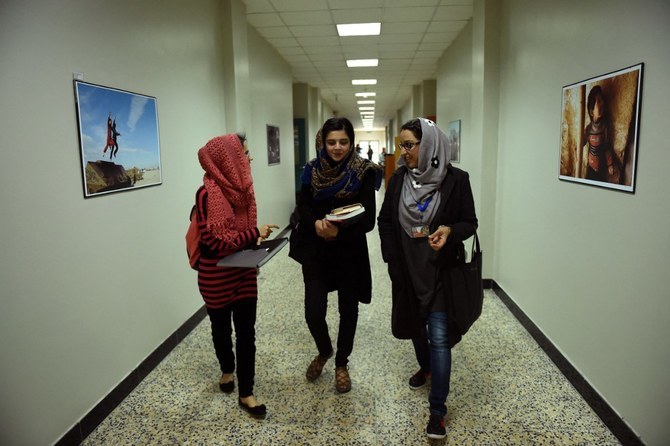
The Afghan students are among the recipients of the Chevening scholarship program, which since 1983 has given thousands of outstanding students from all over the world the chance to study at UK universities. (AFP/File Photo)
Short Url
Updated 15 August 2023
Follow

Afghan students in UK fear forced return to Taliban-controlled homeland after graduation

  • * The 17 students say they face Taliban persecution and asked the British government to grant them leave to remain in the UK indefinitely, as it did for Afghan students in the past two years
  • ‘As a girl who is single, who has done human rights law … who has worked with international forces, I would be persecuted, I would be hanged in front of everybody,’ said one student

LONDON: A group of Afghan students studying in the UK under a Foreign Office scholarship scheme have shared their fears that they will be forced to return to Afghanistan after they graduate in September.

The 17 students asked the British government to grant them indefinite leave to remain in the UK, as it did for Afghans who participated in the program in 2021 and 2022. They said they fear persecution from the Taliban regime in their home country if they have to return there when their visas expire.

They are among the recipients of the Chevening scholarship program, which since 1983 has given thousands of outstanding students from all over the world the chance to study at UK universities, predominantly for one-year master’s degree courses.

The Home Office originally said the scholarship scheme was never intended to be a pathway to permanent residence and that students should follow procedure after graduating by returning to their homeland or moving on to another country. However, it later added that those from Afghanistan can apply for another UK visa or claim asylum.

The students complain they face the prospect of finding money to pay the expensive fee for a two-year graduate visa, or could be left unable to work while British authorities continue to deal with a near 200,000-case backlog of asylum applications.

They spoke to the British media on condition of anonymity to protect their families still living in Afghanistan.

“As a girl who is single, who has done human rights law in the UK under the UK government scheme, who has worked with international forces, I would be persecuted, I would be hanged in front of everybody,” one said of her fears if she is forced to return to Afghanistan.

Another, who also studied international human rights law, said: “I am having panic attacks thinking about what exactly is going to happen. Should I just become stateless and homeless at the same time after September?”

Labour MP Neil Coyle, who is representing one of the students, told news agency PA Media: “Ministers must end their debilitating quagmire and grant leave to remain in the UK, as the Home Office did for the students who completed their studies last year.”

A spokesperson for the government said it has provided a letter of consent that allows the students to apply for a different visa after graduation due to “the situation in Afghanistan” and added: “This will exempt them from the normal requirement to leave the UK on completion of study.”

Bolivia and Israel to restore ties severed over the war in Gaza

Updated 10 December 2025
Follow

Bolivia and Israel to restore ties severed over the war in Gaza

  • Paz's government eased visa restrictions on American and Israeli travelers last month
  • The Bolivian foreign ministry said its top diplomat would meet his Israeli counterpart in Washington later Tuesday to discuss the revival of bilateral ties

LA PAZ, Bolivia: Bolivia's new right-wing government said Tuesday that it would restore diplomatic relations with Israel, the latest sign of the dramatic geopolitical realignment underway in the South American country that was once among the most vocal critics of Israeli policies toward Palestinians.
The Bolivian foreign ministry said its top diplomat would meet his Israeli counterpart in Washington later Tuesday to discuss the revival of bilateral ties, which Bolivia's previous left-wing government severed two years ago over Israel's devastating campaign against Hamas in Gaza.
Bolivia said the effort came as part of a new foreign policy strategy under conservative President Rodrigo Paz aimed at “rebuilding Bolivia's international prestige, opening new economic opportunities and strengthening alliances that directly benefit the country and our citizens abroad."
Bolivian Foreign Minister Fernando Aramayo is in the midst of a whirlwind trip to Washington for meetings with American officials as his government works to warm long-chilly relations with the United States and unravel nearly two decades of hard-line, anti-Western policies under the Movement Toward Socialism, or MAS, party that left Bolivia economically isolated and diplomatically allied with China, Russia and Venezuela.
Paz's government eased visa restrictions on American and Israeli travelers last month.
In announcing his expected meeting with Aramayo on Monday, Israeli Foreign Minister Gideon Saar thanked Bolivia for scrapping Israeli visa controls and said he spoke to Paz after the center-right senator's Oct. 19 election victory to express “Israel’s desire to open a new chapter” in relations with Bolivia.
Paz entered office last month, ending the dominance of the MAS party founded by Evo Morales, the charismatic former coca-growing union leader who became Bolivia's first Indigenous president in 2006. Not long after taking power, Morales sent Israel's ambassador packing and cozied up to Iran over their shared enmity toward the U.S. and Israel.
When protests over Morales' disputed 2019 reelection prompted him to resign under pressure from the military, a right-wing interim government took over and restored full diplomatic relations with the U.S. and Israel as it sought to undo many of Morales’ popular policies.
But 2020 elections brought the MAS party back to power with the presidency of Luis Arce, who in 2023 once again cut ties with Israel in protest over its military actions in Gaza.
Other left-wing Latin American countries, like Chile and Colombia, soon made similar moves, recalling their ambassadors and joining South Africa’s genocide case against Israel before the United Nations’ highest judicial body.