

Saudi Reef aims to achieve annual honey production exceeding 7,500 tons 

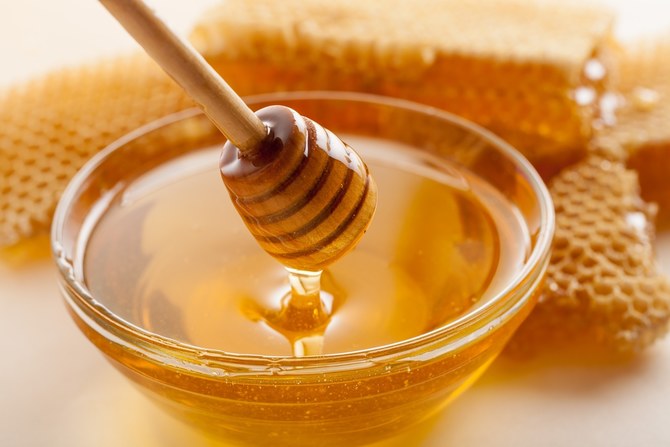
The move aims to diversify the landscape of local agricultural production within Saudi Arabia. (Shutterstock)
Short Url
Updated 14 August 2023
Follow

Saudi Reef aims to achieve annual honey production exceeding 7,500 tons 

RIYADH: In pursuit of food security and agricultural self-sufficiency, Saudi Arabia has unveiled an ambitious initiative to produce over 7,500 tons of honey annually as part of the Sustainable Agricultural Rural Development Program.   

This strategic endeavor is poised to not only enhance the output of honey but also to diversify the landscape of local agricultural production within Saudi Arabia, the Saudi Press Agency reported. 

Ghassan Bakri, the secretary-general of the Reef program, highlighted that this initiative signifies a shift towards modern beekeeping and honey production technologies, while enhancing productivity and quality. 

He also underscored the beekeepers’ dedication to generating added value from honey, in addition to streamlining the honey collection process in a hygienic manner that avoids exposure to sunlight, according to SPA.

Reef, also known as the Sustainable Agricultural Rural Development Program, plays a crucial role in advancing crop cultivation across Saudi Arabia. It particularly addresses potential shortages resulting from unforeseen emergencies.  

Bakri elaborated that the program aids small-scale farmers in obtaining food, elevating their living standards, and enriching nutritional diversity while ensuring the safety of food supplies. 

He added that Reef has contributed to notable increases in Saudi Arabia’s agricultural sector production rates in the current year compared to 2020. 

This development coincides with a significant upswing in the honey sector’s production, reaching 3,748 tons this year, showcasing a remarkable 49 percent growth. 

In a significant move, Saudi Arabian Oil Co. recently entered into an agreement to support 600 beekeepers in upgrading their harvesting skills, aligning with the Kingdom’s objective to boost honey production.

Through a memorandum of understanding with the Beekeepers Cooperative Association in Rijal Almaa province, the oil giant committed to providing comprehensive training and essential resources to honey farmers, particularly those with limited incomes, aiming to enhance their production capabilities. 

The association’s goal involves producing around 10,000 honeybee queens and 4,000 breeding colonies of local bees, independent of external sources, as outlined in an earlier statement. 

The Ministry of Environment, Water and Agriculture reports that Saudi Arabia produces nearly 5,000 tons of honey annually, with an additional 24,000 tons imported. The local market offers over 20 honey varieties from numerous apiaries spanning the nation. 


Saudi POS spending jumps 28% in final week of Jan: SAMA

Updated 06 February 2026
Follow

Saudi POS spending jumps 28% in final week of Jan: SAMA

RIYADH: Saudi Arabia’s point-of-sale spending climbed sharply in the final week of January, rising nearly 28 percent from the previous week as consumer outlays increased across almost all sectors. 

POS transactions reached SR16 billion ($4.27 billion) in the week ending Jan. 31, up 27.8 percent week on week, according to the Saudi Central Bank. Transaction volumes rose 16.5 percent to 248.8 million, reflecting stronger retail and service activity. 

Spending on jewelry saw the biggest uptick at 55.5 percent to SR613.69 million, followed by laundry services which saw a 44.4 percent increase to SR62.83 million. 

Expenditure on personal care rose 29.1 percent, while outlays on books and stationery increased 5.1 percent. Hotel spending climbed 7.4 percent to SR377.1 million. 

Further gains were recorded across other categories. Spending in pharmacies and medical supplies rose 33.4 percent to SR259.19 million, while medical services increased 13.7 percent to SR515.44 million. 

Food and beverage spending surged 38.6 percent to SR2.6 billion, accounting for the largest share of total POS value. Restaurants and cafes followed with a 20.4 percent increase to SR1.81 billion. Apparel and clothing spending rose 35.4 percent to SR1.33 billion, representing the third-largest share during the week. 

The Kingdom’s key urban centers mirrored the national surge. Riyadh, which accounted for the largest share of total POS spending, saw a 22 percent rise to SR5.44 billion from SR4.46 billion the previous week. The number of transactions in the capital reached 78.6 million, up 13.8 percent week on week. 

In Jeddah, transaction values increased 23.7 percent to SR2.16 billion, while Dammam reported a 22.2 percent rise to SR783.06 million. 

POS data, tracked weekly by SAMA, provides an indicator of consumer spending trends and the ongoing growth of digital payments in Saudi Arabia.  

The data also highlights the expanding reach of POS infrastructure, extending beyond major retail hubs to smaller cities and service sectors, supporting broader digital inclusion initiatives.  

The growth of digital payment technologies aligns with Saudi Arabia’s Vision 2030 objectives, promoting electronic transactions and contributing to the Kingdom’s broader digital economy.