

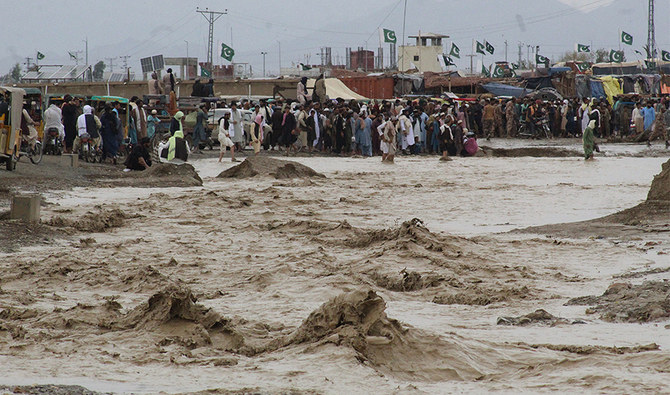

ISLAMABAD: Pakistan’s National Disaster Management Authority (NDMA) issued a warning on Saturday about possible fresh floods and landslides due to heavy rains and thunderstorms in the mountainous regions of the country, including Gilgit-Baltistan, Khyber Pakhtunkhwa (KP), and Azad Kashmir, as stated in an official statement.
The Pakistan Meteorological Department (PMD) had warned of intermittent to moderate to heavy rainfall in the northern and other parts of the country a day earlier, stating that the situation was likely to persist from August 13 to 16.
In light of PMD’s weather advisory, the NDMA urged local authorities and citizens living in vulnerable areas to remain vigilant and exercise caution.
“There is a possibility of thundershowers in different parts of the country [and] these rains may lead to floods and landslides in the hilly areas of KP, Punjab, and Azad Jammu and Kashmir,” the authority announced on the messaging platform X.
“Rainfall can increase the flow of water in local rivers and cause urban flooding, while the rivers and streams of Gilgit-Baltistan are likely to experience increased flow and increased likelihood of glacial lake outburst floods (GLOFs),” it added.
The NDMA also instructed relevant government departments to provide advance information about rains and floods to address possible risks, and recommended systematic monitoring of traffic toward sensitive areas.
“Keep machinery ready to deal with emergency situations, while arrangements should be made to relocate people living in low-lying areas,” it said.
According to the NDMA’s latest monsoon situation report, 211 people, including 87 children and 40 women, have lost their lives due to the ongoing rains or floods in the country since the beginning of the season.
The report also indicated that 1,635 houses have been completely destroyed in the country due to recent spells of rain, while 2,174 have suffered partial damage.
Pakistan has experienced erratic weather patterns, resulting in heatwaves and flash floods, in the last few years. The country ranks among the top 10 most profoundly affected by global climate change. This is despite the fact that its contribution to global greenhouse gas emissions remains less than one percent.
Last year, approximately one-third of the country was flooded during the monsoon rainfall that claimed nearly 1,700 lives and led to an estimated damage of over $30 billion.


