


JUBA, South Sudan: Last week’s coup in Niger ushered in a state of diplomatic and security confusion in the West African region that surpassed previous coups.
The unexpected move by the Economic Community of West African States to consider the use of force to remove the junta from Niamey added a new dimension to the crisis.
Despite negotiations, the junta remains steadfast in its resolve to stay in power, further complicating the situation. Adding to the complexity, neighboring juntas in Guinea, Mali, and Burkina Faso have pledged to support the Nigerien junta, making the situation potentially explosive.
The junta-controlled states possess other valuable resources, further enhancing their bargaining position. As a result, the region finds itself at the epicenter of geopolitical interests, with major powers keen on securing access to these precious materials for their economic and strategic pursuits.
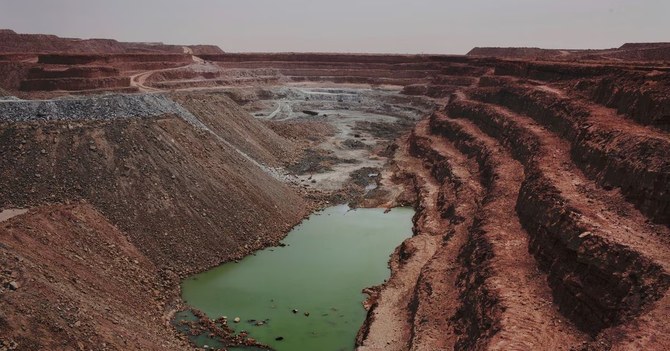
The coup in Niamey has brought attention to Niger’s rich resource capacity, particularly its critical role in fulfilling Europe’s energy needs, especially for France. The country stands as the seventh-largest producer of uranium globally, a resource that France has heavily relied upon for decades.
“France, however, has been gradually reducing its reliance on Niger’s uranium in the last 20 years,” Beatrice Bianchi, a Senegal-based consultant and Sahel expert with Med-Or Leonardo, an Italian think-tank, told Arab News. “Importantly, Niger’s diversification strategy in trade partnerships and France’s focus on more stable countries contributed to this shift.”
Niger is not the only junta-controlled state in the region with valuable strategic resources.
A “crescent” of military-ruled states, starting from the Atlantic coast, includes the Republic of Guinea, which experienced a successful coup in 2021. Guinea holds the distinction of being the world’s second-largest producer of bauxite in 2022, with abundant reserves. Bauxite, an essential mineral in alumina production for industrialized economies, contributes significantly to the global price of the mineral.
Mali and Burkina Faso, often overlooked in the discussions surrounding the resource dynamics of the coup resurgence, hold immense importance in this scenario. In 2021, Mali was ranked the fourth-largest producer of gold in Africa, producing 63.4 tons, while Burkina Faso followed closely as the fifth-largest producer with 45 tons. “The allure of gold attracts not only foreign interests but also foreign armed groups seeking to exploit the resource-rich regions,” Fidel Amakye Owusu, a security analyst from Ghana, told Arab News.
“Wagner has been known to take advantage of these resources by providing ‘security’ to the country. In Burkina Faso, the abundance of the resource has attracted extremists to it,” he added.
At the same time, the claim of Wagner’s meddling in Niger’s affairs cannot be supported by available evidence. “The coup in Niger appears to have internal origins without external backing,” Bianchi said.
“The fragility of President (Mohamed) Bazoum’s presidency, divisions within the ruling party, and tensions within the army all contributed to the unfolding events.”
Nevertheless, the possession of significant strategic resources grants the juntas across the region a sense of security, despite facing opposition from neighboring countries and regional blocs. “Their willingness to trade these resources for survival cements their grip on power, presenting a challenging dilemma for the international community,” Owusu commented.
This is why the response from ECOWAS, a regional political and economic union of 15 countries located in West Africa, and the Western partners seems to be of utmost importance. “Depending on its outcome, there might be the possibility of implementing sanctions and potential impacts on trade agreements,” Bianchi said.
One of the ventures hailed as “transformational” for Niger’s economy, and also at significant risk of being affected by sanctions, is the Niger-Benin pipeline. Owned and contracted by China National Petroleum Corp., this project represents a promising development for the country.
Currently, the pipeline is more than 75 percent complete, and it is slated to commence commercial oil transportation in the fourth quarter of 2023. According to Kai Xue, a finance lawyer based in Beijing, this project holds immense potential for Niger. Projected oil sales were expected to boost the country’s gross domestic product by 24 percent and increase exports by an impressive 68 percent by 2025.
“The sanctions in Mali disrupted fuel and supplies, leading to precarious living conditions for millions of people, and making new financing to the region less attractive,” Kai told Arab News.


