UAE eyes ‘comprehensive’ economic agreement with Pakistan to promote bilateral trade, exports

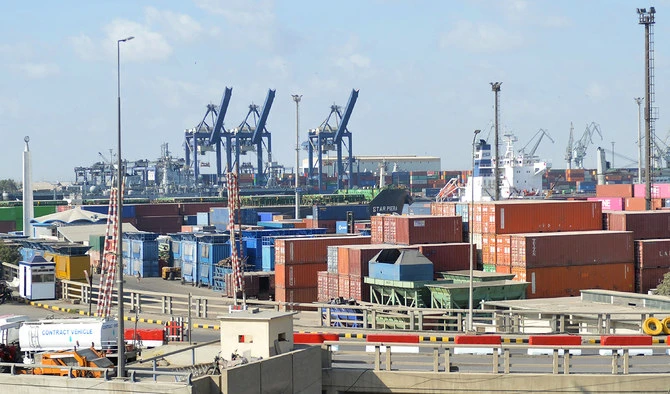
A general view of sea port in Karachi, Pakistan on January 11, 2023. (AFP/File)
Short Url
Updated 03 August 2023
Follow

UAE eyes ‘comprehensive’ economic agreement with Pakistan to promote bilateral trade, exports

  • UAE deputy head of mission calls for enhancing business-to-business ties with South Asian country 
  • Says Pakistan ‘most favorable’ country for tourism, urges improving Pakistani tourism infrastructure

ISLAMABAD: The United Arab Emirates (UAE) is working to sign a ‘Comprehensive Economic Partnership Agreement’ with Pakistan, a UAE diplomat said on Thursday, adding that it would create opportunities to enhance bilateral trade and exports between both countries.

The UAE is Pakistan’s third-largest trade partner after China and the United States. It is also viewed as an ideal export destination by policymakers in the South Asian country due to its geographical proximity which reduces transportation and freight costs and facilitates commercial exchanges.

The Gulf country is also home to an estimated 1.5 million Pakistani expatriates and the second-largest source of remittances for the South Asian nation, after Saudi Arabia.

“The United Arab Emirates (UAE) was working to sign a Comprehensive Economic Partnership Agreement (CEPA) with Pakistan that would create many new opportunities for the entrepreneurs of both countries to promote bilateral trade and exports,” Rashid Abdul Rehman Al Ali, deputy head of Mission of the UAE embassy, told members of the Pakistani business community during his visit to the Islamabad Chamber of Commerce and Industry (ICCI). 

According to a press release issued by the ICCI, Ali said he was “quite optimistic” about Pakistan’s economic future, given that the South Asian country was receiving Foreign Direct Investment (FDI) from Saudi Arabia, UAE, China, and Qatar. 

The diplomat said that the UAE wanted to further promote investment with Pakistan with a focus on agriculture, textiles, marble & tiles, gemstone, mining, and petroleum. Ali called for enhancing government-to-government and business-to-business relations between both countries. 

“He said that Pakistan was the most favorable country for tourism and that an improved tourism infrastructure would attract more tourists,” the ICCI said. 

Pakistan says IMF has not imposed new conditions under $7 billion bailout

Updated 4 sec ago
Follow

Pakistan says IMF has not imposed new conditions under $7 billion bailout

  • Finance ministry says measures cited as ‘new conditions’ are phased extensions of reforms already agreed
  • Media described steps like civil servants’ asset disclosures and sugar industry deregulation as new demands

ISLAMABAD: Pakistan said on Sunday some of the reform measures mentioned in the media and linked to the International Monetary Fund (IMF) bailout program are not “new conditions” imposed by the lender but extensions of commitments already agreed under the arrangement.

Local media and social platforms have described a series of IMF-linked structural benchmarks as fresh conditions under the $7 billion loan for Pakistan in recent weeks. News reports published and broadcast in India also mentioned 11 measures under the loan, describing them as new IMF demands imposed on the country.

“The Ministry of Finance has clarified the intent, context, and continuity of reform measures under Pakistan’s IMF Extended Fund Facility (EFF) program, particularly in response to recent commentary regarding so-called ‘new conditions,’” said an official statement circulated in Islamabad.

“The purpose is to reaffirm that the measures referenced are part of a phased, medium-term reform agenda agreed with the IMF, many of which are extensions or logical progressions of reforms already initiated by the Government of Pakistan,” it added.

The ministry said the EFF is designed to support medium-term structural reforms implemented in a sequenced manner, with each program review building on prior actions to meet policy objectives agreed at the outset.

It provided detailed clarification on 11 measures that had been characterized as new conditions, including public disclosure of asset declarations of civil servants, strengthening the operational effectiveness of the National Accountability Bureau, empowering provincial anti-corruption bodies through access to financial intelligence and facilitating foreign remittances.

Other measures cited included the development of the local currency bond market, deregulation of the sugar industry, a comprehensive reform roadmap for the Federal Board of Revenue, a medium-term tax reform strategy, phased privatization of power distribution companies, regulatory reforms to strengthen corporate compliance and contingency measures to address potential revenue shortfalls.

The ministry said several of these reforms had been embedded in the Memorandum of Economic and Financial Policies (MEFP), a document detailing mutually agreed commitments, dating back to May 2024 and March 2025, including pledges related to tax policy, governance, energy sector restructuring and revenue mobilization.

“During discussions and negotiations with the IMF, the Government of Pakistan presents its planned policy reform initiatives,” the statement added. “Where the IMF assesses that these initiatives contribute to the agreed program objectives, they are incorporated into the MEFP.”

“As a result,” it continued, “many of the structural benchmarks and actions included in the latest MEFP are derived from reforms already undertaken or initiated by the Government of Pakistan, rather than being externally imposed or newly introduced conditions.”

The statement noted the measures outlined in the latest MEFP represent “continuity, sequencing and deepening of Pakistan’s agreed reform agenda” under the IMF loan, rather than the “imposition of abrupt or unprecedented conditions.”