

Kyiv and allies rally support for blueprint to end Russia’s war in Ukraine

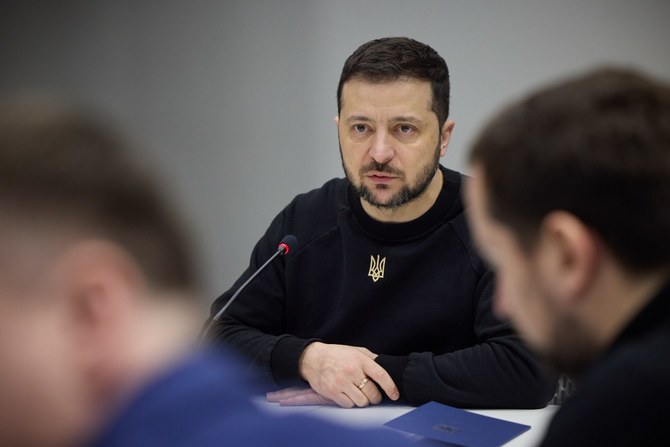
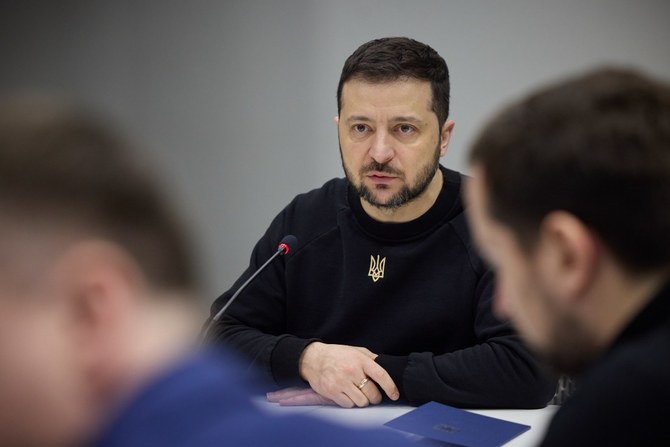
Zelenskiy told Ukrainian diplomats in a speech published on the president's website that almost 40 countries would be represented at the meeting in Jeddah on Aug 5 and 6. (FILE/AFP)
Short Url
Updated 03 August 2023
Follow

Kyiv and allies rally support for blueprint to end Russia’s war in Ukraine

  • Ukraine leader: Talks in Saudi Arabia could be a stepping stone towards peace talks

JEDDAH/KYIV: Ukraine and its allies rallied global support on Thursday for a peace blueprint that will be discussed in talks hosted by Saudi Arabia in Jeddah this weekend.

Diplomats hope the meeting on August 5 and 6 of national security advisers and other senior officials from about 40 countries will agree on key principles to end Russia’s war in Ukraine.

Ukrainian President Volodymyr Zelensky told Ukrainian diplomats in a speech published on the president’s website that the initiative would be a stepping stone toward a peace summit of world leaders this autumn to endorse the principles based on his own 10-point formula for a peace settlement.

“We are working on making it happen this fall,” he said. “Autumn is very soon, but there is still time to prepare for the summit and involve most of the world’s countries.”

There is no prospect of direct peace talks between Ukraine and Russia at the moment, as the war continues to rage and Kyiv seeks to reclaim territory through a counter-offensive. Instead, Ukraine aims to first build a bigger coalition of diplomatic support for its vision of peace beyond its core group of Western backers by involving Global South countries such as India, Brazil, South Africa and Turkiye.

“One of the main aims of this round of negotiations will be to finally fix a common understanding of what the 10 points are about,” Ihor Zhovkva, Zelensky’s chief diplomatic adviser, said on Thursday.

The 10 points include calls for the full restoration of Ukraine’s territorial integrity, a full withdrawal of Russian troops, the protection of food and energy supplies, nuclear safety and the release of all prisoners.

But Western officials concede the initiative can put only limited pressure on Moscow without China, which has maintained close economic and diplomatic ties with Russia and rejected international calls to condemn the invasion.

It was unclear on Thursday whether China would take part in the Jeddah talks. Beijing was invited to a previous meeting in Copenhagen in late June but did not attend.

“I do think it’s critical that not just India, Brazil, and other key partners are participating but also that China is sitting at the table and actually talking peace,” said a senior European Commission official.

Saudi Arabia is keen to play a prominent diplomatic role in efforts to resolve the conflict. Zelensky attended the Arab League summit in Jeddah in May, when Crown Prince Mohammed bin Salman expressed his readiness to mediate.

The Kingdom “reached into parts of the world where Ukraine’s classical allies would not get to so easily,” another EU official said.


US bars five Europeans it says pressured tech firms to censor American viewpoints online

Updated 58 min 35 sec ago
Follow

US bars five Europeans it says pressured tech firms to censor American viewpoints online

WASHINGTON: The State Department announced Tuesday it was barring five Europeans it accused of leading efforts to pressure US tech firms to censor or suppress American viewpoints.
The Europeans, characterized by Secretary of State Marco Rubio as “radical” activists and “weaponized” nongovernmental organizations, fell afoul of a new visa policy announced in May to restrict the entry of foreigners deemed responsible for censorship of protected speech in the United States.
“For far too long, ideologues in Europe have led organized efforts to coerce American platforms to punish American viewpoints they oppose,” Rubio posted on X. “The Trump Administration will no longer tolerate these egregious acts of extraterritorial censorship.”
The five Europeans were identified by Sarah Rogers, the under secretary of state for public diplomacy, in a series of posts on social media. They include the leaders of organizations that address digital hate and a former European Union commissioner who clashed with tech billionaire Elon Musk over broadcasting an online interview with Donald Trump.
Rubio’s statement said they advanced foreign government censorship campaigns against Americans and US companies, which he said created “potentially serious adverse foreign policy consequences” for the US
The action to bar them from the US is part of a Trump administration campaign against foreign influence over online speech, using immigration law rather than platform regulations or sanctions.
The five Europeans named by Rogers are: Imran Ahmed, chief executive of the Center for Countering Digital Hate; Josephine Ballon and Anna-Lena von Hodenberg, leaders of HateAid, a German organization; Clare Melford, who runs the Global Disinformation Index; and former EU Commissioner Thierry Breton, who was responsible for digital affairs.
Rogers in her post on X called Breton, a French business executive and former finance minister, the “mastermind” behind the EU’s Digital Services Act, which imposes a set of strict requirements designed to keep Internet users safe online. This includes flagging harmful or illegal content like hate speech.
She referred to Breton warning Musk of a possible “amplification of harmful content” by broadcasting his livestream interview with Trump in August 2024 when he was running for president.
Breton responded Tuesday on X by noting that all 27 EU members voted for the Digital Services Act in 2022. “To our American friends: ‘Censorship isn’t where you think it is,’” he wrote.
French Foreign Minister Jean-Noël Barrot said France condemns the visa restrictions on Breton and the four others. Also posting on X, he said the DSA was adopted to ensure that “what is illegal offline is also illegal online.” He said it “has absolutely no extraterritorial reach and in no way concerns the United States.”
Most Europeans are covered by the Visa Waiver Program, which means they don’t necessarily need visas to come into the country. They do, however, need to complete an online application prior to arrival under a system run by the Department of Homeland Security, so it is possible that at least some of these five people have been flagged to DHS, a US official said, speaking on condition of anonymity to discuss details not publicly released.
Other visa restriction policies were announced this year, along with bans targeting foreign visitors from certain African and Middle Eastern countries and the Palestinian Authority. Visitors from some countries could be required to post a financial bond when applying for a visa.