‘Highest form of abuse’: Pakistani drama ‘Mayi Ri’ shines light on child marriage and beyond

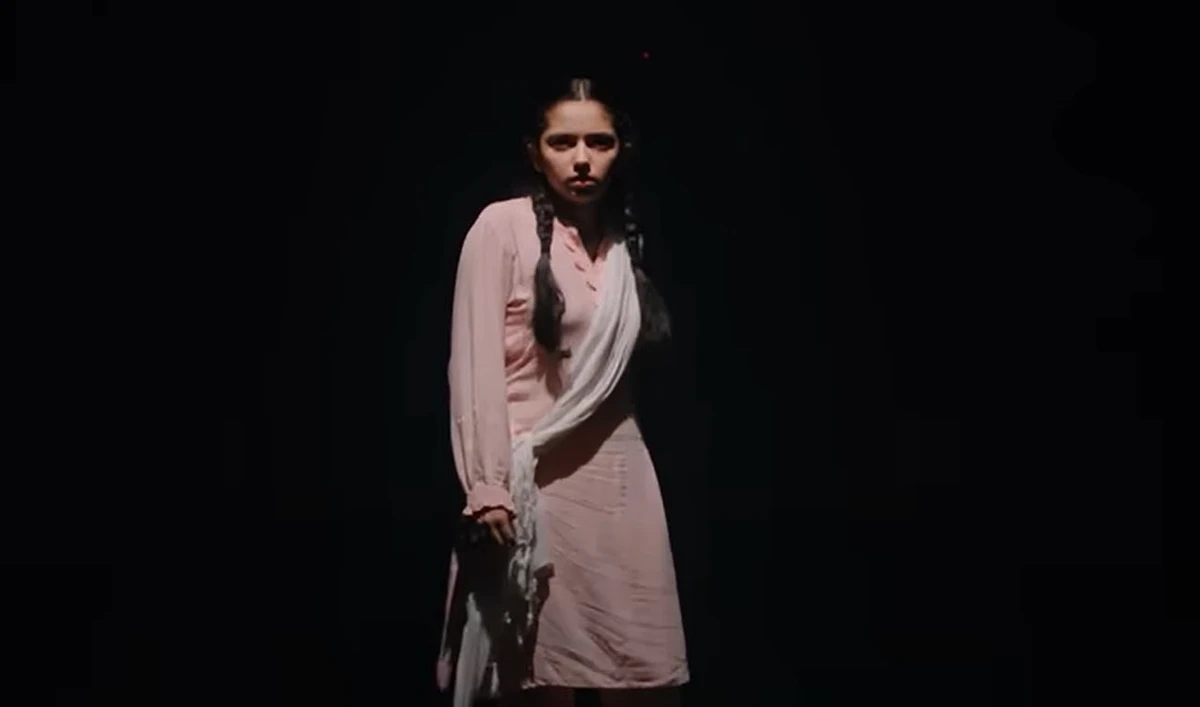
This still image captured from the video teaser of Pakistani drama, “Mayi Ri,” on August 1, 2023, shows actor Aina Asif who is portraying the role of child bride, Ainee, in the play. (Photo courtesy: YouTube/ARY Digital)
Short Url
Updated 02 August 2023
Follow

‘Highest form of abuse’: Pakistani drama ‘Mayi Ri’ shines light on child marriage and beyond

  • The practice has long been prevalent in Pakistan which is said to be home to about 19 million child brides
  • The first episode of the new television serial foregrounding the issue will be aired by a local TV channel tonight

KARACHI: A leading Pakistani actor, Maria Wasti, has described child marriage as “the highest form of abuse,” as her drama serial, “Mayi Ri,” prepares to release, aiming to highlight the issue and raise awareness about its disastrous consequences.

The practice has long remained prevalent in Pakistan, which, according to UNICEF, is home to about 19 million child brides. Statistics compiled by the UN agency reveal that one in six young women in the country is married during her childhood days.

“Child marriage is the highest form of abuse that prevails in our society,” Wasti told Arab News during a recent conversation. “We brush it under the carpet, but we know it is taking away someone’s right to live. It is a way of controlling someone which is very inhuman.”
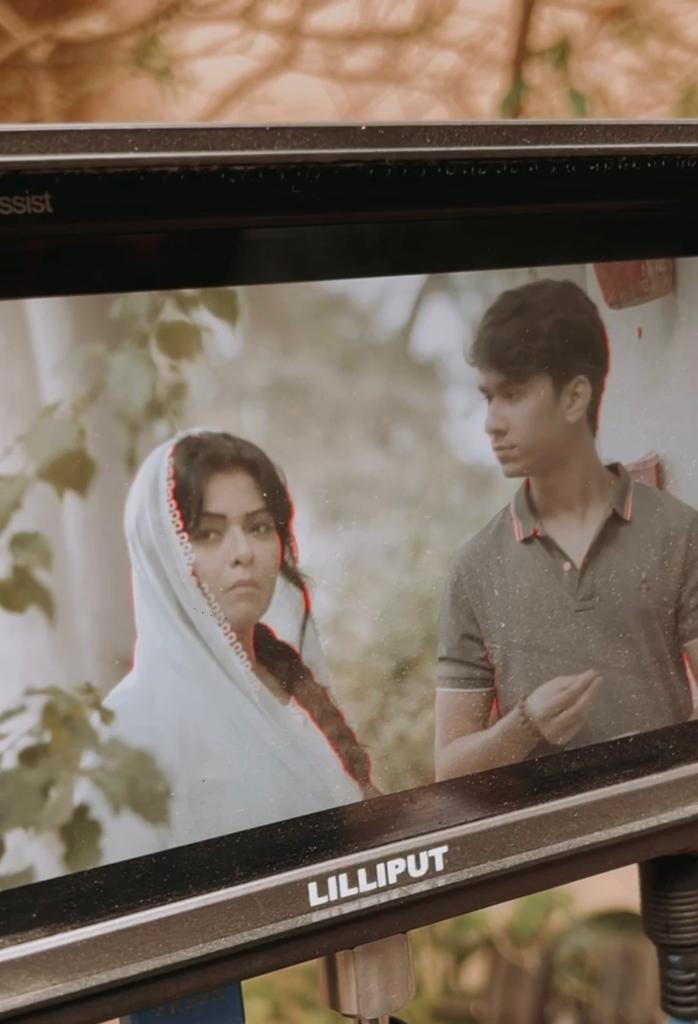


The undated picture shows a scene from the set of Pakistani drama 'Mayi Ri' being filmed in Karachi, Pakistan. (Photo courtesy: Maria Wasti)

The new drama serial revolves around a household with two brothers, Zaheer and Habib, along with their families. Ailing Zaheer’s final wish is to see his daughter, Ainee, married, and he insists on marrying her off to her brother’s son, Fakhir. The drama unfolds as this decision dramatically changes the lives of both families.

Wasti portrays Hareem-e-Samina, a victim of child marriage herself in the play, who is compelled to accept her circumstances. She will appear on the screen as Fakhir’s mother who is forced to marry her cousin at a young age. 

Wasti emphasized the importance of the topic and expressed her satisfaction with production houses and channels working on such meaningful subjects.

“It will at least leave something for the viewer to ponder on and may prevent them from [following the practice],” she added.

Wasti pointed out that there are laws in Pakistan to prevent child marriages but expressed her disappointment over their inadequate implementation.

Samar Jafri, who portrays Fakhir, shared his satisfaction in confronting a social practice that has devastated many lives in the country.
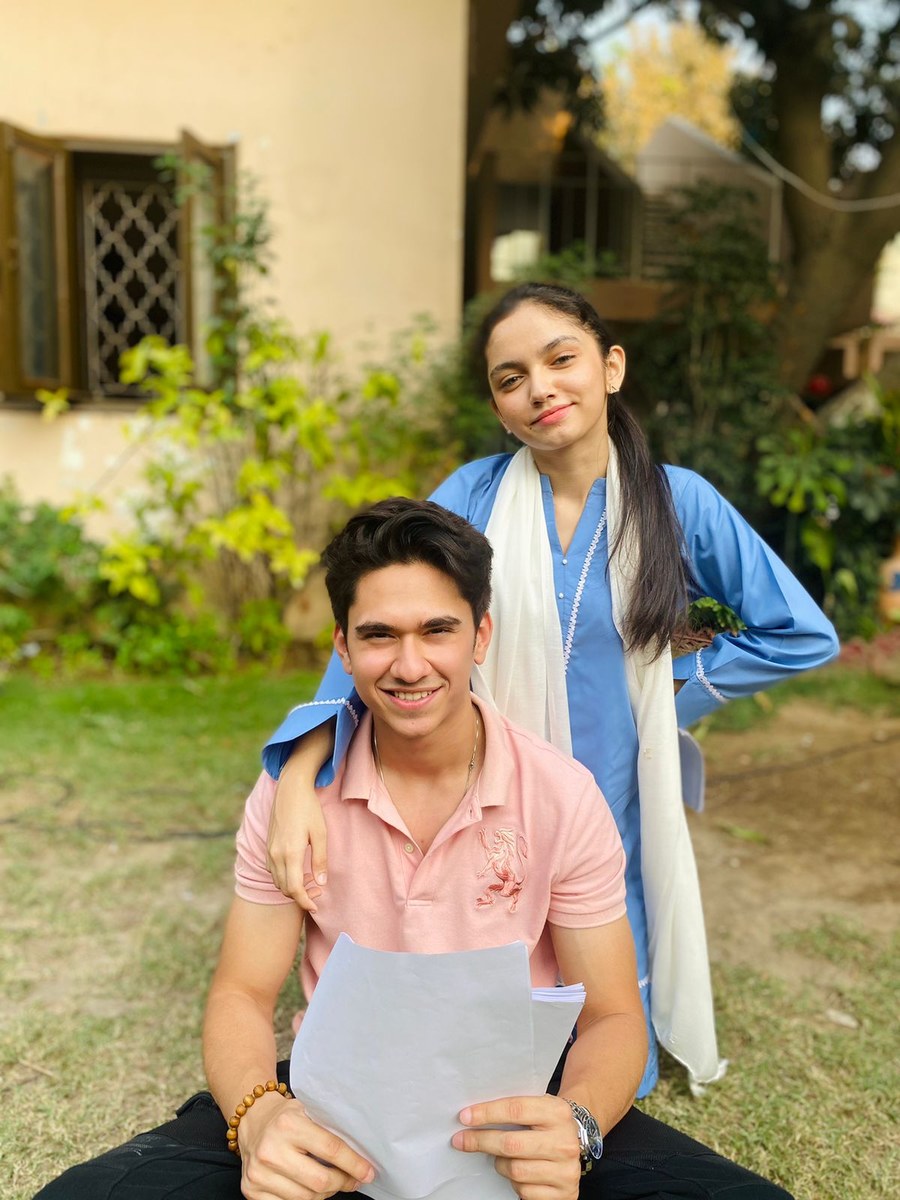


The undated picture shows actors Aina Asif and Samar Jafri posing for a picture on the sets of Pakistani Drama 'Mayi Ri' in Karachi last month. (Photo courtesy: Samar Jafri)

“Marriage is a very beautiful relationship but at the right age,” he said. “Child marriage puts an end to childhood.”

“Mayi Ri” will mark Jafri’s debut in a drama serial in the lead role. In the past, he has been a part of Anwar Maqsood’s theater plays, like “Pawney 14 August” and “Sawa 14 August,” along with short films, telefilms, and over 50 television commercials.

He is also a musician who writes, sings and performs songs.

“It is extremely important to highlight such themes on television because people look up to actors,” he added. “If it is a good message, it will give food for thought to the audience.”

Produced under the banner of Big Bang Entertainment, the director of the play, Syed Meesam Naqvi, said “Mayi Ri” was based on a real-life incident and highlighted several other themes in addition to child marriage.

“The drama is not just about child marriage,” he said. “We have tried to put forth a big issue in a simple manner to make it easier for the audience to digest. It revolves around an ordinary home where people have plenty of other issues too.”

However, Naqvi pointed out that child marriages were as prevalent in urban areas as in rural settings, adding this was one major aspect the drama wanted to highlight.

“It’s not just about girl but also the story of the boy who is married at a young age,” he continued. “His career is also at stake. Child marriage leads to several issues, including medical problems, psychological challenges, and educational issues. Our focus is on education.”
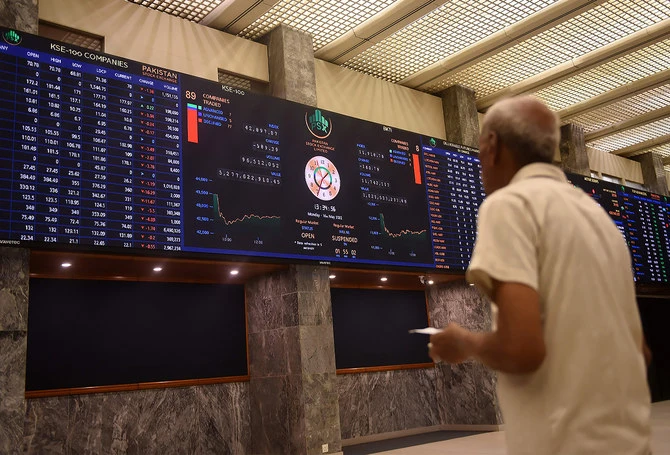
Pakistan’s OGDC ramps up unconventional gas plans

Updated 05 December 2025
Follow

Pakistan’s OGDC ramps up unconventional gas plans

  • Pakistan has long been viewed as having potential in tight and shale gas but commercial output has yet to be proved
  • OGDC says has tripled tight-gas study area to 4,500 square km after new seismic, reservoir analysis indicates potential

ISLAMABAD: Pakistan’s state-run Oil & Gas Development Company is planning a major expansion of unconventional gas developments from early next year, aiming to boost production and reduce reliance on imported liquefied natural gas.

Pakistan has long been viewed as having potential in both tight and shale gas, which are trapped in rock and can only be released with specialized drilling, but commercial output has yet to be proved.

Managing Director Ahmed Lak told Reuters that OGDC had tripled its tight-gas study area to 4,500 square kilometers (1,737 square miles) after new seismic and reservoir analysis indicated larger potential. Phase two of a technical evaluation will finish by end-January, followed by full development plans.

The renewed push comes after US President Donald Trump said Pakistan held “massive” oil reserves in July, a statement analysts said lacked credible geological evidence, but which prompted Islamabad to underscore that it is pursuing its own efforts to unlock unconventional resources.

“We started with 85 wells, but the footprint has expanded massively,” Lak said, adding that OGDC’s next five-year plan would look “drastically different.”

Early results point to a “significant” resource across parts of Sindh and Balochistan, where multiple reservoirs show tight-gas characteristics, he said.

SHALE PILOT RAMPS UP

OGDC is also fast-tracking its shale program, shifting from a single test well to a five- to six-well plan in 2026–27, with expected flows of 3–4 million standard cubic feet per day (mmcfd) per well.

If successful, the development could scale to hundreds or even more than 1,000 wells, Lak said.

He said shale alone could eventually add 600 mmcfd to 1 billion standard cubic feet per day of incremental supply, though partners would be needed if the pilot proves viable.

The company is open to partners “on a reciprocal basis,” potentially exchanging acreage abroad for participation in Pakistan, he said.

A 2015 US Energy Information Administration study estimated Pakistan had 9.1 billion barrels of technically recoverable shale oil, the largest such resource outside China and the United States.

A 2022 assessment found parts of the Indus Basin geologically comparable to North American shale plays, though analysts say commercial viability still hinges on better geomechanical data, expanded fracking capacity and water availability.

OGDC plans to begin drilling a deep-water offshore well in the Indus Basin, known as the Deepal prospect, in the fourth quarter of 2026, Lak said. In October, Turkiye’s TPAO with PPL and its consortium partners, including OGDC, were awarded a block for offshore exploration.

A combination of weak gas demand, rising solar uptake and a rigid LNG import schedule has created a surplus of gas that forced OGDC to curb output and pushed Pakistan to divert cargoes from Italy’s ENI and seek revised terms with Qatar.