

Saudia to acquire 20 Airbus A321neo aircraft by 2026

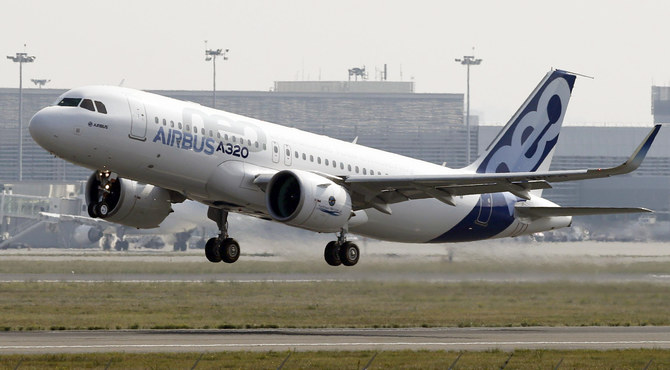
The aircraft provides a new level of comfort, carrying 180 to 220 passengers in a conventional two-class interior configuration. Reuters/File
Short Url
Updated 01 August 2023
Follow

Saudia to acquire 20 Airbus A321neo aircraft by 2026

RIYADH: As part of its drive to meet growing demand, the Kingdom’s national carrier Saudia plans to add 20 fuel-efficient Airbus A321neo aircraft to its fleet by 2026. 

The aircraft carry 180 to 220 passengers in a conventional two-class interior configuration, and is part of the A320 family — the world’s most widely used single-aisle aircraft family. 

Entering global services in 2016, the A320 family has saved 20 million tons of carbon dioxide by incorporating new fuel-efficient engines, cabin innovations, and wing tips known as Sharklets which reduce drag caused by lift.  

It was this ability to run on significantly less fuel that attracted the aircraft to Saudia.

“Our priority is to offer the best guest experience possible and to bring the world to Saudi Arabia, and we will continue to purchase state-of-the-art aircraft from the world’s top manufacturers to deliver on that promise,” CEO of Saudia Ibrahim Koshy said.  

He added: “We commend Airbus for continuously looking to improve the performance of their aircraft, which goes in line with Saudia’s ambition to provide the best guests experience possible while contributing to make aviation more sustainable.”  

The A320neo operate with a 20 percent decrease in fuel consumption and CO2 emissions compared to prior generation aircraft, as well as a 50 percent decline in noise footprint, a 5 percent drop in airframe maintenance costs, and a 14 percent cutback in cash operating expenses per sea.

The partnership between Saudia and Airbus aligns with the Saudi Aviation Strategy objectives, which aims to establish the Kingdom as a market leader in the sector by promoting customer satisfaction, boosting safety and fostering environmental sustainability.  

The strategy also supports Saudia’s plans for growth as the airline strives to welcome 330 million tourists to the Kingdom by 2030.  

The airline’s fleet, which includes models from Boeing and Airbus, has grown to a total of 140 aircraft in the first half of 2023.  

Furthermore, Saudia was placed 23rd in Skytrax’s list of the world’s top airlines for 2023, owing to the rapid expansion of its international network. 

The full-service airline rose 11 spots from last year’s ranking of 34, making it one of the region’s fastest-growing carriers. 

According to Saudia’s performance report released in July, over 13.7 million guests were transported on both domestic and international routes, recording a 24 percent growth in the first half of 2023, compared to the same period last year. 

The increase came through 85,400 flights, representing 6 percent growth, in addition to a 22 percent rise in flying hours to a total of 261,600 hours. 

International transported guests reached a total of 7.4 million in the first half of 2023, representing a 52 percent increase. 

Furthermore, the airline conducted 37,600 intenational flights, indicating a 30 percent expansion. 

European gas prices soar almost 50% as Iran conflict halts Qatar LNG output

Updated 02 March 2026
Follow

European gas prices soar almost 50% as Iran conflict halts Qatar LNG output

  • Analysts warn prolonged disruption could push prices higher
  • Some shipments of oil, LNG through Strait of Hormuz suspended
  • Benchmark Asian LNG price up almost 39 percent

LONDON: ​Benchmark Dutch and British wholesale gas prices soared by almost 50 percent on Monday, after major liquefied natural gas exporter Qatar Energy said it had halted production due to attacks in the Middle East.

Qatar, soon to cement its role as the world’s second largest LNG exporter after the US, plays a major role in balancing both Asian and European markets’ demand of LNG.

Most tanker owners, oil majors and ‌trading houses ‌have suspended crude oil, fuel and liquefied natural ​gas shipments ‌via ⁠the ​Strait of ⁠Hormuz, trade sources said, after Tehran warned ships against moving through the waterway.

Europe has increased imports of LNG over the past few years as it seeks to phase out Russian gas following Russia’s invasion of Ukraine.

Around 20 percent of the world’s LNG transits through the Strait of Hormuz and a prolonged suspension or full closure would increase global competition for other ⁠sources of the gas, driving up prices internationally.

“Disruptions to ‌LNG flows would reignite competition between ‌Asia and Europe for available cargoes,” said ​Massimo Di Odoardo, vice president, gas ‌and LNG research at Wood Mackenzie.

The Dutch front-month contract at the ‌TTF hub, seen as a benchmark price for Europe, was up €14.56 at €46.52 per megawatt hour, or around $15.92/mmBtu, by 12:55 p.m. GMT, ICE data showed.

Prices were already some 25 percent higher earlier in the day but extended gains ‌after QatarEnergy’s production halt.

Benchmark Asian LNG prices jumped almost 39 percent on Monday morning with the S&P Global ⁠Energy Japan-Korea-Marker, widely used ⁠as an Asian LNG benchmark, at $15.068 per million British thermal units, Platts data showed.

“If LNG/gas markets start to price in an extended period of losses to Qatari LNG supply, TTF could potentially spike to 80-100 euros/MWh ($28-35/mmBtu),” Warren Patterson, head of commodities strategy at ING, said. The British April contract was up 40.83 pence at 119.40 pence per therm, ICE data showed.

Europe is also relying on LNG imports to help fill its gas storage sites which have been depleted over the winter and are currently around 30 percent full, the latest data from Gas Infrastructure ​Europe showed. In the European carbon ​market, the benchmark contract was down €1.10 at €69.17 a tonne