Pakistan signs framework agreement with Azerbaijan for LNG procurement on flexible terms

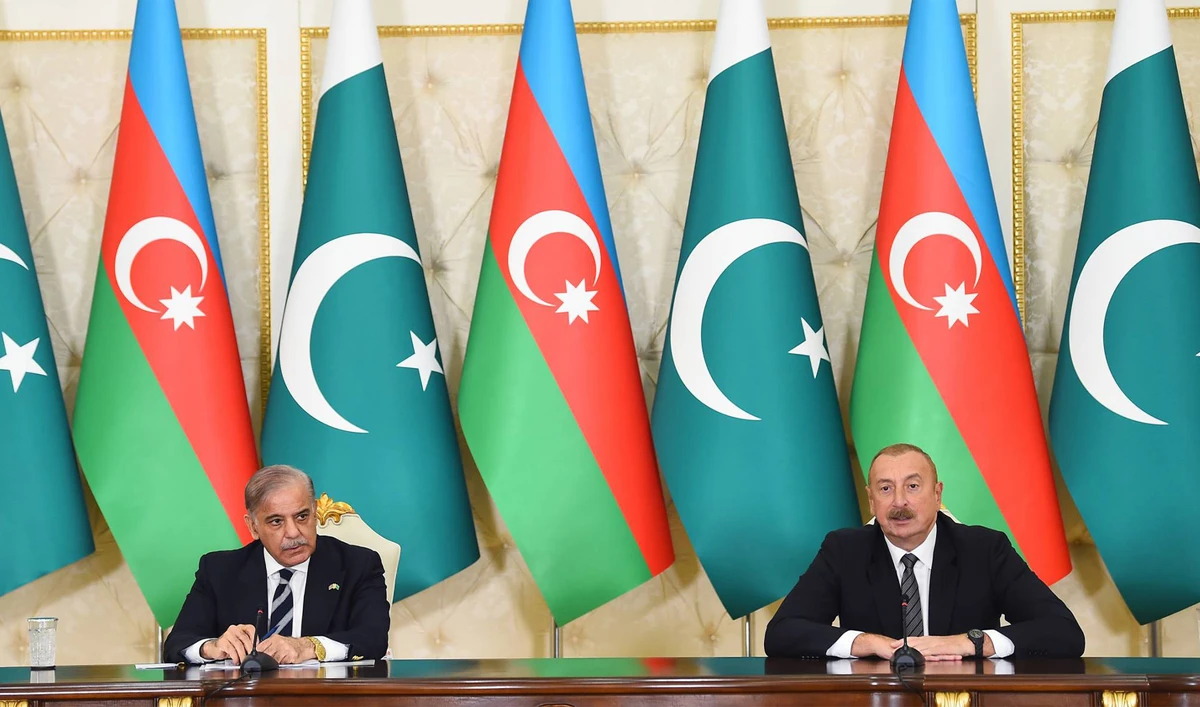
Pakistan Prime Minister Shehbaz Sharif (left) meets President of the Republic of Azerbaijan Ilham Aliyev inn Baku, Azerbaijan, on June 15, 2023. (President Office of Azerbaijan/File)
Short Url
Updated 24 July 2023
Follow

Pakistan signs framework agreement with Azerbaijan for LNG procurement on flexible terms

  • Under the deal, Azerbaijan will offer Pakistan 12 low-cost LNG cargoes a year
  • There will be no penalty for Pakistan in case it decides not to purchase a cargo

ISLAMABAD: Pakistan has signed a framework agreement with Azerbaijan for the import of low-cost liquefied natural gas (LNG) on flexible terms for a period of one year, PM Shehbaz Sharif said on Monday, hailing the development as a “major milestone.” 

The agreement was signed between the Pakistan LNG Limited (PLL), a state-owned entity mandated to procure LNG, and Azeri firm, SOCAR, in Lahore, with PM Sharif in attendance. 

Under the deal, Azerbaijan will offer Pakistan 12 low-cost LNG cargoes per annum, however, Islamabad will not be bound for compulsory buying of the gas. 

“The life of this agreement is one year which is extendable to one more year,” PM Sharif said, addressing attendees at the signing ceremony. 

“SOCAR will offer an LNG cargo to Pakistan every month and Pakistan would decide whether we have to buy this cargo at this price.” 
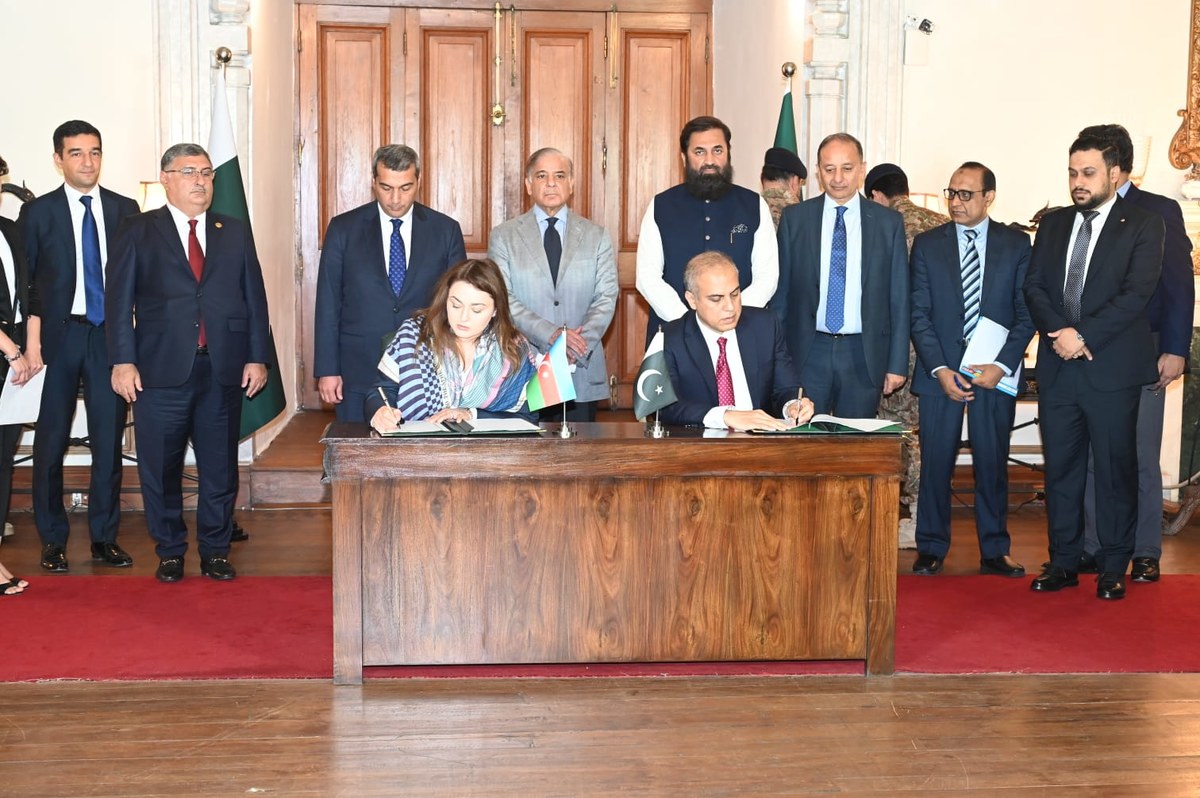


Managing Director of Pakistan LNG Limited, Masood Nabi (right) and CEO of Azeri firm, SOCAR, Mariam Almaszade (left), are pictured signing an agreement for LNG cargo in Lahore on July 24, 2023, on behalf of Pakistan and Azerbaijan respectively. (Government of Pakistan)

The prime minister said there would be no penalty for Pakistan in case it decides not to purchase cargo. He described the agreement as a “major milestone” in fraternal relations between Pakistan and Azerbaijan, and the Azerbaijan president for playing a pivotal role in the realization of the deal. 

The development comes amid Pakistan’s efforts to diversify its energy sources. The South Asian country recently imported 100,000 metric ton of crude oil from Russia for the first time, however, it awaits the refining report from Pakistan Refinery Limited (PRL). 

Pakistan currently meets its LNG requirement through long-term supply contracts. The country has two long-term supply contracts with Qatar, one signed in 2016 for 3.75 million metric tons of LNG per annum, and another signed in 2021 for 3 million metric tons. 

The cash-strapped South Asian country has remained out of the spot LNG market since June 2022 due to the skyrocketing prices which hit a record high of $69.9 per million British thermal units (mmBtu) for Asia deliveries in August last year and a financial crunch at home. 

Last week, the PLL also received offers for the supply of super chilled fuel from Singapore-based Trafigura in response to a tender it had issued. 

Pakistan cuts key rate by 50 bps to 10.5% in surprise move after holding for four meetings

Updated 9 sec ago
Follow

Pakistan cuts key rate by 50 bps to 10.5% in surprise move after holding for four meetings

  • An IMF staff report last week warned against premature easing, with analysts expecting SBP to hold the policy rate
  • Inflation remains within the bank’s target band, but analysts expect price pressures to rise later in the fiscal year

KARACHI: Pakistan’s central bank cut its key interest rate by 50 basis points to 10.5 percent on Monday, the bank said on its website, breaking a hold on the rate for four meetings in a move that surprised analysts and came despite IMF warnings to avoid premature easing.

All 12 analysts in a Reuters poll had expected the State Bank of Pakistan (SBP) to hold the policy rate at 11 percent.

Monday’s reduction takes the total easing since rates peaked at 22 percent to 1,150 basis points, after the SBP delivered 1,100 bps of cuts between June 2024 and May 2025 and then held the rate steady for four meetings before Monday’s move.

Inflation edged down to 6.1 percent in November from 6.2 percent in October, within the SBP’s 5 percent–7 percent target band, with analysts expecting it to rise again later in FY26 as base effects fade and food and transport prices stay volatile.

An IMF staff report last week warned against premature easing, calling for policy to remain data-dependent to anchor expectations and rebuild external buffers, even as Pakistan received a $1.2 billion disbursement under its loan program.