



ISLAMABAD: Pakistan has signed a framework agreement with Azerbaijan for the import of low-cost liquefied natural gas (LNG) on flexible terms for a period of one year, PM Shehbaz Sharif said on Monday, hailing the development as a “major milestone.”
The agreement was signed between the Pakistan LNG Limited (PLL), a state-owned entity mandated to procure LNG, and Azeri firm, SOCAR, in Lahore, with PM Sharif in attendance.
Under the deal, Azerbaijan will offer Pakistan 12 low-cost LNG cargoes per annum, however, Islamabad will not be bound for compulsory buying of the gas.
“The life of this agreement is one year which is extendable to one more year,” PM Sharif said, addressing attendees at the signing ceremony.
“SOCAR will offer an LNG cargo to Pakistan every month and Pakistan would decide whether we have to buy this cargo at this price.”
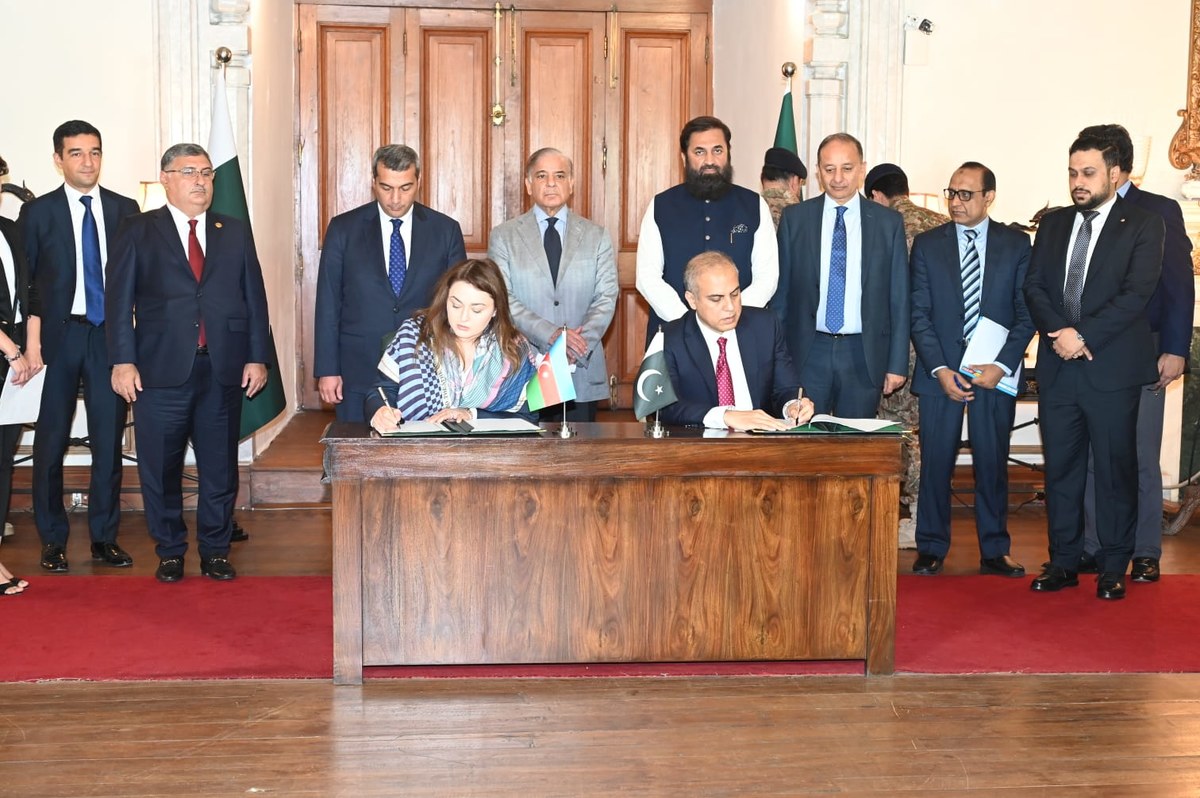
Managing Director of Pakistan LNG Limited, Masood Nabi (right) and CEO of Azeri firm, SOCAR, Mariam Almaszade (left), are pictured signing an agreement for LNG cargo in Lahore on July 24, 2023, on behalf of Pakistan and Azerbaijan respectively. (Government of Pakistan)
The prime minister said there would be no penalty for Pakistan in case it decides not to purchase cargo. He described the agreement as a “major milestone” in fraternal relations between Pakistan and Azerbaijan, and the Azerbaijan president for playing a pivotal role in the realization of the deal.
The development comes amid Pakistan’s efforts to diversify its energy sources. The South Asian country recently imported 100,000 metric ton of crude oil from Russia for the first time, however, it awaits the refining report from Pakistan Refinery Limited (PRL).
Pakistan currently meets its LNG requirement through long-term supply contracts. The country has two long-term supply contracts with Qatar, one signed in 2016 for 3.75 million metric tons of LNG per annum, and another signed in 2021 for 3 million metric tons.
The cash-strapped South Asian country has remained out of the spot LNG market since June 2022 due to the skyrocketing prices which hit a record high of $69.9 per million British thermal units (mmBtu) for Asia deliveries in August last year and a financial crunch at home.
Last week, the PLL also received offers for the supply of super chilled fuel from Singapore-based Trafigura in response to a tender it had issued.


