
JEDDAH: A few months ago, Mohammed Munshi, a 40-year-old Saudi businessman, who had always struggled with his weight, was rushed to hospital after developing strange symptoms.
“For two weeks straight, I experienced nausea, anxiety, and consumed sugary drinks excessively due to a bitter taste in my mouth that altered the taste of everything, including water,” Munshi told Arab News.
“I felt constantly hot, my neck turned black, and my vision significantly weakened, but I didn’t understand why.”
When doctors checked Munshi’s blood sugar levels, his lab results showed a reading of 900. Anything above 500 is considered dangerous.
Munshi was suffering from diabetes mellitus — a disease related to the body’s inadequate control of blood glucose levels.
“Even after four doses of insulin, my levels remained dangerously high, and the symptoms persisted,” he said.
Further medical tests revealed that Munshi had developed diabetic ketoacidosis, a serious and potentially life-threatening condition resulting from prolonged high blood sugar levels.
For a week after his diagnosis, he was not allowed to eat, his water intake was restricted to just three bottle caps per day, and he received daily insulin doses to balance his levels.
“It took me a while to realize how unhealthy my lifestyle was, the excessive food consumption, and the disregard for the red flags,” he said.
Munshi is among millions of Saudis who have followed unhealthy lifestyles for years, resulting in high obesity rates in the Kingdom.
In response to the profound health and social implications of the obesity problem, the Saudi government has implemented a wide range of policies under its Vision 2030 plan, aiming to create a healthier population and improve quality of life.
Once considered an affliction of only the most affluent, obesity has in recent decades become a significant global health concern at all levels of society. That is why Saudi Arabia is committing resources to promoting healthy diets and active lifestyles.
Obesity, a complex disease that has reached pandemic proportions worldwide, has nearly tripled in prevalence since 1975. This surge is widely attributed to the adoption of increasingly sedentary lifestyles and unhealthy diets.
Globally, more than 1 billion people are deemed to be overweight, with a third of them classified as obese. The World Health Organization says approximately 4 million deaths per year are associated with the disease.
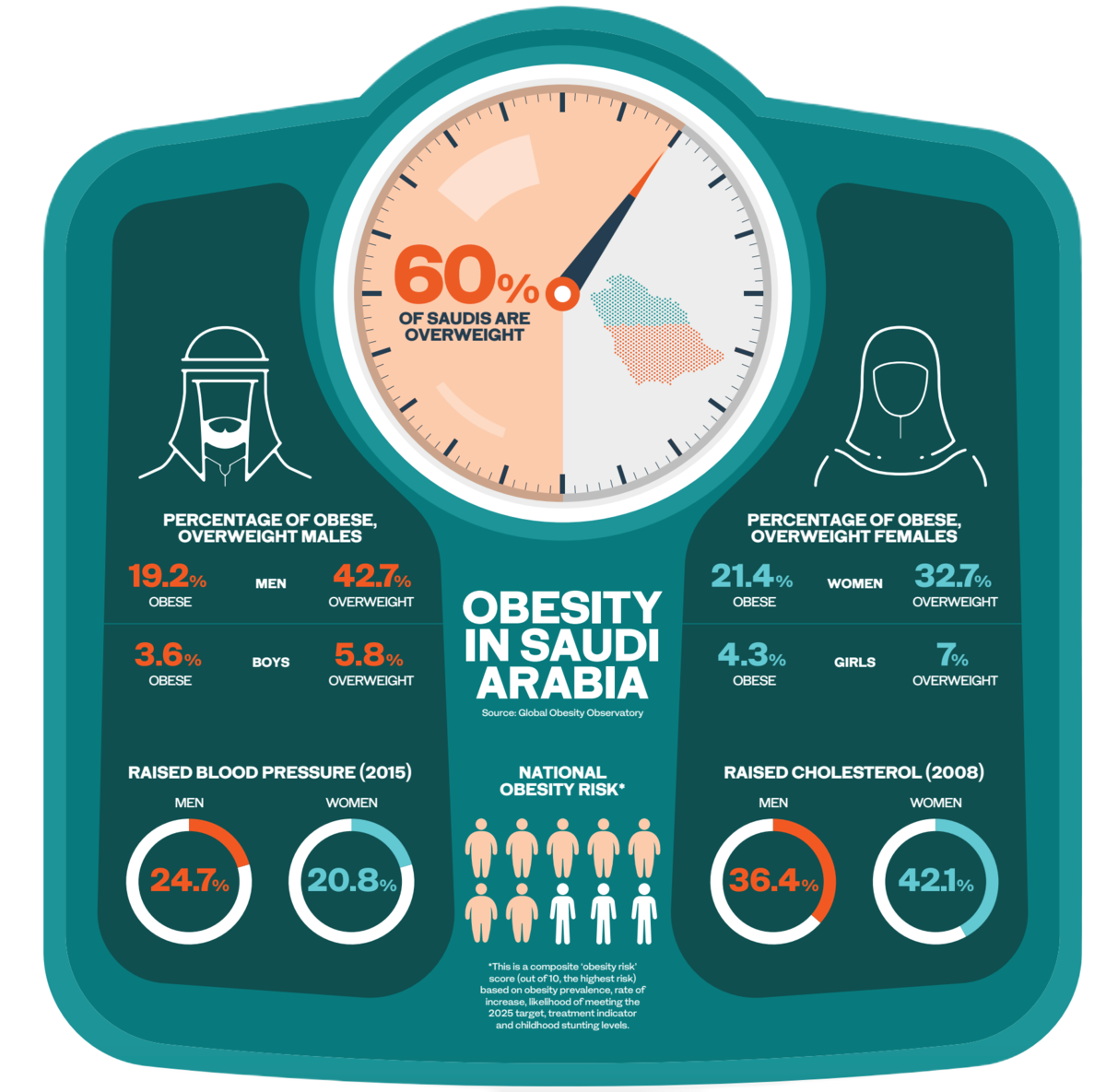
A study published in 2022 by the Global Obesity Observatory revealed that approximately 60 percent of Saudi Arabia’s adult population is overweight, with 20 percent classified as obese.

The Kingdom has implemented policies under Vision 2030 to help promote weight loss and improve quality of life. (Shutterstock)
Among children, 10.5 percent are overweight and 4.1 percent are obese. Recent data from the Kingdom’s leading health bodies indicate an increase in childhood obesity, while the number of obese adults has decreased compared to a decade ago.
The Saudi government says it is committed to providing seamless and equal access to engaging, world-class sporting events, competitions, and amenities for all citizens, residents and tourists, regardless of age, gender, background, or ability.
The Sports for All Federation, the main organization responsible for developing community activity in the Kingdom, emphasized the importance of being physically active to curb the uptick of obesity rates.
SFA highlights the important role physical activity plays in helping people to lead healthy lives and also the positive impact sport has on society as a whole. It works to ensure all members of society are equipped with the tools and support to practice daily physical activities.
The federation’s goal is to inspire young people to develop life-long physical activity habits and literacy. Initiatives like the Summer Camps Program, designed for boys and girls aged 6 to 17, emphasize the benefits of physical activity.
The program places emphasis on the benefits of physical activity, exposing participants, from a very early age, to the positive impact of sport on their lives and their communities. This allows it to combat issues such as obesity as early and effectively as possible.

“We aim to empower communities across the Kingdom to be as active and healthy as possible,” said Prince Khaled bin Alwaleed, president of the Saudi Sports for All Federation. (Supplied)
Established in 2018, the SFA has successfully increased physical activity levels in Saudi Arabia through their diverse range of health and fitness-focused programs, experiences and partnerships.
As a result, there has been a significant rise in physical activity levels across the Kingdom, with more people taking advantage of the available amenities.
According to the General Authority for Statistics, more than 48.2 percent of the population now engage in physical activity for more than 30 minutes a week.
Lifestyle and environmental factors play a significant role in reducing the risk of being overweight and obese among children and young adults. Unhealthy eating habits are a key contributor.
Dr. Nabeela Al-Abdullah, an associate professor in public health and epidemiology at King Abdulaziz University in Jeddah, has raised concerns about the lack of teaching in schools concerning good dietary habits.
“The ministries of education and health are the main responsible bodies for the health of children outside of their homes,” Al-Abdullah told Arab News.
“Upon reviewing results from field visits conducted by our specialized students to several girls’ and boys’ schools, reports filed do not reflect the true situation especially given a recent MOH (Ministry of Health) initiative targeting school children.
“Canteens don’t have healthy options, obesity rates among children were high, including undernutrition. We need a health policy that focus on nutrition targeting children to build a healthy community.”
Al-Abdullah emphasized the need to intensify public health awareness campaigns that include nutritionists, educational institutions and health facilities, to target not just the most vulnerable but also broader society.
“There simply is not enough awareness. It’s a fact,” she added.
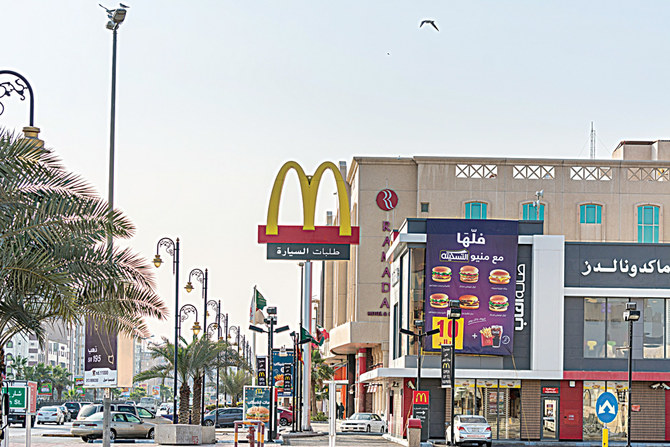
Obesity, a complex disease that has reached pandemic proportions worldwide, has nearly tripled in prevalence since 1975. This surge is widely attributed to the adoption of increasingly sedentary lifestyles and unhealthy diets. (Shutterstock)
Obesity is influenced by a variety of factors, including genetics, environment, and dietary choices influenced by numerous modifiable and non-modifiable elements, including family background, demographics, and lifestyle.
While no single nutritional approach can completely eliminate the risk of obesity, experts say it is a matter of changing behaviors where possible to improve health outcomes.
“The best diet anyone can benefit from is the diet you can adhere to,” said Mona Anan Aldubyan, a dietician specializing in obesity and weight management, told Arab News.
“Meta-analytical research of different diet studies’ results and their collective impact are one of the same on average. There’s no one-size-fits-all diet and the best diet is the one that you can stick to, of course within the parameters of a healthy diet.”
Adherence is key to the success of a diet plan to change habits and reduce weight, she said.
“While (a) special focused diet can be beneficial to some people that need it, it is crucial to adopt a comprehensive approach to reducing the risk of obesity — through finding a balanced diet, incorporating regular physical activity, personal dietary preference, financial capabilities, availability of goods, and what is a cultural norm — to initiate long-term lifestyle changes,” said Aldubyan.
“How to keep the weight off is the challenge because your body’s physiological changes and adaptation to the new weight are drastic and can go through phases, such as sending mixed messages to your brain that you’re hungry or in need of sugar. Such phases occur and it’s a long-term fight. Obesity is a long-term fight.”
Interventions and awareness campaigns can be transformative for people like Munshi, who is turning his life around.
“Today, I work out five times a week,” Munshi told Arab News. “I’ve adhered to a healthy, sugar-free, low-carb diet, and my blood sugar levels have significantly improved.
“My ultimate goal is to be able to play football with my son.”