KSrelief celebrates Youth Skills Day at Zaatari camp

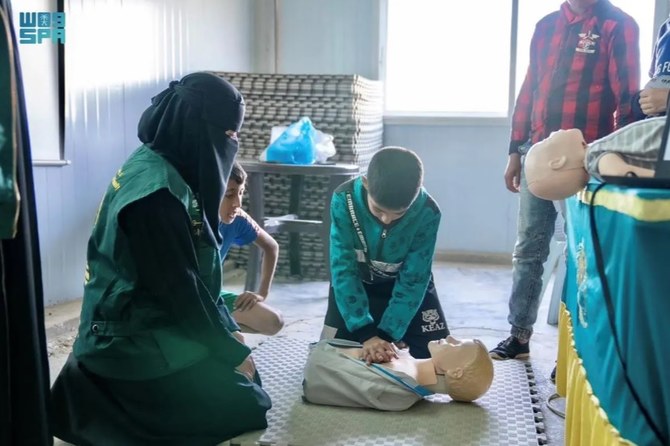
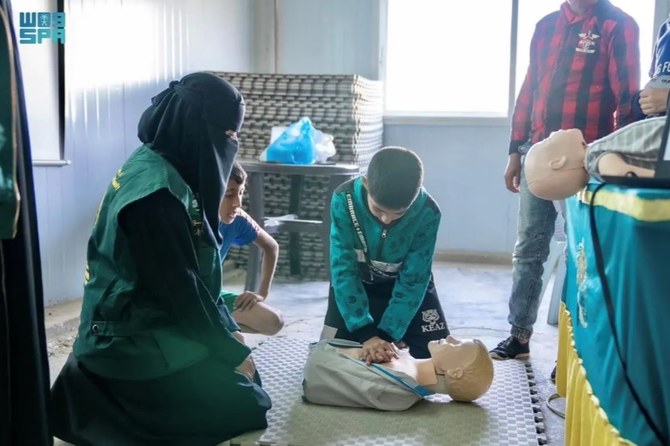
King Salman Humanitarian Aid and Relief Center’s Saudi Center for Community Service recently celebrated Youth Skills Day at the Zaatari Syrian refugee camp in Jordan. (SPA)
Short Url
Updated 21 July 2023
Follow

KSrelief celebrates Youth Skills Day at Zaatari camp

  • Awareness and training activities in various specializations were organized

AMMAN: King Salman Humanitarian Aid and Relief Center’s Saudi Center for Community Service recently celebrated Youth Skills Day at the Zaatari Syrian refugee camp in Jordan.
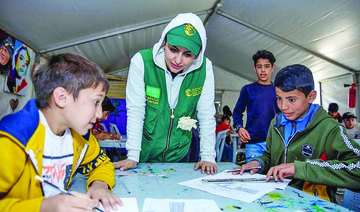
The celebration highlighted the skills needed for youth to find work that matches their interests and abilities.
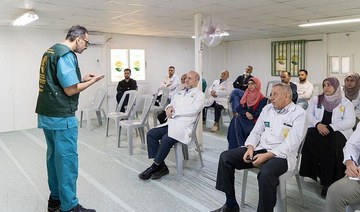
Awareness and training activities in various specializations were organized with a focus on the importance and positive results of working.
Sewing machines were distributed to women enrolled in the course at the center for community service.
This comes as part of the series of humanitarian and relief projects provided by the Kingdom to the families living in the camp. Projects also aim to provide families with social and practical services, and improve their professional skills.



On World Wildlife Day, WWF warns wildlife crime, overharvesting threaten Pakistan’s natural heritage 

Updated 4 sec ago
Follow

On World Wildlife Day, WWF warns wildlife crime, overharvesting threaten Pakistan’s natural heritage 

  • Pakistan identified as both source and transit route for illegal wildlife trade
  • Unsustainable harvesting of medicinal plants puts biodiversity, rural livelihoods at risk

ISLAMABAD: WWF-Pakistan on Tuesday called for urgent national action to combat illegal wildlife trade and unsustainable harvesting practices, warning that wildlife crime and overexploitation are placing Pakistan’s biodiversity under increasing pressure.

Marking World Wildlife Day 2026, the conservation group said Pakistan’s ecosystems are under strain from trafficking of animals and plants, as well as rising commercial demand for high-value medicinal and aromatic species.

Globally, more than 20 percent of medicinal plant species are threatened with extinction due to habitat loss, climate change and illegal trade. WWF-Pakistan said similar pressures are visible domestically, where wildlife trafficking and indiscriminate plant extraction are eroding ecosystem stability and community livelihoods.

“Effective conservation cannot succeed without strong enforcement and informed communities,” said Rab Nawaz, Senior Director Programmes at WWF-Pakistan. 

“By strengthening institutional capacity and engaging local stakeholders, we are improving Pakistan’s ability to prevent wildlife crime and protect vulnerable species before they disappear from the wild.”

WWF-Pakistan said the country functions both as a source and transit route for illegal wildlife trade, with reptiles, mammals and high-value medicinal plants among the most targeted species. The organization said it is working with government departments and partners to strengthen enforcement systems, improve inter-agency coordination and build the capacity of wildlife officials and judicial actors.

“We have developed a comprehensive training curriculum and an Illegal Wildlife Trade Prevention Strategy and are conducting trainings nationwide on SMART monitoring, species identification, wildlife crime investigation, ranger safety, safe animal handling, and community engagement,” said Muhammad Jamshed Iqbal Chaudhry, Senior Manager Conservation WWF-Pakistan. “More than 1,200 individuals- including community members, students, journalists, and local leaders- have been engaged through awareness sessions and webinars.”

The group cited recent field-based conservation efforts at Deva Vatala National Park, carried out with local communities and the Azad Jammu and Kashmir Wildlife Department, which led to the rescue and release of species including rock pythons, Indian pangolins, barking deer and Alexandrine parakeets.

This year’s World Wildlife Day theme, “Medicinal and Aromatic Plants: Conserving health, heritage and livelihoods,” highlights growing concern over commercial exploitation of plant species widely used in traditional medicine and the herbal industry.

WWF-Pakistan said species such as Saussurea costus (Kuth), Nardostachys jatamansi (Jatamansi) and Commiphora wightii (Guggal) are often harvested indiscriminately, limiting natural regeneration. In arid regions like Balochistan and Sindh, Guggal is extracted for its resin, while high-altitude species including Ephedera and Bergenia ciliata (Zakhm-e-hayat) are sourced from northern forests.

“Medicinal and aromatic plants are deeply intertwined with Pakistan’s natural heritage, health care systems, and rural economies,” Rab Nawaz said. “Protecting these species through sustainable harvesting, stronger regulation, and community engagement is essential to safeguard both biodiversity and livelihoods for future generations.”

WWF-Pakistan warned that continued overexploitation could undermine ecosystem services that communities depend on and called for stronger regulation, enforcement and community-led conservation initiatives to prevent irreversible biodiversity loss.