

SALIC acquires 10.7% of Brazilian poultry giant BRF

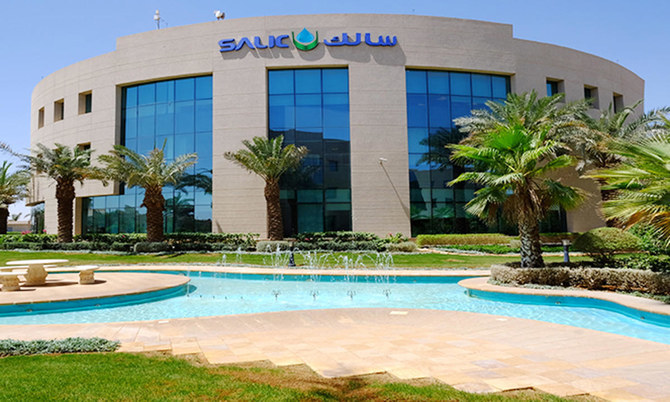
This investment is part of SALIC’s plans to widen its footprint globally and locally. (File)
Short Url
Updated 19 July 2023
Follow

SALIC acquires 10.7% of Brazilian poultry giant BRF

RIYADH: The Kingdom is all set to make a mark in the global food industry space with Saudi Agricultural and Livestock Investment Co., or SALIC, acquiring 180 million shares of BRF, Brazil’s largest poultry producer. 

According to the Saudi Press Agency, the Public Investment Fund-owned company acquired a 10.7 percent stake in BRF for SR1.27 billion ($340 million), demonstrating its commitment to the food security of the Kingdom. 

The SPA report stated that this investment is part of the company’s plans to widen its footprint globally and locally. It also emanates from the Saudi Vision 2030 to support long-term national development to ensure the sustainability of targeted basic food commodities. 

As poultry is one of the essential commodities in the Saudi market, SALIC sought to access the strategic food supply directly using its network of global investments and partnerships. 

However, Saudi Arabia has been planning to raise the percentage of its annual self-sufficiency in poultry, compared to the current rate, estimated at 43 kilograms per capita. 

The food company added that its investment in the BRF will also support its strategic directions to empower the local agri-food sector by bridging gaps along the value chain and benefiting from global expertise to raise the efficiency of local production. 

SALIC stressed that the investment in the poultry sector is an extension of its assets in major international companies to access animal protein sources to achieve food security goals in this sector at the local and global levels. 

The company added that it began a strategic investment and a qualitative partnership in 2016 with the Brazilian company Minerva Foods, one of the largest international companies in red meat, in addition to its acquisition of a 42.4 percent stake in the Saudi company Naqua, the world leader in aquaculture. 

BRF started its business 85 years ago and is the world’s third-largest poultry producer and the second-largest company in selling halal products worldwide. It is also the No. 1 brand of poultry products in Brazil, with an annual production capacity of over five million tons and over 90,000 workers in 130 countries. 


Multilateralism strained, but global cooperation adapting: WEF report

Updated 10 January 2026
Follow

Multilateralism strained, but global cooperation adapting: WEF report

DUBAI: Overall levels of international cooperation have held steady in recent years, with smaller and more innovative partnerships emerging, often at regional and cross-regional levels, according to a World Economic Forum report.

The third edition of the Global Cooperation Barometer was launched on Thursday, ahead of the WEF’s annual meeting in Davos from Jan. 19 to 23.

“The takeaway of the Global Cooperation Barometer is that while multilateralism is under real strain, cooperation is not ending, it is adapting,” Ariel Kastner, head of geopolitical agenda and communications at WEF, told Arab News.

Developed alongside McKinsey & Company, the report uses 41 metrics to track global cooperation in five areas: Trade and capital; innovation and technology; climate and natural capital; health and wellness; and peace and security.

The pace of cooperation differs across sectors, with peace and security seeing the largest decline. Cooperation weakened across every tracked metric as conflicts intensified, military spending rose and multilateral mechanisms struggled to contain crises.

By contrast, climate and nature, alongside innovation and technology, recorded the strongest increases.

Rising finance flows and global supply chains supported record deployment of clean technologies, even as progress remained insufficient to meet global targets.

Despite tighter controls, cross-border data flows, IT services and digital connectivity continued to expand, underscoring the resilience of technology cooperation amid increasing restrictions.

The report found that collaboration in critical technologies is increasingly being channeled through smaller, aligned groupings rather than broad multilateral frameworks.  

This reflects a broader shift, Kastner said, highlighting the trend toward “pragmatic forms of collaboration — at the regional level or among smaller groups of countries — that advance both shared priorities and national interests.”

“In the Gulf, for example, partnerships and investments with Asia, Europe and Africa in areas such as energy, technology and infrastructure, illustrate how focused collaboration can deliver results despite broader, global headwinds,” he said.

Meanwhile, health and wellness and trade and capital remained flat.

Health outcomes have so far held up following the pandemic, but sharp declines in development assistance are placing growing strain on lower- and middle-income countries.

In trade, cooperation remained above pre-pandemic levels, with goods volumes continuing to grow, albeit at a slower pace than the global economy, while services and selected capital flows showed stronger momentum.

The report also highlights the growing role of smaller, trade-dependent economies in sustaining global cooperation through initiatives such as the Future of Investment and Trade Partnership, launched in September 2025 by the UAE, New Zealand, Singapore and Switzerland.

Looking ahead, maintaining open channels of communication will be critical, Kastner said.

“Crucially, the building block of cooperation in today’s more uncertain era is dialogue — parties can only identify areas of common ground by speaking with one another.”