

Government dismisses possibility of Internet voting for overseas Pakistanis in next general elections

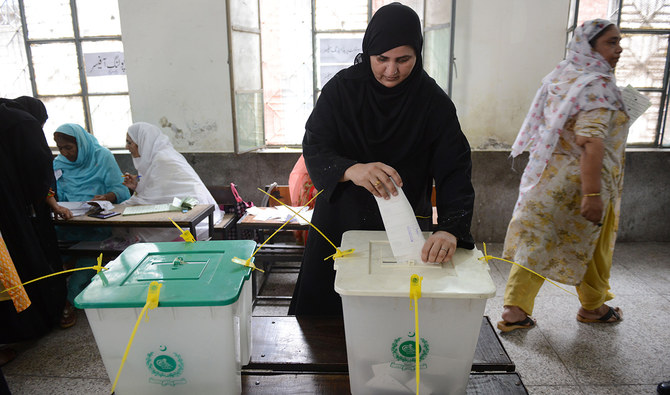
A woman casts her vote during Pakistan's general election at a polling station during the general election in Lahore on July 25, 2018. (AFP/File)
Short Url
Updated 19 July 2023
Follow

Government dismisses possibility of Internet voting for overseas Pakistanis in next general elections

  • Last year, the National Assembly passed the Election Amendment Bill to prevent the use of electronic voting machines
  • The country’s citizens living abroad make significant contributions to the national economy by sending remittances

ISLAMABAD: Pakistani citizens residing abroad will not be able to vote in the upcoming general elections via the Internet after the country’s law minister, Azam Nazeer Tarar, ruled out the possibility following an in-camera meeting of the parliamentary committee on electoral reforms.

Last year in May, Pakistan’s National Assembly passed the Election Amendment Bill, 2022, to revoke the voting rights for overseas Pakistanis and prevent the use of electronic voting machines (EVMs) in general elections.

The development took place after the ouster of former prime minister Imran Khan’s administration in a no-trust vote which had sanctioned the use of EVMs with the stated objective to make elections more transparent and inclusive.

The government maintained back then that the overseas Pakistanis were previous asset of the country and it did not want to snatch away their right to vote. However, it added that the election commission had opposed the use of EVMs since their potential of misuse and tampering was too high.

“Overseas Pakistanis willing to vote have the right to do so, but since the committee’s report and the Supreme Court’s report stated that Internet voting was not possible — pilot projects will not be allowed,” Pakistan’s Dawn newspaper quoted the law minister as saying after the parliamentary committee’s meeting.

Pakistani citizens working in other countries make major contributions to the country’s economy by sending remittances.

The country is scheduled to hold an electoral contest later this year after the current coalition administration finishes its tenure in August and gives way to a caretaker setup.


Pakistan reports decline in polio cases in 2025

Updated 4 sec ago
Follow

Pakistan reports decline in polio cases in 2025

  • Cases drop to 30 from 74 in 2024, with no new infections recorded since September
  • Authorities plan intensified targeted drives in 2026 to halt remaining transmission

ISLAMABAD: Pakistan reported a sharp decline in polio cases in 2025, with infections falling to 30 from 74 a year earlier, as intensified vaccination campaigns and improved surveillance helped curb the spread of the virus, health authorities said on Wednesday.

No new polio cases have been recorded anywhere in the country since September, said a statement, as Pakistan carried out six polio campaigns, including five nationwide drives, trying to reach children in high-risk areas and improve monitoring of virus circulation.

Despite the decline, the authorities cautioned that poliovirus continues to circulate in some districts, requiring sustained vigilance to prevent a resurgence.

“Targeted interventions, robust community engagement, and ongoing vaccination efforts remain essential to reach every missed child and prevent any resurgence,” the official statement said.

“Frontline health workers, security personnel, and local authorities continue to work in close coordination to maintain high immunity levels and ensure that Pakistan remains on course toward becoming polio-free,” it added.

The most recent nationwide campaign, conducted from Dec. 15 to 21, achieved more than 98 percent coverage across the country, including all four provinces, Azad Jammu and Kashmir, Gilgit-Baltistan and the capital, Islamabad.

Authorities reported an 18 percent reduction in the number of missed children compared with the previous round, with notable improvements in access and operations in southern Khyber Pakhtunkhwa, a longstanding challenge area.

Pakistan’s polio eradication drive relies on close coordination between health workers, security personnel and local authorities, amid ongoing resistance in some communities and access constraints in remote or insecure regions.

Officials said district-specific interventions, including improved microplanning, better deployment of vaccination teams and enhanced community outreach, were being used to address remaining gaps, particularly in parts of southern Khyber Pakhtunkhwa.

The statement said Pakistan plans to intensify targeted efforts in 2026 to interrupt the remaining transmission chains and move closer to eliminating the disease.