BRUSSELS: The European Union urged Azerbaijan and Armenia to refrain from “violence and harsh rhetoric” on Saturday at the latest round of talks in a tortuous peace process in which Russia is also pushing to retain a leading role.
EU Council President Charles Michel hosted Azerbaijani President Ilham Aliyev and Armenian Prime Minister Nikol Pashinyan for talks in Brussels aimed at drawing a line under more than three decades of hostilities.
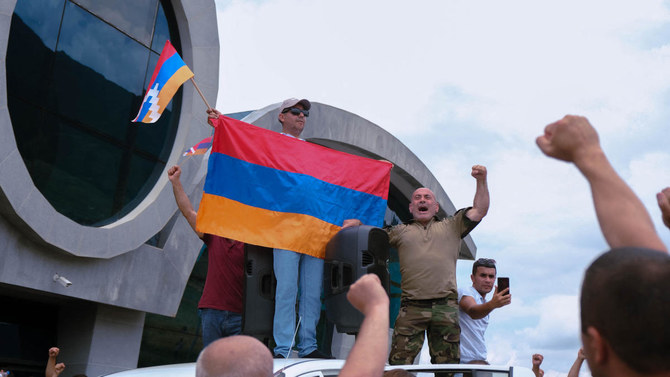
Since the collapse of the Soviet Union, the two countries have fought two wars over Nagorno-Karabakh, a small mountainous enclave that is part of Azerbaijan but populated by about 120,000 ethnic Armenians.
Armenia says the proposed peace treaty should provide special rights for them and guarantee their security. Azerbaijani Foreign Minister Jeyhun Bayramov rejected that demand in an interview with Reuters in June, saying it was unnecessary and amounted to interference in Azerbaijan’s affairs.
“Real progress depends on the next steps that will need to be taken in the near future. As a matter of priority, violence and harsh rhetoric should stop in order to provide the proper environment for peace and normalization talks,” Michel said.
He told reporters: “The population on the ground needs reassurances, first and foremost regarding their rights and security.”
Michel said he also expressed the EU’s encouragement for Azerbaijan to talk directly to the Karabakh Armenians in order to develop confidence between the parties.
It was not clear how Aliyev reacted, as he and Pashinyan left without briefing reporters. The de facto leadership of Nagorno-Karabakh claims to be independent but is not recognized by any country.
Besides the EU, the United States has also been pushing the sides to reach a peace deal. Russia, the traditional power broker in the region, has been distracted by the war in Ukraine and risks seeing its influence diminished.
Russia said on Saturday that it was ready to organize a three-way meeting with Armenia and Azerbaijan at the level of foreign ministers. This could be followed up with a Moscow summit to sign a peace treaty, the Foreign Ministry said in a statement.
It said an integral part of this pact should be “reliable and clear guarantees of the rights and security of the Armenians of Karabakh” and implementation of earlier agreements between Russia, Azerbaijan and Armenia.


![]()

EU tries to push Azerbaijan-Armenia peace as Russia offers more talks
Short Url
https://arab.news/94yye
EU tries to push Azerbaijan-Armenia peace as Russia offers more talks
- Armenia says the proposed peace treaty should provide special rights for them and guarantee their security
- Azerbaijani Foreign Minister Jeyhun Bayramov rejected that demand saying it was unnecessary and amounted to interference in Azerbaijan’s affairs


Latest updates


Recommended


© 2026 SAUDI RESEARCH & PUBLISHING COMPANY, All Rights Reserved And subject to Terms of Use Agreement.