

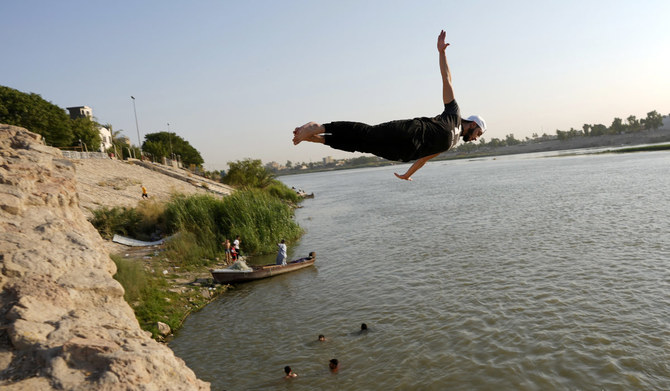

BAGHDAD: With scorching temperatures and power cuts, Wissam Abed cools off from Baghdad’s brutal summer by swimming in the Tigris River, but as Iraqi rivers dry up, so does the age-old pastime.
Near a bridge linking the east of the city to the west, Abed stood in the middle of the river, but the water only came up to his waist.
“I live here in Adhamiya, like my grandfather did before me. Year after year, the water situation gets worse,” said the 37-year-old, referring to his neighborhood nestled along the Tigris in northern Baghdad.
Abed waded through the water to the middle of the ancient river, as temperatures reached near 50 degrees celsius and wind whipped through the city like a hair dryer one July afternoon.
He said he comes to the Tigris “to have fun and feel refreshed.”
Summer in Iraq is a prime example of the convergences of multiple crises weighing down the lives of the 43-million-strong population: a dilapidated electricity sector, rising temperatures and severe water shortages.
The UN says Iraq is one of the five countries in the world most touched by some effects of climate change.
In parts of Baghdad, home to around 9 million people, the water is still deep enough for youths to enjoy diving into the water from mounds of bricks. But elsewhere, new islets of earth stick out from the middle of the river.
“In the evening when we return to our homes, there is no water or electricity,” said Abed, a public employee at the Ministry of Electricity.
Last night, “I came to swim in the river at one o’clock in the morning before returning” home.
In addition to the declining levels of rainfall, Iraqi authorities say upstream dam construction by Turkiye and Iran has impacted the volume of the water that runs in rivers through Iraq.
Ravaged by decades of conflict and international sanctions, oil-rich Iraq relies on Iranian gas imports for a third of its energy needs. It is also beset by rampant corruption, and suffers from dilapidated infrastructure.
Generally power cuts can last up to 10 hours a day. But every summer when the thermometer climbs, the supply of public electricity worsens.
Families who can afford it hook up their house to neighborhood generators to make up for the poor supply.
But to do away with power cuts, Iraqi power plants would need to produce more than 32,000 megawatts daily, according to authorities.
This year, for the first time, Iraq produced 26,000 MW per day on average until the onset of July when production fell due to Iran shutting off the gas taps over 11 billion euros of unpaid bills.
An agreement has been reached and electricity production has improved to exceed 24,000 MW, the Ministry of Electricity. said on Friday.
While the first week of July was the hottest on record in the world, according to preliminary data from the World Meteorological Organization Iraq is experiencing a scorching weekend.
Temperatures are due to climb to 47 degrees Celsius on Saturday in Baghdad and 50 degrees in Basra in the far south.


