

New AlUla tourist destination revives ancient oasis’ natural, cultural history

1 / 6
As part of wider efforts to promote AlUla’s natural and cultural heritage, officials have been working for more than a year to develop Daimumah as a free-to-visit tourist destination. (AN photo by Nada Hameed)
2 / 6
(AN photo by Nada Hameed)
3 / 6
(AN photo by Nada Hameed)
4 / 6
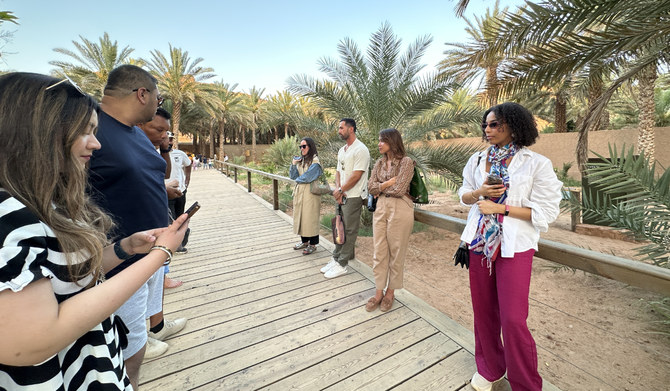
AlUla's summer activities were explored by Arab and Saudi social media influencers during a media tour. (AN photo by Nada Hameed)
5 / 6
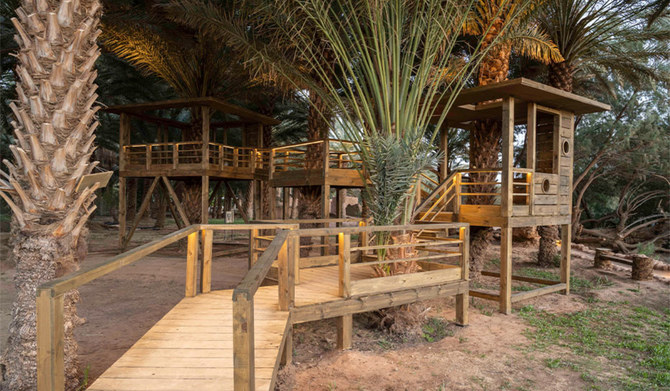
The palm house in Daimumah is fully made from palm tree wood, featuring a wooden staircase that leads up to the cozy attic, and right in the center of it all, there is a majestic palm tree stretching its branches, adorned with green dates just waiting to be plucked in August during the dates season. (AN photo by Nada Hameed)
6 / 6
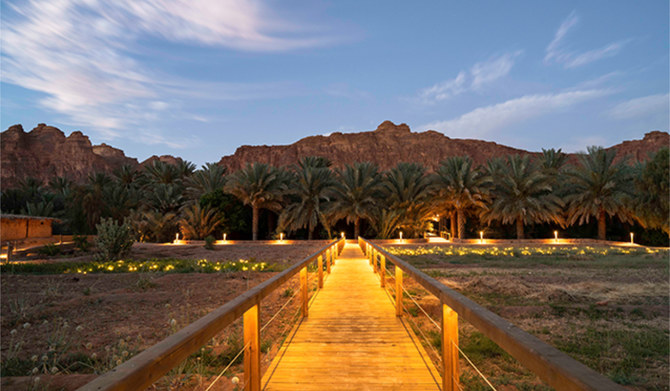
Once visitors enter the field of palms through the 150 meters long bridge, they will be surrounded by a serene atmosphere, as the landscape is adorned with tall, slender palm trees swaying gracefully in the gentle breeze. (AN photo by Nada Hameed)
Short Url
Updated 15 July 2023
Follow

New AlUla tourist destination revives ancient oasis’ natural, cultural history

  • Daimumah blends traditional farming practices with modern innovative techniques to produce a variety of crops

JEDDAH: Modern-day tourists are being offered the chance to connect with the past at a sustainable farmland destination nestled within the Saudi desert.

AlUla’s latest attraction, Daimumah, from the Arabic word for sustainability, brings together art, nature, and heritage in a scenic oasis setting.

For centuries farming communities have shaped and nurtured the AlUla valley, leaving a fertile landscape for future generations.

As part of wider efforts to promote AlUla’s natural and cultural heritage, officials have been working for more than a year to develop Daimumah as a free-to-visit tourist destination.
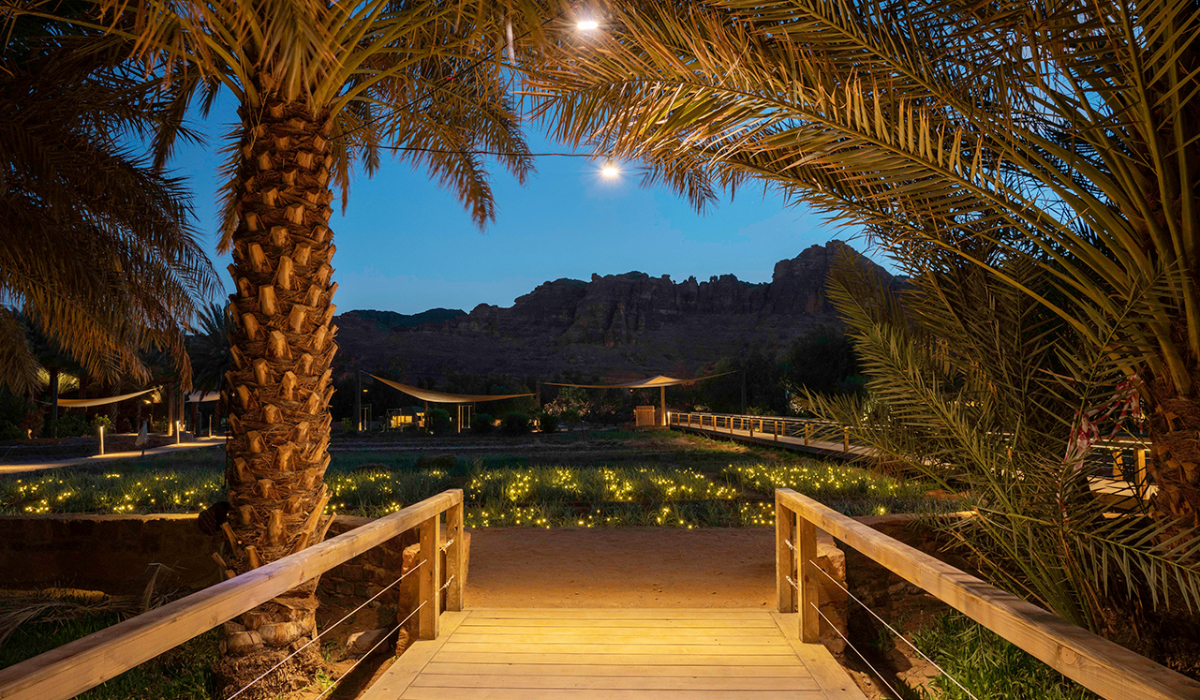


As part of wider efforts to promote AlUla’s natural and cultural heritage, officials have been working for more than a year to develop Daimumah as a free-to-visit tourist destination. (AN photo by Nada Hameed)

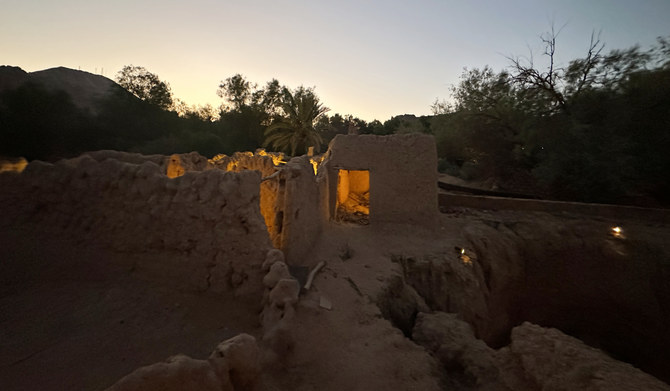
With its palm groves, botanical gardens, and fields, trippers can explore at their leisure, discovering art installations, old mudbrick farm dwellings, ancient irrigation channels, and crops still grown sustainably by local farmers.

Adel Al-Balawi, a Saudi tour guide at Daimumah, told Arab News that palm trees had always played a vital role in the civilization and dwellings of AlUla.

He said: “Serving as natural shields against the scorching sun, they provide shade and help regulate temperature by reducing it by 10 degrees compared to open areas.

HIGHLIGHTS

• AlUla’s latest attraction, Daimumah, from the Arabic word for sustainability, brings together art, nature, and heritage in a scenic oasis setting.

• For centuries farming communities have shaped and nurtured the AlUla valley, leaving a fertile landscape for future generations.

“Within the palm fields, farmers strategically plant delicate crops that are susceptible to heat, benefiting from an optimal balance of sunlight.

“The passing breeze through the palms further cools the air, safeguarding the fragile plants from excessive heat, fostering the growth of lush vegetation below,” he added.
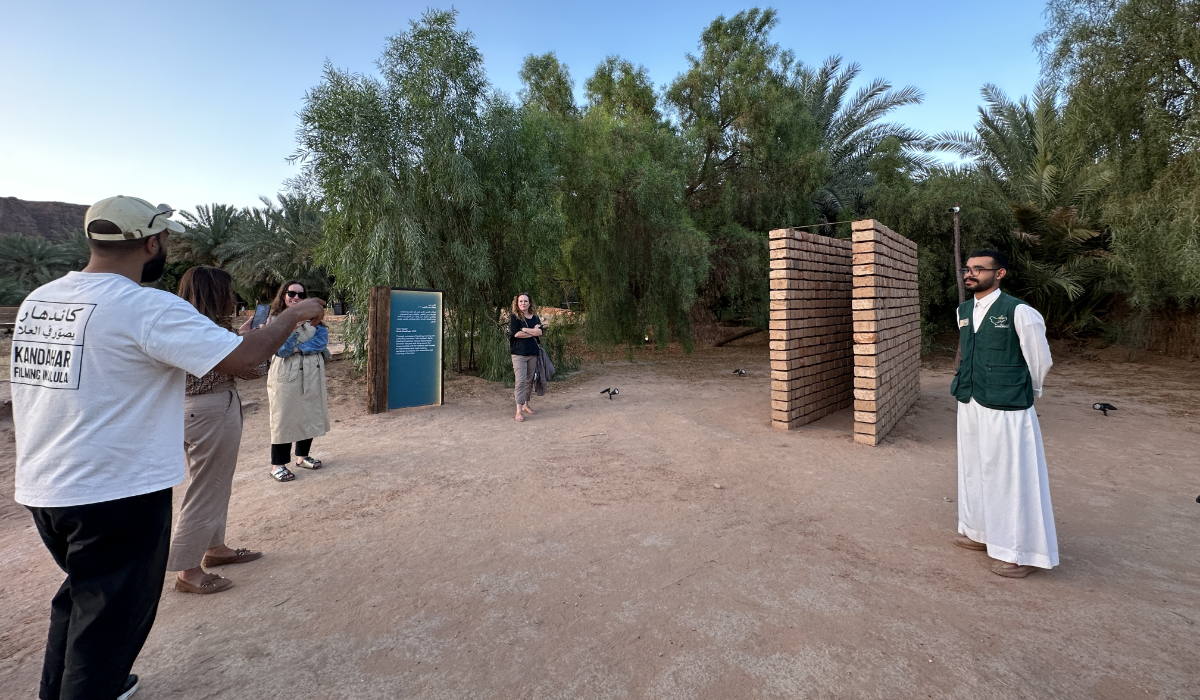


As part of wider efforts to promote AlUla’s natural and cultural heritage, officials have been working for more than a year to develop Daimumah as a free-to-visit tourist destination. (AN photo by Nada Hameed)

The installations scattered around the site were specially created by three artists and have been themed around the people of AlUla and the folklore dances of Saudi weddings.

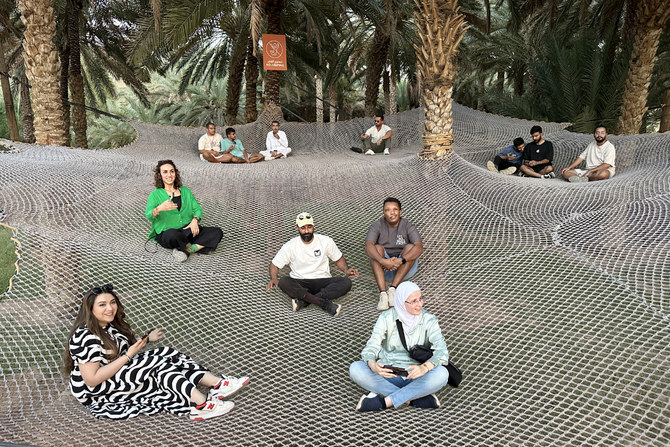
In the Explorers’ Garden visitors can relax in a giant net strung between the palm trees and connect with nature by listening to the gentle rustle of the palm fronds and the soft chirping of birds as cool breezes create a calming ambience.

Al-Balawi said: “The net, expertly crafted from durable yet gentle materials, stretches out, inviting visitors to lay down and immerse themselves in its cradling embrace.

“Its intricate design allows for a comfortable and secure lounging experience, providing the perfect vantage point to admire the breathtaking surroundings.”
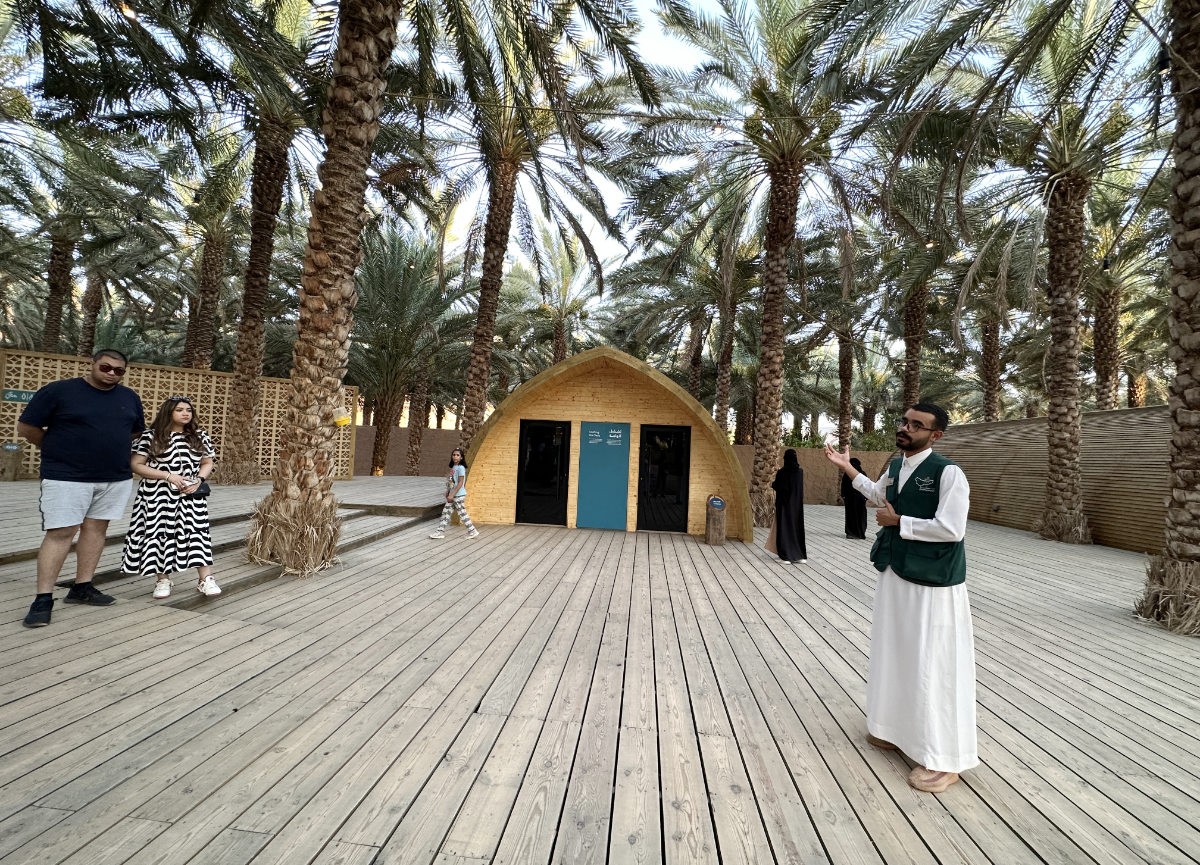


Adel Al-Balawi explains to visitors about Daimumah. (AN photo by Nada Hameed)

Daimumah uses solar panels to generate electricity for all its facilities. “It is the sure and best solution to reduce carbon footprints,” Al-Balawi added.

One visitor, Munirah Al-Enizi, 15, from AlUla, said: “I am so glad that the oasis has a tree house. It is inspired by palm trees which represent our Saudi culture too. It’s a great way to connect with nature and appreciate the beauty of the rural environment.”

The palm house has been made entirely from palm tree wood and has a wooden staircase that leads to an attic. At its center is a majestic palm tree with branches full of green dates waiting to be picked in August.

On Daimumah’s historic farm dwellings and water systems, Al-Balawi pointed out that the people of AlUla used to use a series of canals to link farms in the oasis. Water flows were controlled by a skilled farmer known as the master.

“It’s proof of the deep-rooted traditions and community spirit that make AlUla’s irrigation system not just ancient, but truly remarkable,” he said.

Daimumah blends traditional farming practices with modern innovative practices to produce a variety of crops including eggplant, onions, bell peppers, lemons, oranges, and an assortment of herbs.

A greenhouse area offers visitors the chance to find out how exotic fruits are grown while saving water and space.

“In Daimumah, farmers cultivate an environment that is tailor-made for specific crops. Within these reserves, an impressive count of 10,000 strawberry seedlings flourishes, enabling farmers to successfully grow exotic fruits that would otherwise struggle to thrive,” Al-Balawi added.

Between December to March, visitors can tour the site’s strawberry reserves and handpick the berries.

Moringa trees also flourish in the oasis. Al-Balawi said: “They require very little water to grow and are therefore considered a resource-efficient crop that is incredibly versatile and can be made into many different products.”

An open-air eatery, wood-cabin cafe serving hot and cold refreshments and snacks, and souvenirs shops are also located on the site.

In addition, educational and entertainment workshop programs are organized by the Royal Commission for AlUla.

For more information visit: https://www.experiencealula.com/en


US consulate supports Saudi musicians for Jazz in Jeddah Festival

Updated 15 January 2026
Follow

US consulate supports Saudi musicians for Jazz in Jeddah Festival

  • Songs created from inspiring process, say local artists
  • David Malatesta, professional bassist, led the program

JEDDAH: The US Consulate in Jeddah marked a milestone in cultural exchange with the completion of its first English Language Specialist program, “Creative Writing for Musicians and Songwriters,” on Jan. 14.

The program, which combined advanced English-language instruction with professional music training, culminated in a showcase where participants presented versions of their original jazz compositions.

The initiative was funded by the US Department of State’s Bureau of Educational and Cultural Affairs, through its English-language programs, and administered by Georgetown University.

The US partnered with the Call of Culture organization, and the Jazz in Jeddah festival, to support emerging Saudi talent. The program aimed to merge American expertise in storytelling, songwriting, and jazz with the voices of Saudi musicians, and prepare them for international stages.

Stephen Ibelli, head of the Public Diplomacy Section at the consulate, said the initiative “demonstrates how American expertise in education, storytelling, and the creative industries can contribute to Saudi Arabia’s growing cultural sector.

“By partnering with leading Saudi cultural organizations, we are investing in people, creativity, and long-term cultural exchange that strengthen the US–Saudi relationship.”

David Malatesta, an English-language specialist and professional jazz musician who led the program, reflected on his experience with the students.

“I was a bassist and an educator, and what drew me to Saudi Arabia was the chance to make music with Saudi musicians, share ideas, improvise together, and explore jazz as a global language.

“I led the lyrics section of the program, and the students wrote original jazz songs in English. I helped them improvise lyrics and develop creative ideas, combining their creativity with mine.

“We went through the whole process together, using a variety of activities to spark inspiration. I also brought my experience as a linguist and my work with the State Department to the sessions, blending language and musical training.”

He added: “The students were fearless and inventive. They took risks, experimented, and blended Saudi traditions with modern beats. We also explored blues, which is indigenous to the US, and drew parallels with the students’ experiences here.

“The program opened my ears and made me rethink how jazz could integrate with local rhythms and storytelling. It was a two-way process, I learned how to incorporate Saudi scales, rhythms, and traditions into jazz, which is an improvisational language.”

Malatesta highlighted that what stood out most was the students’ sense of rhythm and melody, bringing a fresh, bold voice to jazz. They were open to learning about jazz history while creating their own musical vocabularies.

Non-Western scales, different rhythmic patterns, and storytelling approaches were woven into jazz grooves, creating a dialogue between Western jazz and Saudi tradition, producing music that could only exist in that moment with these artists.

“Looking ahead to the Jazz in Jeddah Festival in April, I hoped audiences would feel the musicians’ curiosity and playfulness, experience jazz as a conversation across cultures, and enjoy the improvisation and connection we created during the program, which will stay with me and the students long after it ended.”

The participants echoed Malatesta’s views on the transformative impact of the program.

Donia Ahed, a university student and singer-songwriter, said: “I joined because my professor recommended it, and I’ve always loved writing songs. The online sessions were really nice, and David was very passionate and patient.

“In the in-person sessions, we learned jazz, blues, and pop, and got guidance on how to structure songs. I created my own song, ‘My Way,’ and also performed a song by another participant. It was amazing working with my teammates, sharing ideas, and being creative together.

“This program helped me improve my writing and musical skills and even sparked a deeper interest in jazz. I can’t wait to perform at the festival in April. I’m excited but a bit nervous, of course.”

Abrar Niyazi, who wrote “Bend Not Break,” described her journey: “Singing has been my passion since I was a kid, but I never thought of writing lyrics. This program gave me the tools to express myself.

“It simplified the process and allowed me to turn my feelings, stories, or imagery into lyrics. It was challenging to put my emotions on paper and focus on them, but with David’s support, I was able to write a heartfelt song.

“It was empowering and taught me that I can improve my skills, write more, and eventually record my own songs. I’m really excited to perform for the first time at the Jazz in Jeddah Festival and to hear audience feedback.”

Loulwa Alshareef, an established singer and songwriter, said “magic” was a way to describe the program. “I’ve been performing since 2014, mostly covers, and writing my own songs was always a struggle.

“David made it easy by helping me connect with my feelings and write simply but meaningfully. I wrote a song about women, and it was an incredible process.

“I now feel inspired to create more original songs and share them at the Jazz in Jeddah festival with other Saudi artists. Opportunities like this, getting mentorship and guidance, help artists step out of their comfort zones and grow.

“I would advise young artists to be themselves, put their ideas out there, and embrace creativity without waiting for perfection.”

Eng. Mohammed Bakhrieba, the founder of Call of Culture, emphasized the program’s historical significance during his opening remarks at the closing ceremony.

“Jazz in Jeddah has roots going back to the late 1950s and 1960s with American artists. This initiative continues that legacy and allows local artists to build on it, creating a bridge between generations and cultures while fostering cross-cultural collaboration,” he said.

The program highlights the growing collaboration between Saudi Arabia and the US in the creative industries, providing young musicians with professional guidance, international exposure, and a platform to contribute to a global musical dialogue.