

NEW DELHI: Warmer, drier weather because of an earlier than usual El Nino is expected to hamper rice production across Asia, hitting global food security in a world still reeling from the impacts of the war in Ukraine.
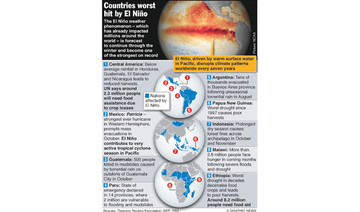
An El Nino is a natural, temporary and occasional warming of part of the Pacific that shifts global weather patterns, and climate change is making them stronger. The National Oceanic and Atmospheric Administration announced this one in June, a month or two earlier than it usually does. This gives it time to grow. Scientists say there’s a one in four chance it will expand to supersized levels.
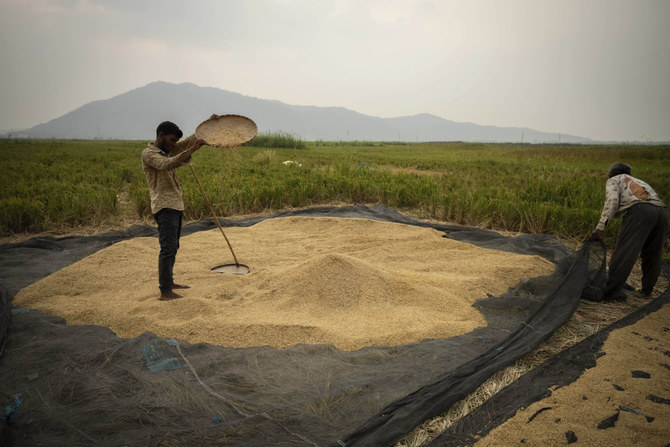
That’s bad news for rice farmers, particularly in Asia where 90 percent of the world’s rice is grown and eaten, since a strong El Nino typically means less rainfall for the thirsty crop.
Past El Ninos have resulted in extreme weather, ranging from drought to floods.
There are already “alarm bells,” said Abdullah Mamun, a research analyst at the International Food Policy Research Institute or IFPRI, pointing to rising rice prices due to shortfalls in production. The average price of 5 percent broken white rice in June in Thailand was about 16 percent higher than last year’s average.
Global stocks have run low since last year, in part due to devastating floods in Pakistan, a major rice exporter. This year’s El Nino may amplify other woes for rice-producing countries, such as reduced availability of fertilizer due to the war and some countries’ export restrictions on rice. Myanmar, Cambodia and Nepal are particularly vulnerable, warned a recent report by research firm BMI.
“There is uncertainty over the horizon,” Mamun said.
Recently, global average temperatures have hit record highs. Monsoon rains over India were lighter than usual by the end of June. Indonesian President Joko Widodo on Monday asked his ministers to anticipate a long dry season. And in the Philippines, authorities are carefully managing water to protect vulnerable areas.
Some countries are bracing for food shortages. Indonesia was among the worst hit by India’s decision to restrict rice exports last year after less rain fell than expected and a historic heat wave scorched wheat, raising worries that domestic food prices would surge.
Last month, India said it would send over 1 million metric tons (1.1 million US tons) to Indonesia, Senegal and Gambia to help them meet “their food security needs.”
Fertilizer is another crucial variable. Last year China, a major producer, restricted exports to keep domestic prices in check after fertilizers were among exports affected by sanctions on Russian ally Belarus for human rights violations. Sanctions on Russia for its invasion of Ukraine don’t specifically target fertilizers but the war has disrupted shipments of the three main chemical fertilizers: potash, phosphorus, and nitrogen.
Bangladesh found suppliers in Canada to make up for lost potash shipments from Belarus, but many countries are still scrambling to find new sources.
Farmers like Abu Bakar Siddique, who cultivates 1.2 hectares (3 acres) in northern Bangladesh, had enough fertilizer to keep his yields steady last year. But less rainfall meant he had to rely more on electric pumps for his winter harvest at a time of power shortages due to war-related shortfalls of diesel and coal.
“This increased my costs,” he said.
Each El Nino is different, but historical trends suggest scarce rainfall in South and Southeast Asia will parch the soil, causing cascading effects in coming years, said Beau Damen, a natural resources officer with the Food and Agriculture Organization based in Bangkok, Thailand. Some countries, like Indonesia, may be more vulnerable in the early stages of the phenomenon, he said.
Kusnan, a farmer in Indonesia’s East Java, said rice farmers there have tried to anticipate that by planting earlier so that when the El Nino hits, the rice might be ready for harvest and not needing so much water. Kusnan, who like many Indonesians uses only one name, said he hoped high yields last year would help offset any losses this year.
Indonesian President Joko Widodo has stressed the need to manage water well in the coming weeks, warning that various factors including export restrictions and fertilizer shortages could combine with the El Nino to “make this a particularly damaging event.”
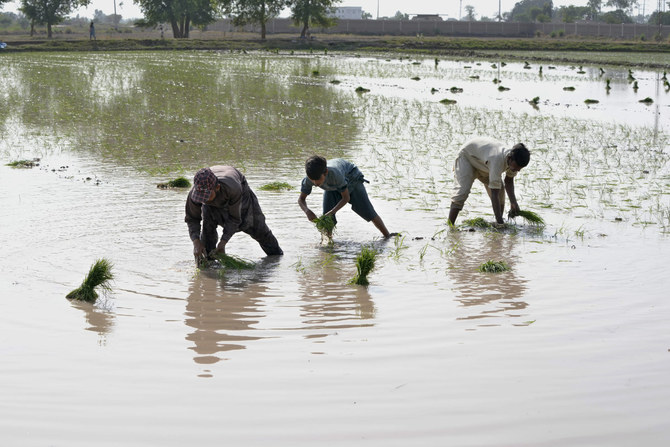
Baldev Singh, a 52-year-old farmer in northern India’s Punjab state, is already worried. He typically sows rice from late June until mid-July, but then needs the monsoon rains to flood the paddies. Less than a tenth of the usual rainfall had come by early this month, and then floods ravaged northern India, battering young crops that had just been planted.
The government has encouraged Punjab farmers to grow rice along with their traditional wheat crops since the 1960s to improve India’s food security, even though farmers like Singh don’t typically eat rice and irrigation of rice fields has drained the area’s aquifers. But he keeps growing it, counting on the certainty of government purchases at fixed prices.
With rain scarce, Singh may need to dig wells. Last year, he dug down 200 feet (60 meters) to find water.
“Rice has been our ruin ... I don’t know what will happen in the future,” he said.