

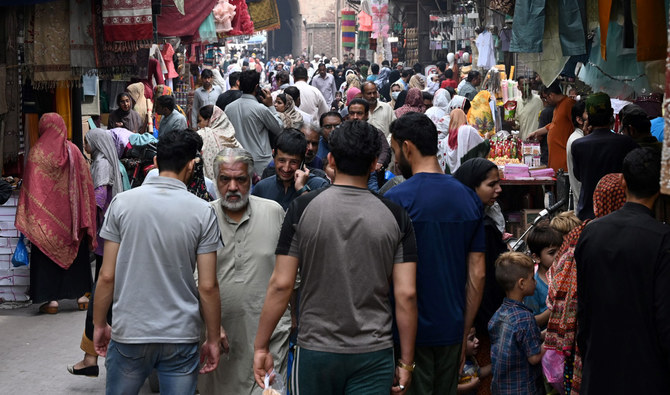

ISLAMABAD: The World Bank has approved $100 million in funds for Pakistan to support population control initiatives in the province of Punjab, which accounts for more than half of the country’s total population, a statement from the bank said on Thursday.
According to the Pakistan Bureau of Statistics (PBS), the initial results of Pakistan’s digital census revealed in May 2023 that the South Asian country’s population had reached 249.5 million, with approximately 127.4 million people living in Punjab.
“The World Bank’s Board of Executive Directors approved on Wednesday $100 million for the Punjab Family Planning Program to increase the utilization of family planning services in Pakistan’s Punjab province, which is home to more than half of the country’s population,” a statement from the bank said on Thursday.
The program will provide the people of Punjab with timely access to quality family planning services free of charge and also institutionalize quality of care across the family planning services delivery system and support public information and advocacy campaigns so that more families are made aware of the benefits of family planning.
“The program will scale up innovations, such as clinical franchising, voucher schemes, and family planning counseling through community leaders, which have been piloted in different districts of Punjab and have shown improvements in family planning outcomes,” the bank said.
It added that the program will reach areas and communities that have limited or no access to family planning services through an extensive network of lady health workers, family welfare workers and community health workers that are linked to health facilities, family health clinics, and family welfare centers in the province.
“The program will scale up the voucher incentive scheme, social marketing, male and community leaders’ engagement, and youth platforms for increasing utilization of family planning services,” the statement said.
“It will also improve the interpersonal communication skills of family planning service providers.”
Pakistan has been a member of the World Bank since 1950. Since then, the bank has provided $40 billion in assistance to the country in four priority areas of engagement: energy, private sector development, inclusion, and service delivery.
The bank’s current portfolio in Pakistan has 58 projects and a total commitment of $14.8 billion.


