

Cultivating holistic wellness with yoga in Alkhobar

1 / 3
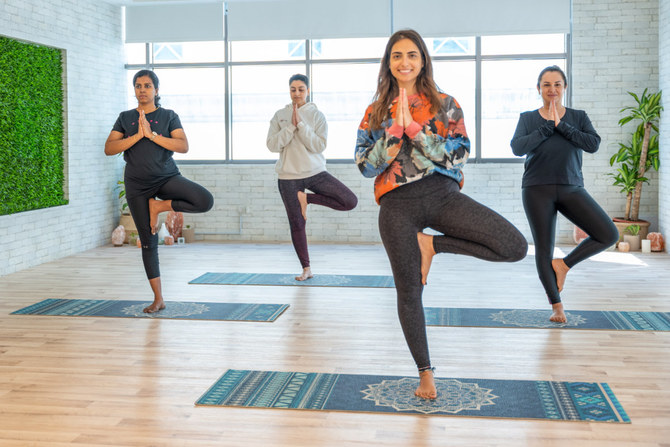
For Yasmeen Al-Dossary, yoga is more than a form of exercise. (Supplied)
2 / 3
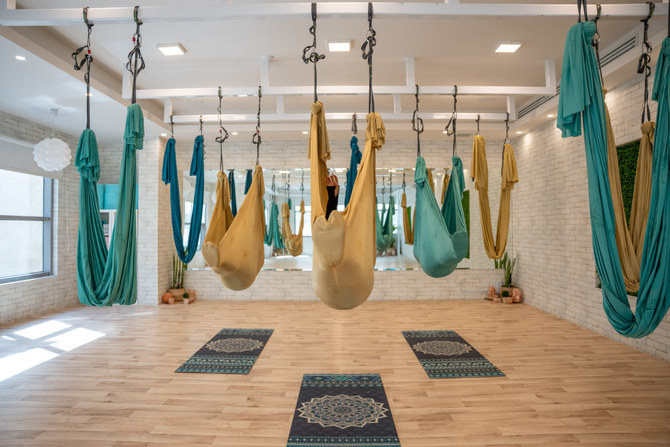
Aerial Yoga at YAS Yoga. (Supplied)
3 / 3
For Yasmeen Al-Dossary, yoga is more than a form of exercise. (Supplied)
Short Url
Updated 13 July 2023
Follow

Cultivating holistic wellness with yoga in Alkhobar

  • Yasmeen Al-Dossary’s trip to the coastal city of Goa in India deepened her understanding of yoga and its mind-body connection
  • Since launching six years ago, the YAS Studio community has grown to become a melting pot of women who empower one another

RIYADH: Yasmeen Al-Dossary, a yogi, entrepreneur and wellness expert, learned the fundamentals of yoga during an invigorating trip to India, and founded YAS Studio in Alkhobar with the knowledge she brought back.

In 2018, Al-Dossary was on the hunt for wellness spaces in Alkhobar but was out of luck. She took it upon herself to change the narrative and create more opportunities for wellness exploration by launching her own, YAS Studio.

She said she was “inspired to fill the void and share the empowering benefits of yoga and fitness with my community.”

She strives to create a supportive and nurturing environment in her studio. “As the CEO and lead yoga instructor at YAS Studio, my role extends beyond business — I am a mentor and guide on the path to holistic health,” she told Arab News.

In 2019, Al-Dossary’s trip to the coastal city of Goa in India deepened her understanding of yoga and its mind-body connection. “My yoga journey took root in India, where I was fortunate to immerse myself in its birthplace,” she added.

“It’s a beautiful city with a stunning ocean view, lush greenery, and an incredibly peaceful ambiance. This picturesque setting made it the perfect place for yoga and meditation, allowing me to connect more deeply with nature and my inner self,” she recalled.

Her time at Sampoorna Yoga, a yoga training center in Goa, introduced her to a community of yogis, whose varied backgrounds and shared passion for yoga “fostered a sense of unity.”

She explained: “I attended a highly professional and well-organized yoga school, where the depth and breadth of teachings significantly enhanced my understanding of yoga and its philosophy.

“The experience was truly immersive, starting our days early with yoga practices as the sun rose, something that profoundly instilled a sense of discipline and dedication in me.”

From her experience in India emerged a new perspective on her own career path and it “guided (her) vision for YAS Studio.”

At her studio, she strives to share what she learned with the Saudi community by providing a variety of yoga classes and activities to promote wellness. The studio offers Hatha yoga for foundational strength and flexibility, Ashtanga yoga “for a more dynamic sequence,” Yin yoga for deep, meditative stretches, and restorative yoga to balance and soothe the mind and body.

Al-Dossary described yoga as a practice that “fosters mindfulness, strength, and inner peace” and says that its versatility contributes to accommodating practitioners of all levels and interests.

She noted that wellness is a combination of maintaining one’s physical, mental, emotional, and spiritual health. It is about “creating balance in all aspects of life, whether it’s through exercise, nutrition, mindfulness practices, or connections with others.”

She emphasized that the road to wellness will differ from one person to another, and so it is “crucial to honor that individuality and be patient with oneself throughout the process.”

Since launching six years ago, the YAS Studio community has grown to become a melting pot of women who empower one another. It is more than just a yoga studio, it is a “sanctuary designed to cultivate holistic wellness in a supportive and nurturing environment.”

Speaking about the community’s response, Al-Dossary said: “The feedback has been overwhelmingly positive. Our customers appreciate the supportive and inclusive atmosphere at YAS Studio. Many have noted significant improvements in their physical and mental health.”


Mini op-ed: Coffee, fasting and finding your rhythm this Ramadan

Updated 17 February 2026
Follow

Mini op-ed: Coffee, fasting and finding your rhythm this Ramadan

DUBAI: Ramadan is a month of reflection, balance and listening more closely to our bodies. It is also a time when everyday rituals, including coffee, naturally shift. Rather than giving it up completely, many people simply change how, when and what they drink. And that is where a little understanding can go a long way.

There is no single “right” way to enjoy coffee during Ramadan. Taste preferences, caffeine sensitivity, work schedules and sleep patterns are deeply personal. The key is finding what supports you during the fast.

Suhoor, the pre-dawn meal before fasting begins, is often where people think carefully about caffeine. Some find a small coffee helps them feel alert through the morning. Others prefer to avoid it so they can return to sleep more easily after the meal. How you metabolize caffeine plays a big role here, some people feel energized for hours, while others crash quickly or feel jittery.

Choosing a lower-caffeine option can help. Coffees made from 100 percent Arabica beans naturally contain less caffeine than Robusta, while still offering plenty of flavor and aroma.

Iftar, traditionally broken with water and dates, is usually followed by a light meal or soup. Coffee often comes later, once the body has rehydrated and blood sugar levels have stabilized. Enjoyed mindfully, it can be part of a beautiful evening ritual rather than a stimulant.

There is no single “right” way to enjoy coffee during Ramadan. Taste preferences, caffeine sensitivity, work schedules and sleep patterns are deeply personal. (Shutterstock) 

One of the most important things to remember during Ramadan is hydration. Coffee should never replace water, especially when fasting hours are long. Drinking enough water between iftar and suhoor helps reduce fatigue and headaches far more effectively than extra caffeine.

Added sugar in coffee can also cause blood sugar spikes, followed by dips in energy. If you enjoy sweetness, try reducing it slightly or pairing coffee with food to soften the impact.

If you are worried about caffeine withdrawal during Ramadan, decaffeinated coffee can be a very helpful bridge. High-quality decaf, such as coffee processed using the Swiss water method (which avoids chemical solvents), retains flavor while removing most of the caffeine.

Ramadan is not about restriction for restriction’s sake. It is about awareness, intention and care, including care for your own body. Coffee can absolutely remain part of that journey, as long as it’s enjoyed thoughtfully.

Whether you choose to drink less, switch origins, reduce caffeine or simply slow down and savor it more, the best coffee choice this Ramadan is the one that supports your rhythm, your rest and your well-being.

Here are a few RAW coffees that feel gentle, balanced and comforting during Ramadan:

RITUAL Blend
Created at the request of many customers from the Levant, this is our only blend that combines Arabica with a small amount of Robusta. The result is a bold, full body with very low acidity. Smooth and grounding, it works beautifully as espresso, Moka pot or Turkish coffee, and pairs well with milk.

Brazil — Serra Dos Ciganos (Single Origin)
A beautifully approachable coffee with tasting notes of roasted hazelnuts, nougat, baker’s chocolate and pear. Comforting and elegant, especially when brewed.

Guatemala — Pampojila Natural
Often chosen as a “breakfast coffee”, this is gently sweet with notes of brown sugar, nuts and orange, offering a medium body and soft fruit character.

Mexico — Mazateca
Another favourite for earlier in the day, with flavors of orange, malted barley and cacao, balanced, warm and easy to drink.

Kim Thompson is the founder and director of Culture & Brand at RAW Coffee Co.
