


UN rights body passes Pakistan motion on religious hatred after Qur’an burning

A photo shows a general view on the opening day of the 50th session of the UN Human Rights Council, in Geneva, on June 13, 2022. (AFP/File)
Short Url
Updated 12 July 2023
Follow

UN rights body passes Pakistan motion on religious hatred after Qur’an burning

  • The resolution demanded ‘prevention and prosecution’ of such acts of religious hatred
  • The vote’s outcome marks a defeat for Western countries that opposed the motion

GENEVA: The United Nations Human Rights Council on Wednesday approved a disputed resolution on religious hatred in the wake of the burning of a Qur’an in Sweden, prompting concern by Western states who say it challenges long-held practices in rights protection.

The resolution, introduced by Pakistan on behalf of the 57-nation Organization of Islamic Cooperation (OIC), calls for the UN rights chief to publish a report on religious hatred and for states to review their laws and plug gaps that may “impede the prevention and prosecution of acts and advocacy of religious hatred.”

It was strongly opposed by the United States and the European Union, who say it conflicts with their view on human rights and freedom of expression.

An Iraqi immigrant to Sweden burned the Qur’an outside a Stockholm mosque last month, sparking outrage across the Muslim world and demands by Muslim states for action.

The vote’s outcome marks a major defeat for Western countries at a time when the OIC has unprecedented clout in the council, the only body made up of governments to protect human rights worldwide.

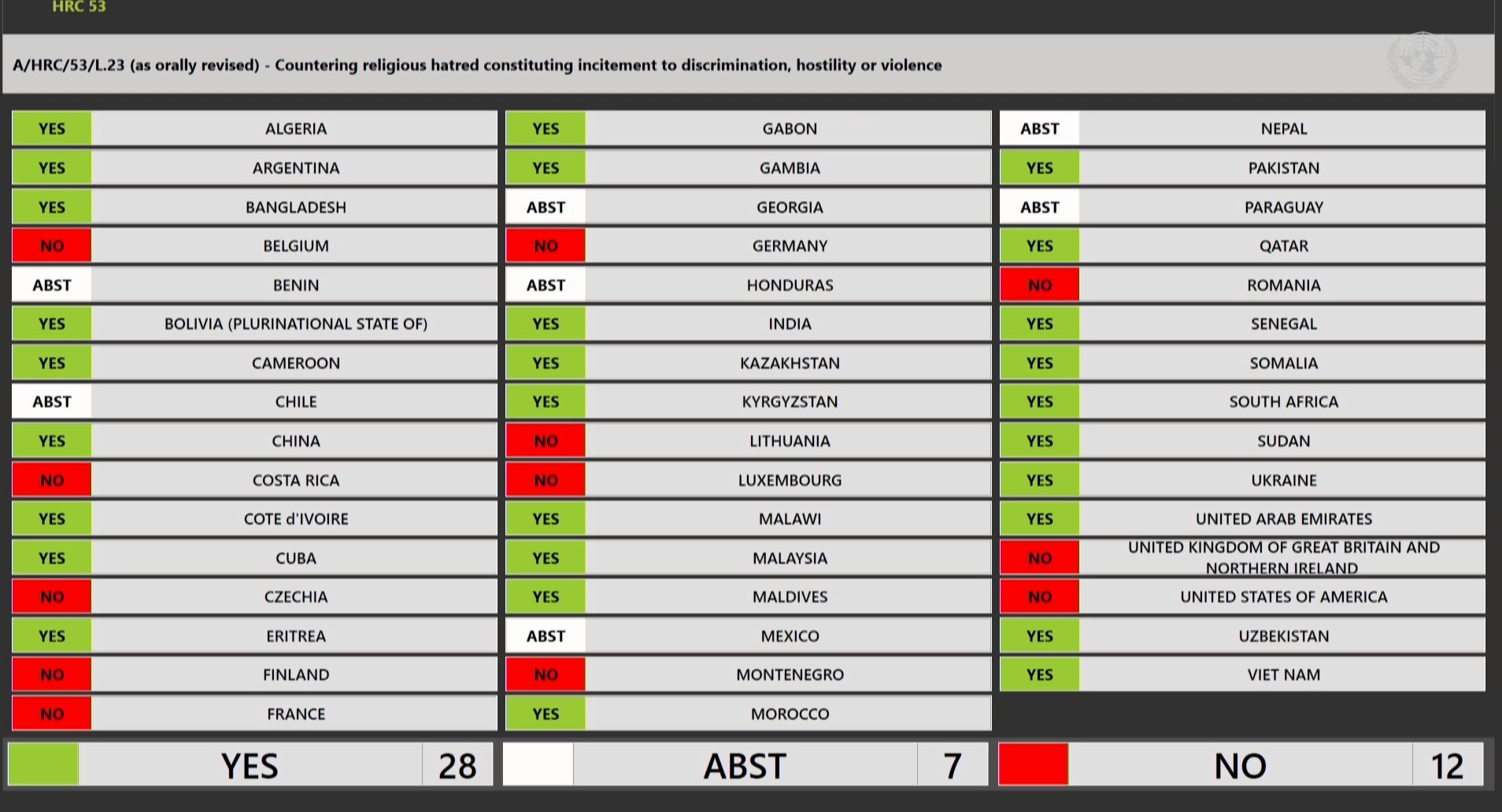
Twenty-eight countries voted in favor, 12 voted against and seven countries abstained.
Michele Taylor, the US Permanent Representative to the UN Human Rights Council, deplored the vote’s outcome, saying the United States’ concerns about the initiative “were not taken seriously.”

“I believe with a little more time and more open discussion, we could have also found a way forward together on this resolution,” she said.


Pakistan to introduce new navigation system to cut flight delays at Skardu, Gilgit and Chitral

Updated 5 sec ago
Follow

Pakistan to introduce new navigation system to cut flight delays at Skardu, Gilgit and Chitral

  • Pakistan Airports Authority says satellite-guided RNP-AR procedures will be in place by June 2026, pending a feasibility study
  • The system is expected to reduce weather-related delays and cancelations in Pakistan’s most popular mountain destinations

KARACHI: Pakistan said on Sunday it would introduce a new satellite-guided navigation system for flights to Skardu, Gilgit and Chitral by June 2026, aiming to curb chronic weather-related delays and cancelations at the three remote northern airports.

The destinations are among Pakistan’s most visited tourist sites and serve as gateways to the Himalayan and Karakoram ranges. Gilgit-Baltistan, which borders China, also holds strategic significance as part of the northern corridor linking the two neighbors.

Marking International Civil Aviation Day, the Pakistan Airports Authority (PAA) said it was accelerating aviation-sector upgrades, including the rollout of Required Navigation Performance – Authorization Required (RNP-AR) procedures.

RNP-AR is a high-precision, satellite-based approach system that enables aircraft to fly accurate, terrain-avoiding paths in low visibility, reducing weather-related disruptions at mountain airports.

“Pakistan Airports Authority is rapidly working on major projects for safe, efficient and modern aviation in the country,” the PAA said.

It added that RNP-AR flight procedures for Skardu, Gilgit and Chitral “will be implemented by June 2026,” subject to the findings of a consultant’s feasibility study.

The authority said the system would “significantly reduce weather-related flight delays and cancelations.”

The PAA also announced timelines for several other major upgrades, including terminal expansion at Lahore’s Allama Iqbal International Airport by September 2026 and runway modernization at Karachi’s Jinnah International Airport by January 2026.

Further works include the next upgrade phase at Skardu Airport and phase two of Muridke General Aviation Aerodrome, both due to begin next year.

New greenfield airports in Dera Ismail Khan, Sukkur and Faisalabad have also entered planning stages, the statement said.

Final sites have been approved for a new air-traffic control tower and rescue fire station at Karachi Airport, infrastructure the PAA said would strengthen air-traffic management and safety.

“Pakistan Airports Authority is leading the aviation sector toward a safer and more accessible future,” it said.