NEW ZEALAND: Tourists received no health and safety warnings before they landed on New Zealand’s most active volcano ahead of a 2019 eruption that killed 22 people, a prosecutor said Tuesday.
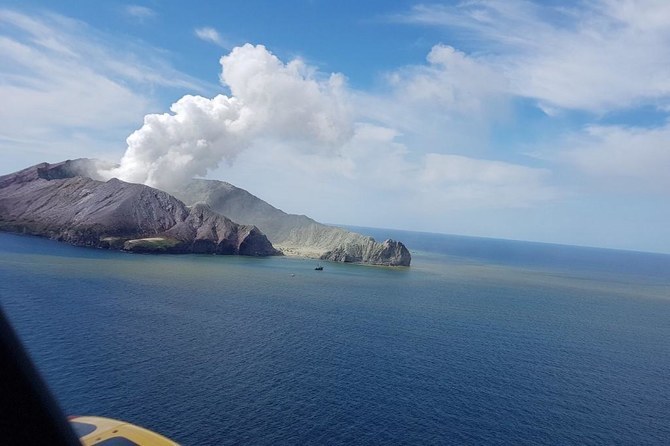
There were 47 people on White Island, the tip of an undersea volcano also known by its Indigenous Maori name, Whakaari, when superheated gases erupted on Dec. 9. Most of the 25 people who survived were severely burned.
The island’s owners, brothers Andrew, James and Peter Buttle; their company Whakaari Management Ltd.; and tour operators ID Tours NZ Ltd. and Tauranga Tourism Services Ltd. went on trial Tuesday in Auckland District Court for allegedly failing to adequately protect tourists and staff.
Prosecutor Kristy McDonald said in opening the prosecution case that the eruption at the popular tourist destination was not predictable but was foreseeable. The 20 tourists and two tour guides who died were given no warning of the risks, she said.
“They were not given the opportunity to make any informed decision about whether they wanted to take the risk of walking into the crater of an active and unpredictable volcano that had erupted as recently as 2016,” McDonald said.
“The business of tourism on Whakaari was a risky business. It involved tours to an active volcano, taking people to the heart of the crater in circumstances where no one could predict when an eruption might occur, and if an eruption did occur, those on Whakaari were likely to die or suffer very serious injury. And tragically, that risk was realized,” she said.
Of those killed, 14 were Australians, five were Americans, two were New Zealanders and one was German.
McDonald said the company that owned the volcano — Whakaari Management Ltd., which she called WML — failed to understand the risk, failed to consult with tour operators on the hazards, failed to ensure appropriate personal protective equipment was provided to tourists and staff, and failed to provide an adequate means of evacuation.
The company left tour operators to monitor the changing risk. An eruption on April 27, 2016, occurred at night without warning when no one was on the island. That should have prompted the owner to review the risk assessment, McDonald said.
The volcano had gone through 42 “eruptive periods” since colonial records began in 1826, McDonald said.
After the 2016 eruption, New Zealand geology agency GNS Science said its staff were banned from visiting the crater floor until further notice because of the “heightened state of volcanic unrest,” McDonald said.
Despite knowing this, several operators continued taking tourists to the crater from the day after the eruption, she said.
WHL, which made a profit of 1 million New Zealand dollars ($621,000) a year from tourists, could have paid GNS for a formal risk assessment but did not, she said.
McDonald said warning tourists of the dangers “would obviously not be good for business.”
“However, profit should never come before safety,” she said.
She blamed the Buttle brothers for the WML’s failure to assess the volcano danger.
“The Buttles knew they could obtain expert advice from GNS for a fee. They chose not to,” McDonald said. “The Buttles failed to do one of the most fundamental things required of them as officers. They failed to ensure that their company had and used sufficient resources to understand the risk of its business and to implement controls to manage that risk.”
ID Tours NZ and Tauranga Services failed to ensure 38 passengers, who had traveled from Australia aboard the Royal Caribbean cruise ship Ovation of the Seas and were on the volcano when it erupted, had been properly warned of the risk, she said.
Those 38 people “did not receive any health and safety information about volcanic activity or volcanic risk prior to the tour,” McDonald said.
If WML was going to allow tourists to visit the volcano, the company should have ensured visitors were equipped with adequate personal protective equipment and that emergency evacuation options were provided, McDonald said.
The court was shown video and photographs taken in the moments before and during the eruption.
McDonald said the only way off the island other than aircraft was a 90-year-old jetty that was too small for tourist boats to dock at. Survivors had to climb down a ladder to inflatable boats.
“A number of victims were badly burnt and this transfer was very painful,” McDonald said. “Some of them were losing the skin off their hands as they attempted to climb down the ladder. Some were unable to use the ladder and were pushed or fell into the inflatable boats.”
Defense lawyer James Cairney, representing WML and the Buttle brothers, questioned whether “one director can be liable for one failing by a company when there are multiple directors.”
David Neutze, the lawyer for ID Tours, said Royal Caribbean had probably breached safety standards but the New Zealand regulator WorkSafe had no jurisdiction over the Florida-based company.
ID Tours’ role was as a ground handler taking passengers from the cruise ship and as a booking agent for volcano tours.
“ID, we say, did not have a reasonably practical ability to cancel tours, to control the provision of health and safety information to passengers, to verify its accuracy or its adequacy or appropriateness of any health or safety information provided,” Neutze said. “Those functions were part of the work activity of others, principally Royal Caribbean, which sold the tours, and White Island Tours, which provided the tours.”
White Island Tours pleaded guilty in June to safety breaches relating to the eruption. All but one of the 22 dead were involved with that tour operator.
Three helicopter tour operators pleaded guilty last week to safety breaches.
Each of the companies faces a maximum fine of NZ$1.5 million ($927,000). Each of the brothers charged faces a maximum fine of NZ$300,000 ($185,000).
The trial being heard by Judge Evangelos Thomas without a jury will resume Wednesday. It is scheduled to run for 16 weeks.


![]()

Tourists received no safety warnings before New Zealand volcano eruption killed 22, prosecutor says
Short Url
https://arab.news/8atf7
Tourists received no safety warnings before New Zealand volcano eruption killed 22, prosecutor says
- Prosecutor Kristy McDonald said in opening the prosecution case that the eruption at the popular tourist destination was not predictable but was foreseeable
- The 20 tourists and two tour guides who died were given no warning of the risks


Latest updates


Recommended


© 2026 SAUDI RESEARCH & PUBLISHING COMPANY, All Rights Reserved And subject to Terms of Use Agreement.