- The center will work in collaboration with Saudi Arabia, the UAE, Qatar, Bahrain and China on various projects
- It aims to enhance modern agro-farming in Pakistan by utilizing over 9 million hectares of uncultivated state land
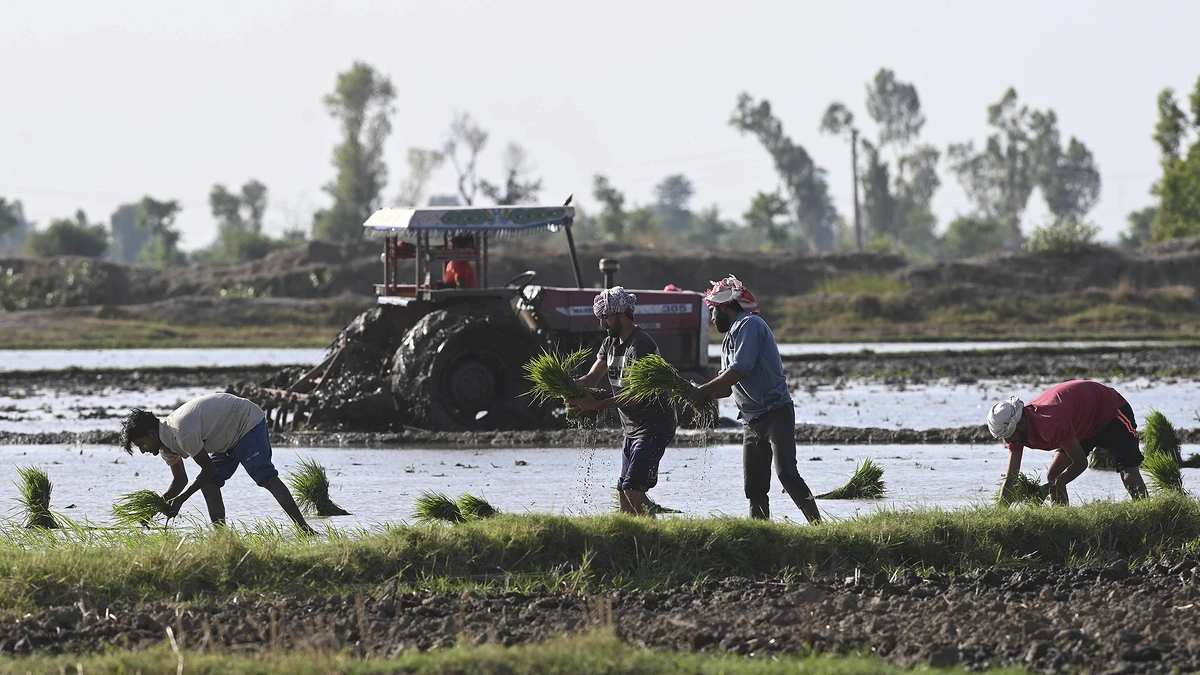
ISLAMABAD: Pakistan has established a Land Information and Management System, Center of Excellence ((LIMS-CoE) to enhance modern agro-farming by utilizing over 9 million hectares of uncultivated state land, a senior official said on Thursday, adding that Saudi Arabia provided an initial $500 million investment to set up the facility.
Pakistan, an agriculture-based economy contributing 23 percent to the GDP and employing 37.4 percent of the labor force, faces recurrent economic hardships. Currently, the productivity remains below par, with a decreasing cultivation area, a population-production gap, and agricultural imports amounting to $10 billion.
According to the World Food Program, around 36.9 percent of Pakistanis are food insecure, with 18.3 percent experiencing severe food crises. The country faces a shortfall of 4 million metric tons in wheat production against a total demand of 30.8 million metric tons, while cotton production has fallen by 40 percent to around 5 million bales in the last decade.
“As far as the high efficiency irrigation system is concerned, Saudi Arabia has already given us [Pakistan] $500 million,” Maj. Gen. Shahid Nazeer, who heads the LIMS-CoE, told reporters at a briefing on Thursday.
“Aimed at enhancing modern agro-farming utilizing over 9 million hectares of uncultivated waste state land, LISM-CoE has been established under the Director General Strategic Projects of Pakistan Army.”
The state-of-the-art system will revolutionize means to steer agricultural development through real-time information about land, crops, weather, water resource and pest-handling under one roof, according to the official.
The center will work in collaboration with Saudi Arabia, the United Arab Emirates, Qatar, Bahrain and China on various agri projects to enhance Pakistan’s exports.
“In the next 3-4 days, a very high-powered Saudi delegation is coming to Pakistan to explore this kind of investment in four major sectors including agriculture, mines and minerals, information technology (IT) and defense production,” he said, adding this would be done under the umbrella of the Special Investment Facilitation Council (SIFC) that was recently established to revive the Pakistani economy.
Nazeer said the LIMS-CoE was aimed at ensuring food security and optimizing agricultural production in Pakistan through innovative technologies and precise, sustainable agricultural practices based on agro-ecological potential of the land, while ensuring the well-being of rural communities and environment preservation.
“The main objectives of the center included consolidation and reclamation of uncultivated waste land, optimal decision; what and where to grow, development of a master plan for modern farming, implementation of state-of-the-art agriculture management practices, practicing agro-intelligence for digital and precision agriculture, better utilization of technology to enhance yield and effective decision support system,” he explained.
The LIMS-CoE recently initiated modern agri-farming projects in Punjab, according to the official. Efforts were being made to use certified hybrid seeds with concurrent development involving joint ventures with multi-national companies, which could pay rich dividends. In agriculture and gardening, a hybrid seed is produced by deliberately cross-pollinating plants that are genetically diverse.
“Hybrid seed gives 30-50 percent more yield, world is using 80 percent hybrid seed, while Pakistan currently uses only 8 percent of hybrid seed,” he added.