

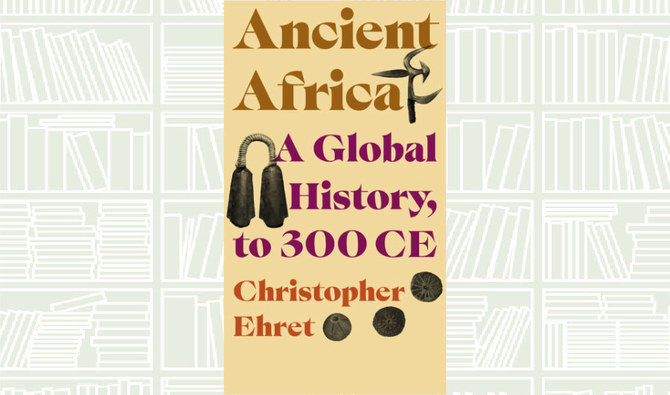

This book brings together archaeological and linguistic evidence to provide a sweeping global history of ancient Africa, tracing how the continent played an important role in the technological, agricultural, and economic transitions of world civilization. Christopher Ehret takes readers from the close of the last Ice Age some 10,000 years ago, when a changing climate allowed for the transition from hunting and gathering to the cultivation of crops and raising of livestock, to the rise of kingdoms and empires in the first centuries of the common era.
Ehret takes up the problem of how we discuss Africa in the context of global history, combining results of multiple disciplines. He sheds light on the rich history of technological innovation by African societies—from advances in ceramics to cotton weaving and iron smelting—highlighting the important contributions of women as inventors and innovators.
He shows how Africa helped to usher in an age of agricultural exchange, exporting essential crops as well as new agricultural methods into other regions, and how African traders and merchants led a commercial revolution spanning diverse regions and cultures. Ehret lays out the deeply African foundations of ancient Egyptian culture, beliefs, and institutions and discusses early Christianity in Africa.
A monumental achievement by one of today’s eminent scholars, Ancient Africa offers vital new perspectives on our shared past, explaining why we need to reshape our historical frameworks for understanding the ancient world as a whole.


