

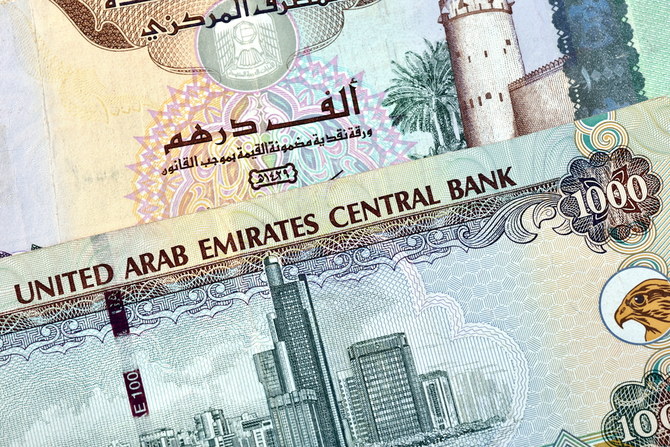

RIYADH: The Central Bank of the UAE has outlined measures designed to curb elevated interest rates on residential real estate loans that are unintended for investment.
The CBUAE’s new rules mean that when it comes to customers with a monthly income of 40,000 dirhams ($10,890) or more, banks are allowed to increase the deduction rate from the current 50 percent level to up to 60 percent to cover the increase in interest rates.
However, banks must still pay any additional interest that results from the rate increase.
Customers are essentially exempted from the remaining interest without the tenor being extended.
The measures further stated that banks are entitled to extend the payback tenor to meet increased interest rates, up to a maximum of 30 years, for customers with a monthly income of less than 40,000 dirhams, while maintaining the current proportion of deduction from salary or income at 50 percent.
Waste to Energy Center’s first phase launched in Warsan
The first phase of the world’s largest waste-to-energy plant was launched in an industrial neighborhood in Dubai, featuring sustainable technologies to accelerate the UAE’s transition to a green economy.
Crown Prince of Dubai Sheikh Hamdan bin Mohammed bin Rashid Al-Maktoum launched the Waste to Energy Center in Warsan, which is part of the Dubai ruler’s vision to transform the emirate into one of the world’s most sustainable cities.
“The start of the operations of the Waste to Energy Center in Warsan takes Dubai another step closer to achieving its strategy to create the world’s best sustainable ecosystem,” Sheikh Hamdan said.
The plant, which was built for 4 billion dirhams, leaves no environmental footprint, as it “integrates global sustainability benchmarks.”
Additionally, the Waste to Energy Center contributes to the Dubai Clean Energy Strategy 2050’s objectives of sourcing 75 percent of Dubai’s energy needs from clean sources.
Barakah nuclear energy plant refinanced with banking partners
The UAE’s multi-unit operating nuclear plant Barakah One completed the landmark refinancing of the Barakah Nuclear Energy Plant, working with key banking institutions in the country, according to Emirates News Agency, also known as WAM.
Barakah One, which is a joint venture between the Emirates Nuclear Corp. and the Korea Electric Power Corp., has refinanced its entire outstanding balance using loan facilities provided by the Export-Import Bank of Korea, known as KEXIM, South Korea’s export credit agency.
Two prominent Emirati banks, Abu Dhabi Commercial Bank and First Abu Dhabi Bank, were chosen to refinance the KEXIM loan facilities.
This refinancing shows how the Barakah Plant is adding economic value in the UAE outside of the favorable effects on the local supply chain and the creation of job opportunities for Emiratis.
“We have showcased a new model to the world for nuclear developments, demonstrating that new nuclear projects like Barakah are bankable, can be delivered in a timely manner, while continuing to meet the highest standards of safety and quality,” Mohamed Ibrahim Al-Hammadi, ENEC’s managing director and CEO said.
ADGM implements its sustainable regulatory framework
Abu Dhabi Global Market has implemented its sustainable regulatory framework with immediate effect, solidifying its position as a premier sustainable financial hub.
The framework includes requirements for environmental, social and governance disclosures by ADGM enterprises as well as guidelines for managed portfolios, bonds and investment funds with a focus on sustainability.
The initiatives will aid the UAE in its transition to net-zero greenhouse gas emissions and speed up the development of a sustainable financial ecosystem in the region.
“This initiative will play a vital role in mobilizing capital for the transition to net zero not only in the UAE, but also in EMDEs (emerging market and developing economies), and will enable increased green transactions from local and global financial institutions,” said Sultan Al-Jaber, president designate of the 2023 UN Climate Change Conference, known as COP28 UAE.
He added: “These initiatives encompass joint efforts to advance frameworks for ESG disclosures, measures to require sustainability-focused corporate governance and the development of a UAE green taxonomy.”


