In Pakistan’s Tharparkar, single mother defies gender norms to take up drumming as profession 

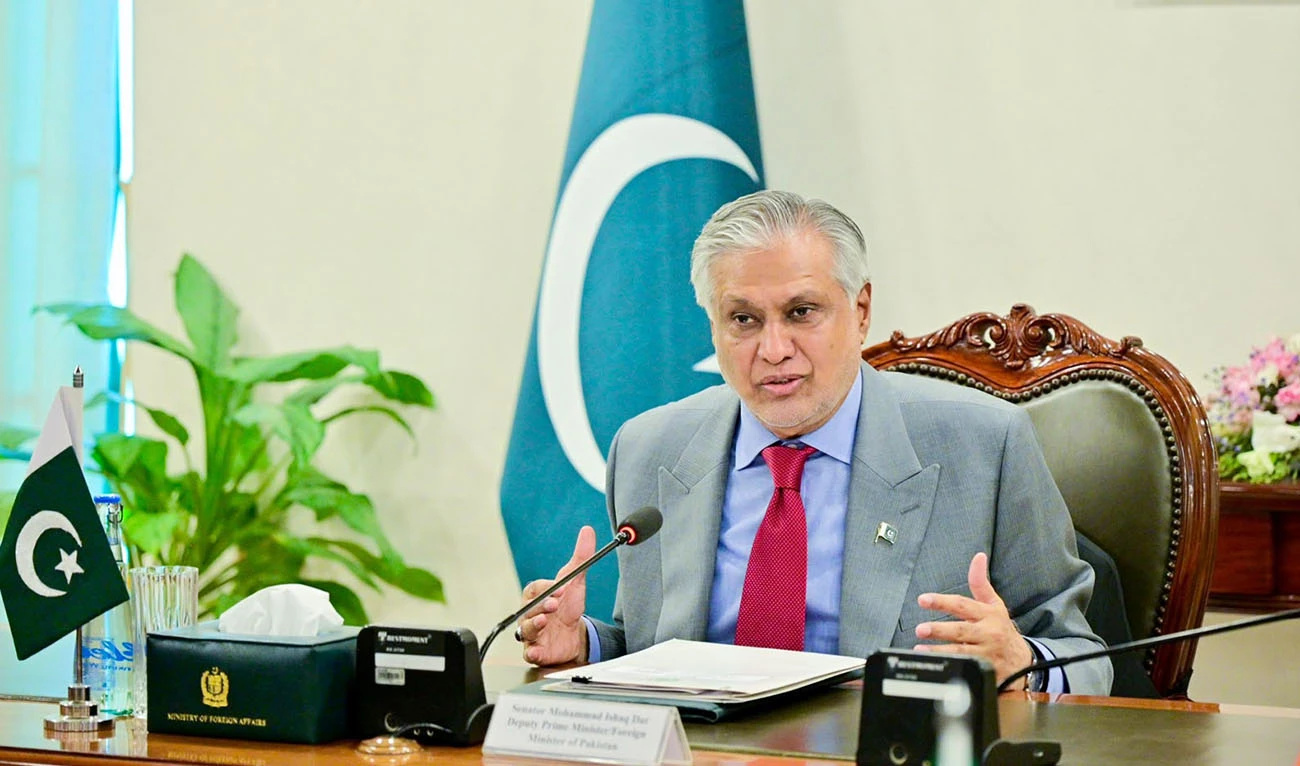
Maryam Naz, a Dholak player is seen singing and playing Drum at a mud dune in the desert of Tharparkar, Sindh, Pakistan on July 01, 2023. (AN Photo)
Short Url
Updated 05 July 2023
Follow

In Pakistan’s Tharparkar, single mother defies gender norms to take up drumming as profession 

  • Maryam Naz, 40, says she learned the art of singing, playing drum at the age of eight 
  • The mother of six decided to take up drum-playing as profession after husband’s death 

MITHI, THARPARKAR: Rocking a colorful Rajasthani dress, singing Marwari folk songs, and playing a drum that hangs from her neck attached to a sturdy blue strap, Maryam Naz, 40, impresses her audience with her performance standing atop sand dunes in Tharparkar, a southern Pakistani desert region where seeing a woman publicly singing or playing instruments had largely been unheard of. 

Playing a drum, which is a two-headed hand drum, is common all across the subcontinent in countless folk genres, devotional traditions, and family functions. In Pakistan, most drum players are men, therefore, seeing a woman playing the percussion instrument in public is a rare sight. 

But for Naz, a single mother of six children hailing from Tharparkar’s Mithi city, traditionally-defined gender norms could not become a hurdle and she chose drumming as a profession when things turned difficult for her following her husband’s death in 2016 nearly a decade ago. 
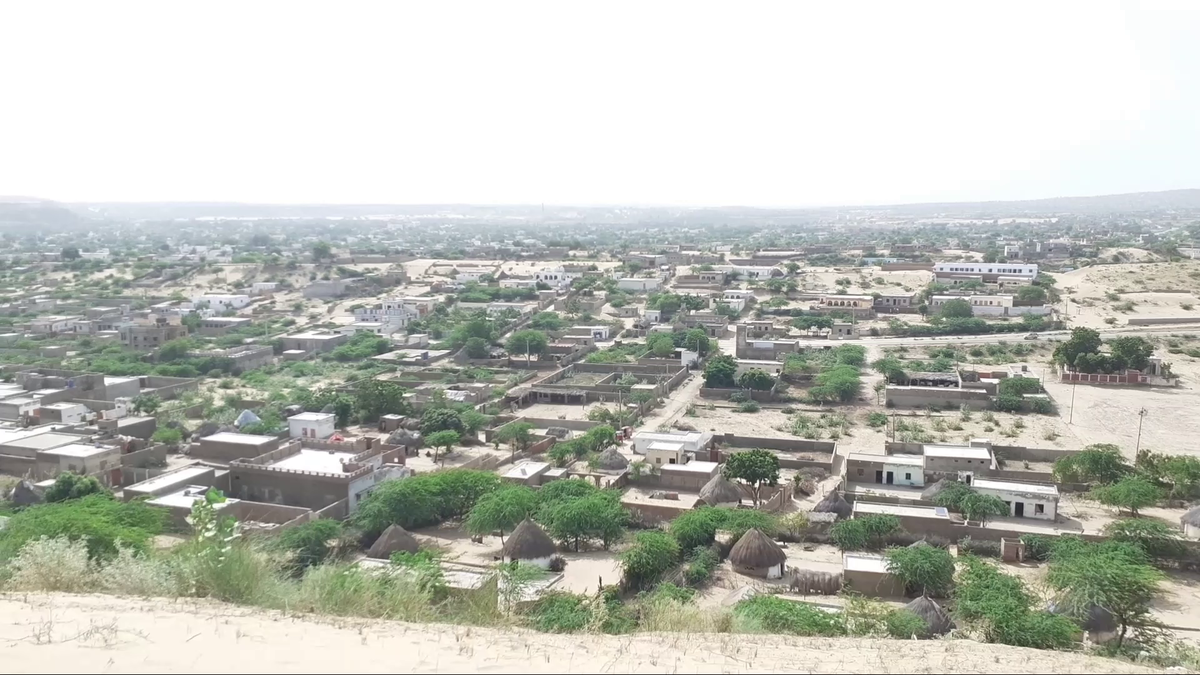


Aerial view of Mithi city from mud dunes, it is the capital of Tharparkar District in the Sindh province of Pakistan on July 01, 2023. (AN Photo)

“After my husband’s death, I faced many problems, I was unable to feed my children,” Naz told Arab News. “I had to earn for my children, so I decided to sing and play in public.” 

Naz, who also sings in Urdu, Sindhi, Dhatki and Marwari languages, belongs to the Manganiar community, which has produced many traditional folk musicians in India’s Rajasthan and Pakistan’s Tharparkar. Members of the community are known for their unique folk style and have contributed significantly to the region’s rich cultural heritage. 

She says she learned singing and playing drum at the age of eight from prominent local singer and drum player, Ustaad Soomar Faqir, while her skills were further polished by her father, who also used to sing and play drum at weddings and other events. 

Naz initially sang and played drum at weddings, but she was criticized when she took it up as a profession due to cultural norms. She, however, defied the norms and continued doing what she was best at, so much so that many Sindhi-language entertainment channels invited her on shows and appreciated her music skills. 
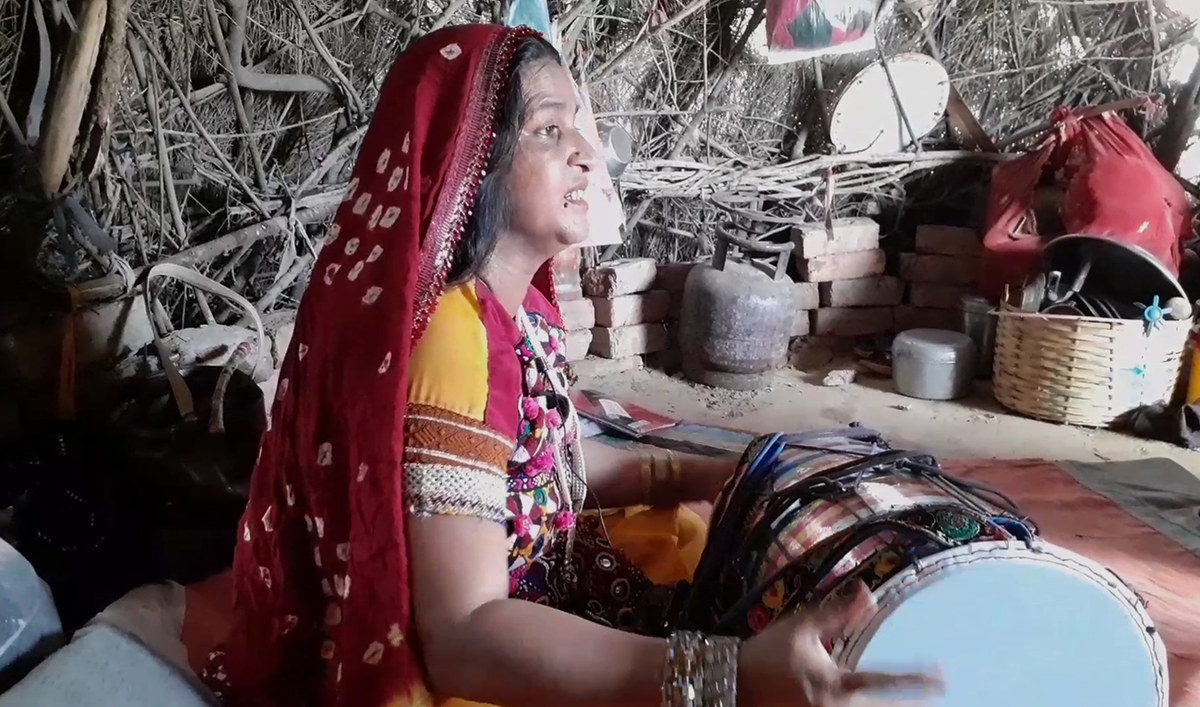


Maryam Naz, a Dholak player is seen singing and playing Drum at her hut house in the desert of Tharparkar, Sindh, Pakistan on July 01, 2023. (AN Photo)

Imtyaz Dharani, a local journalist, told Arab News he reported Naz’s story for the first time on his YouTube channel, Indus Globe, in 2020. 

“I saw her first time playing dholak in a wedding function in Mithi, where she was playing dholak in an amazing way,” he said. “So far I haven’t found such a woman dholak (drum) player in the Sindh province.” 

Naz says it is often difficult for her to make ends meet amid rising inflation in Pakistan and due to inconsistent earnings, but she is passionate about what she does. 

“I could have another profession for earning, but I was passionate [about playing drum and singing],” she said. “I did not quit.” 

Nadeem Jumani, a local poet from Tharparkar, said Naz had been playing drum alongside many prominent Sindhi singers, including Sanam Marvi and Allah Dino Junejo, but she did not get her due share of fame. 

“She is a very talented artist, therefore [Sindh culture minister] Sardar Shah should give her a stipend,” Jumani said. 

He added that Naz’s skills should be lauded as she was challenging the gender stereotypes created by the society. 

“In a male-dominated society, it is difficult for women to do a government job, but she sings and plays drum [alongside] her male counterparts,” he said. 

“After her initiative, the trend is changing here as other girls from her community are also coming forward to learn drum-playing skills.” 

Pakistan urges ‘time-bound and irreversible’ path to Palestinian statehood at UN

Updated 5 sec ago
Follow

Pakistan urges ‘time-bound and irreversible’ path to Palestinian statehood at UN

  • Pakistan warns the Security Council Israeli settlement expansion has reached its highest level in the West Bank
  • It says Islamabad backs sustained ceasefire, expanded humanitarian access, protection of UNRWA’s role in Gaza

ISLAMABAD: Pakistan on Tuesday called for a time-bound and irreversible political process leading to the establishment of a sovereign Palestinian state, urging the international community to move beyond declarations and turn long-standing commitments into concrete action.

Addressing a Security Council briefing on the Middle East, Pakistan’s ambassador to the United Nations said repeated diplomatic initiatives had underscored that the status quo was untenable and that only a credible political horizon, grounded in international law, could deliver durable peace.

His remarks came as the Security Council reviewed the implementation of Resolution 2334, which calls on Israel to halt settlement activity in occupied Palestinian territory.

Pakistan said recent diplomatic efforts — including a high-level conference in July and the General Assembly’s endorsement of the New York Declaration reaffirming the two-state framework — had sought to preserve the possibility of a negotiated settlement between Israelis and Palestinians.

It said follow-up meetings at Sharm El-Sheikh, along with US-led initiatives under President Donald Trump aimed at halting the fighting, were intended to reopen a political process toward Palestinian statehood.

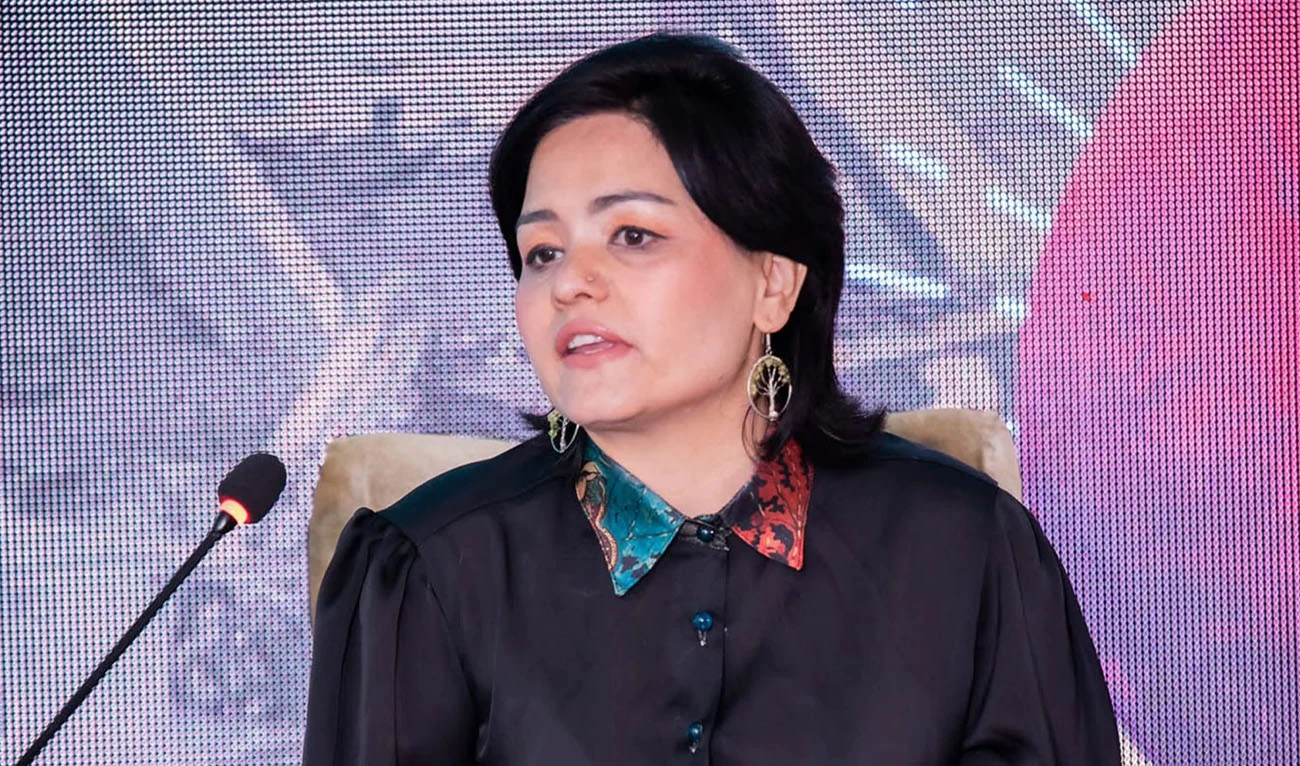
“A time-bound and irreversible political process, anchored in relevant UN resolutions must lead to the establishment of a sovereign, independent and contiguous State of Palestine on the basis of pre-1967 borders, with Al-Quds Al-Sharif as its capital,” Pakistan’s Permanent Representative Asim Iftikhar Ahmad told the council.

“It is high time to turn promises into action and speed up this process,” he added.

Ahmad said Pakistan backed Security Council Resolution 2803, which calls for efforts to sustain the ceasefire, expand aid access and restart a political track toward Palestinian statehood.

He said settlement activity in the occupied West Bank, including East Jerusalem, had reached its highest levels since the United Nations began systematic monitoring, citing UN findings that more than 6,300 housing units were advanced during the reporting period.

Such actions, he said, had “no legal validity” under international law but continued to undermine the viability of the two-state solution.

Pakistan also defended the role of the UN Relief and Works Agency (UNRWA), saying it remained indispensable for Palestinian refugees and must not be weakened by what it called unfounded criticism.

Ahmad condemned the storming of UNRWA’s headquarters in East Jerusalem earlier this month, calling it a violation of international law and the inviolability of UN premises, and urged full, safe and unimpeded humanitarian access to Gaza, along with the immediate start of reconstruction without annexation or forced displacement.