

Saudi Fashion Commission hosts showcase of Saudi jewelry, couture labels in Paris

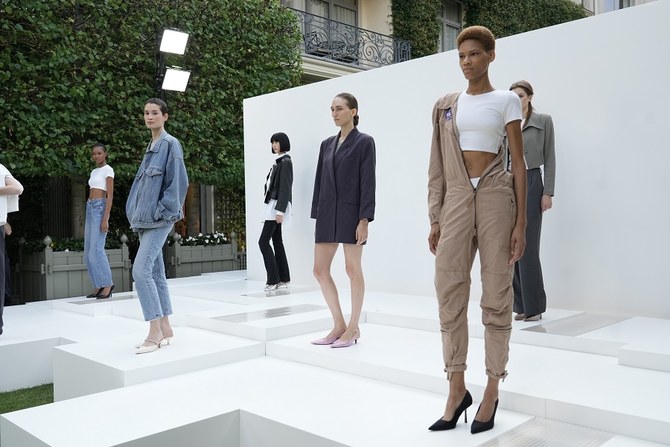
Monday’s invite-only event at the Ritz saw a presentation of collections by some of the participating designers and labels. (Supplied)
Short Url
Updated 04 July 2023
Follow

Saudi Fashion Commission hosts showcase of Saudi jewelry, couture labels in Paris

DUBAI: The Saudi Fashion Commission hosted a glittering opening cocktail party ahead of a showcase of jewelry and couture labels from the Kingdom, being held in Paris from July 3-5.  

The showcase is being held at the headquarters of Paris auction house Artcurial, a historical mansion in the heart of the city’s “Golden Triangle.”


Designer Mashael Al-Faris is taking part in the event in Paris. (Supplied)

The showroom has spaces dedicated to couture, jewelry and fragrance brands, and also offers private salons and fitting rooms for clients. 


Ashwaq Al-Marshad's creations are on show in Paris. (Supplied)

Monday’s invite-only event at the Ritz saw a presentation of collections by some of the participating designers and labels, including Yousef Akbar, Yataghan Jewelry, Rutana Jewelry, Pavone, Najla Almunajem,  Mashael Al-Faris, Luda Fine Jewelry, Ashwaq Al-Marshad and Adnan Akbar.
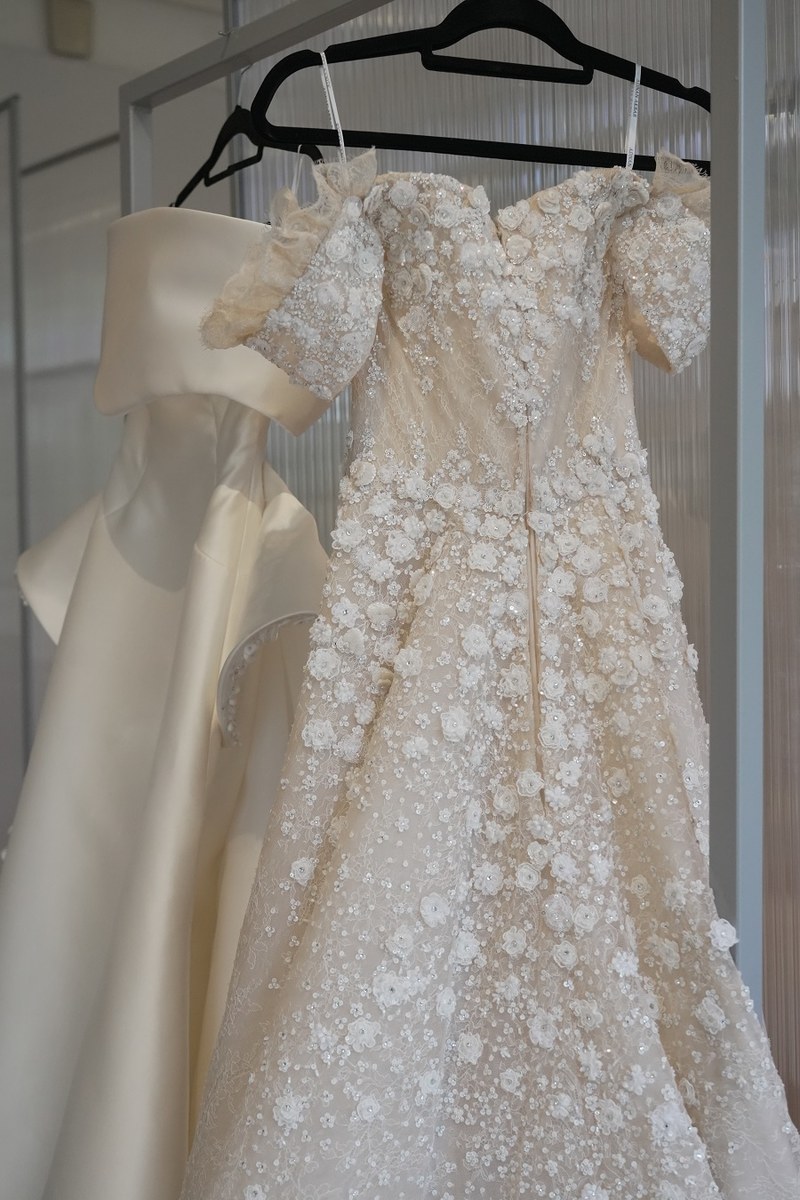


Saudi designer Adnan Akbar is taking part with his gowns. (Supplied)

Saudi designer Khlood Arab, who is presenting designs from her label Luda Jewelry in Paris at the showroom, spoke to Arab News about the opportunity.

Arab, who is also a cosmetics dentist at King Faisal Specialist Hospital and Research Center, told Arab News that she is “so proud to be an ambassador for Saudi women, showing the world what we can do. As a cosmetic dentist and jewelry designer, I want to show aspiring Saudi creatives that anything is possible.” 
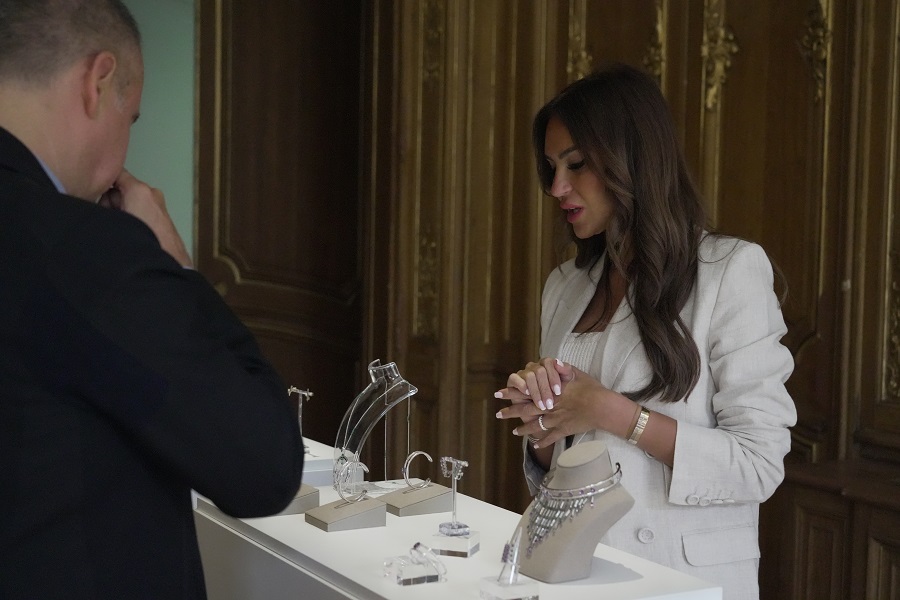


Saudi designer Khlood Arab is presenting designs from her label Luda Jewelry in Paris. (Supplied)

To Arab, Paris is not just a city, but a world of fashion, she said. 

“Paris is a city of dreams and romance, and Luda Jewelry is very dreamy, sensual and floral. The designs represent Saudi Arabia’s natural landscapes, new beginnings, the warmth and hospitality of Saudi people and, of course, opulence. I am blending Saudi’s rich and deep-rooted natural heritage with the contemporary and the modern to make exquisite and sensual jewelry. 

“I believe design is a form of expression, reflecting your experiences, perspectives and dreams — Luda is the world through my eyes.” 
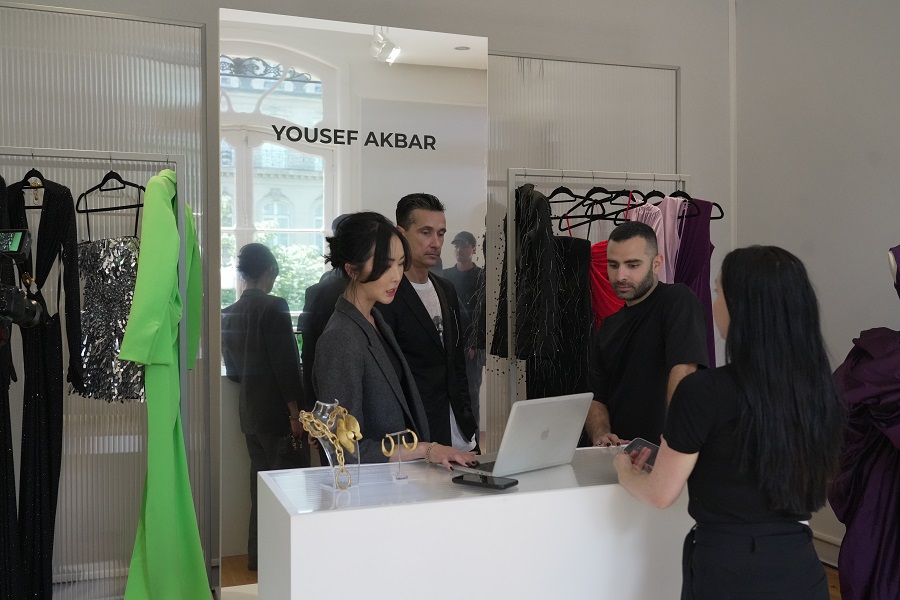


Yousef Akbar is part of the Saudi showcase. (Supplied)

The jewelry maker, whose brand uses 18-carat gold, precious and semi-precious stones, also believes that Saudi designers are making a name in the region and internationally. “Along with the support of the Saudi Fashion Commission, Saudi fashion is evolving incredibly, striving to be globally recognized,” she said. 

Though jewelry design began as an accidental love, it grew into a passion for Arab. She broadened her scope by attending GIA courses along with jewelry design programs in several cities around the world. 
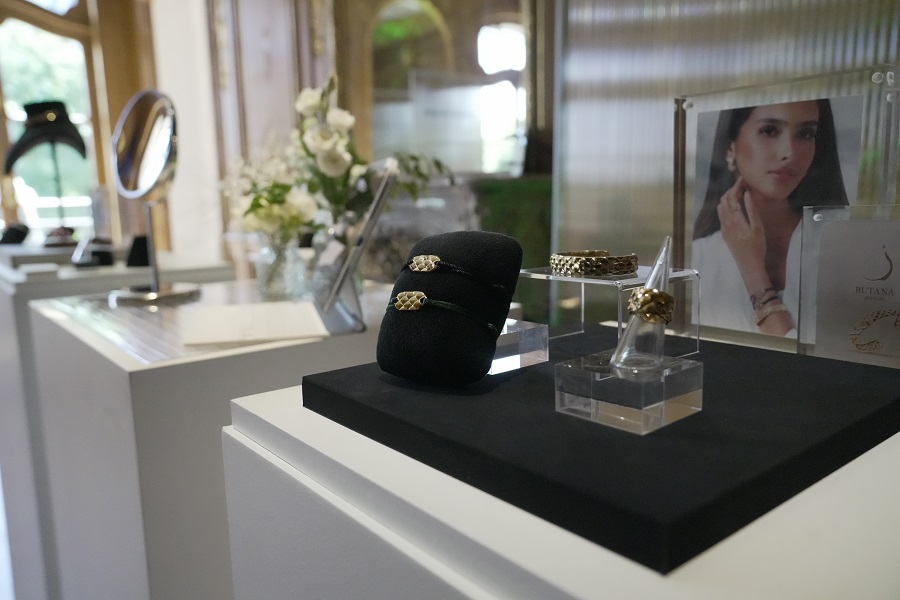


Rutana Jewelry's booth at the Paris showroom. (Supplied)

“I believe design is a form of expression that reflects your background, personality and the way you see the world in your eyes,” she said. “Luda jewelry designs tend to have an eclectic hidden mix of blending our Saudi rich deep-rooted natural heritage inspirations making it into exquisite contemporary modern sensual jewelry pieces where East meets West.” 


Decoding villains at an Emirates LitFest panel in Dubai

Updated 25 January 2026
Follow

Decoding villains at an Emirates LitFest panel in Dubai

DUBAI: At this year’s Emirates Airline Festival of Literature in Dubai, a panel on Saturday titled “The Monster Next Door,” moderated by Shane McGinley, posed a question for the ages: Are villains born or made?

Novelists Annabel Kantaria, Louise Candlish and Ruth Ware, joined by a packed audience, dissected the craft of creating morally ambiguous characters alongside the social science that informs them. “A pure villain,” said Ware, “is chilling to construct … The remorselessness unsettles you — How do you build someone who cannot imagine another’s pain?”

Candlish described character-building as a gradual process of “layering over several edits” until a figure feels human. “You have to build the flesh on the bone or they will remain caricatures,” she added.

The debate moved quickly to the nature-versus-nurture debate. “Do you believe that people are born evil?” asked McGinley, prompting both laughter and loud sighs.

Candlish confessed a failed attempt to write a Tom Ripley–style antihero: “I spent the whole time coming up with reasons why my characters do this … It wasn’t really their fault,” she said, explaining that even when she tried to excise conscience, her character kept expressing “moral scruples” and second thoughts.

“You inevitably fold parts of yourself into your creations,” said Ware. “The spark that makes it come alive is often the little bit of you in there.”

Panelists likened character creation to Frankenstein work. “You take the irritating habit of that co‑worker, the weird couple you saw in a restaurant, bits of friends and enemies, and stitch them together,” said Ware.

But real-world perspective reframed the literary exercise in stark terms. Kantaria recounted teaching a prison writing class and quoting the facility director, who told her, “It’s not full of monsters. It’s normal people who made a bad decision.” She recalled being struck that many inmates were “one silly decision” away from the crimes that put them behind bars. “Any one of us could be one decision away from jail time,” she said.

The panelists also turned to scientific findings through the discussion. Ware cited infant studies showing babies prefer helpers to hinderers in puppet shows, suggesting “we are born with a natural propensity to be attracted to good.”

Candlish referenced twin studies and research on narrative: People who can form a coherent story about trauma often “have much better outcomes,” she explained.

“Both things will end up being super, super neat,” she said of genes and upbringing, before turning to the redemptive power of storytelling: “When we can make sense of what happened to us, we cope better.”

As the session closed, McGinley steered the panel away from tidy answers. Villainy, the authors agreed, is rarely the product of an immutable core; more often, it is assembled from ordinary impulses, missteps and circumstances. For writers like Kantaria, Candlish and Ware, the task is not to excuse cruelty but “to understand the fragile architecture that holds it together,” and to ask readers to inhabit uncomfortable but necessary perspectives.