Saudi Airlines Catering Co. signs 2 deals worth $2.4bn with Red Sea Global
Updated 04 July 2023
Arab News
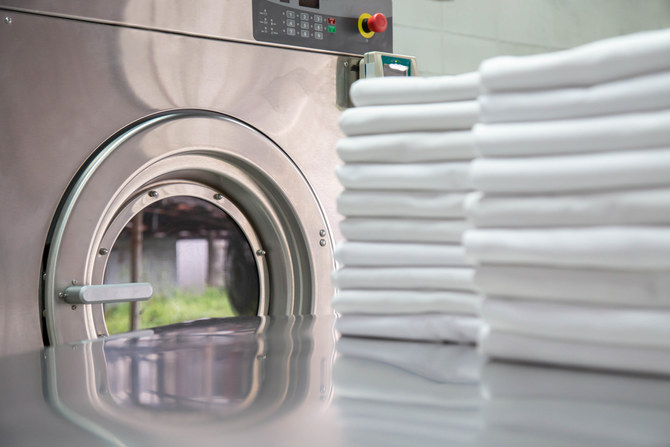
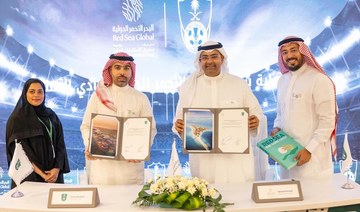
RIYADH: A SR2.7 billion ($720 million) deal has been signed which will see Saudi Airlines Catering Co. provide laundry services for hotels at Red Sea Global’s tourist developments.
The agreement was announced on the Saudi stock exchange, Tadawul, and SACC expects the deal to start showing up in its profit margin by the third quarter of 2025.
The 20-year contract will see SACC operate laundry services for hotels, resorts and other facilities located within the destination.
The deal is the latest struck by RSG as it gears up to opening to visitors later this year.
The announcement on Tadawul noted that the deal will boost the business sustainability of the SACC “by increasing the company's cash flow and enhancing the company's business.”
It added: “This contract is part of the strategic plan implemented by the company to attract investment opportunities in new industrial and tourist cities, noting that this contract will be subject to The Red Sea Global Board of Directors’ final sign off.”
Moreover, SACC also signed a design, build, operate, and transfer contract worth SR6.3 billion for a central production unit.
The new production unit for catering and facilities management is projected to cater to RSG’s employees at hotel establishments and resorts.
It will also service other facilities and sectors within the Red Sea destination, the company said in a statement to Tadawul.
Additionally, the two contracts will be subject to RSG board’s final sign-off, the statement said.
RSG is set to operate 50 resorts by 2030, with up to 8,000 hotel rooms and over 1,000 residential buildings spread across 22 islands and six inland areas.
Three of these resorts will open this year, and it is also set to welcome domestic flights and travelers to its airport.
RSG has been keen to involve Saudi firms in its development and operation.
In March, it organized a series of local and regional meetings highlighting projects being developed along the Kingdom’s Red Sea coast, as well as partnership opportunities with the company, in a bid to attract local bidders.
By the time the first of these meetings was held, 70 percent of existing contracts had already been awarded to Saudi companies.
Alongside this, the company is working to ensure half of its workforce are Saudi nationals.
In May, while speaking to Arab News on the sidelines of Arabian Travel Market 2023 in Dubai, Tracy Lanza, global head of brand development at RSG, revealed the company was edging closer to hitting that target.
“The goal is 50-50 and we are nearly there, and I can say from a marketing standpoint, our team is at 67 percent and growing. We also have the largest percentage of Saudi women, I think, at the company,” said Lanza.
RIYADH: Short-term retail concepts are gathering pace across Saudi Arabia’s consumer market, with over 1.5 million small and medium enterprises operating in the Kingdom.
It is forecast they will increase their contribution to the country’s gross domestic product from 20 percent to 35 percent by the end of this decade.
The pop-up scene and experiential retail market, which is present in the food and beverages sector and has extended to the fashion and accessory space, has an estimated value of $1.2 billion across the GCC, according to Ken Research.
As this niche sector of retail booms, Ken Research points to Saudi Arabia as one of the top three key markets driving growth.
While pop-ups have long been used internationally as a social media marketing concept, their growing presence in the Kingdom can be traced back to a larger shift in the retail ecosystem as a whole.
For many entrepreneurs, pop-ups offer a way to leverage their brand’s creative identity, reach new customers, and build a presence through the trend without the financial constraints of a permanent retail store.
The niche trend offers tenancy flexibility, allows companies to bypass cyclical nature of economies, provides them with price flexibility — proving to be a malleable entryway for businesses.
The rise of flash business retail concepts also reflects broader changes in the Kingdom’s entrepreneurial landscape, as SMEs continue to expand under the economic diversification goals of Vision 2030.
About 38 percent of active commercial registrations by the end of Q2 2025 were youth owned, signaling an emphasis on trendy approaches to retail, according to Monshaat, the Kingdom’s Small and Medium Enterprises General Authority.
Additionally, around 25,000 new commercial registrations were issued in the wholesale and retail sector in the fourth quarter of 2025.
In the fashion and accessory sectors, for example, the pivot to the ephemeral retail model offers a unique customer experience.
It is driving demand through limited edition pop-ups that play on aesthetics and interactive tactical commerce, all while maintaining limited risk and increased support for smaller enterprises to leverage accessible spaces.
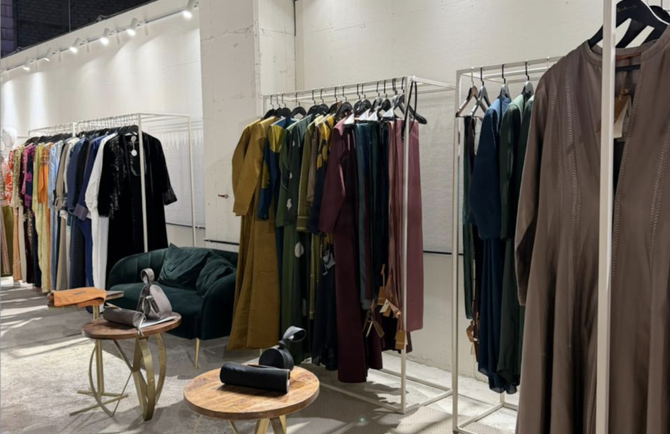
A particular destination that has made space for pop-ups is Riyadh’s Solitaire mall, on its roof.
The outdoor venue hosts booths of diverse sectors, all bringing creative and hands-on retail experiences that are maximizing temporary spaces through the power of brand direction and social media.
As founder of one of the largest pop-ups taking space on the roof, Aya Alhalek, founder of SNIM, known as the first outlet for local attire brands in the Kingdom, spoke to Arab News on the rise of pop-up culture, its importance in the retail space, and the benefits of its growing relevance.
Alhalek said: “We choose pop-ups because there’s always a demand for them, because it brings together different designers and different brands, providing the customer with diverse options whether it’s a British brand or an Indian brand, they are combined in one pop-up.”
“I think this trend is here to stay.”
SNIM pop-up in Riyadh. AN Photo/Basmah Albasrawi
Companies such as SNIM, which prioritize local brand presence throughout the Kingdom, say the format has become an important entry point for emerging brands looking to gain exposure and that the concept is here to stay due to the customer experience and profitability.
Pop-ups are not constrained by the dynamic change of weather in the Kingdom, but rather encouraged to alter temporary installation experiences accordingly and depending on the city, Alhalek said.
“We always have either indoor or outdoor options, and so they differ greatly in terms of winter or summer pop-ups but we adjust accordingly and keep them going but Riyadh is a global hub,” she said.
She added that “the limited time, space and social media marketing of pop-ups helps keep these going.”
Riyadh, in particular, has been a priority due to its ability to attract diverse and international customers to the SNIM pop-ups, which helps platform local brands on a global scale, Alhalek added.
On the preference to lean into pop-up style retail alongside online availability as opposed to brick-and-mortar locations, Rasha AlWazeenani, founder of Nayya Jewellery, told Arab News: “Pop-ups usually bring together a mix of different brands, not just jewelry.”
“Someone might visit to shop for an abaya or another product and end up discovering our pieces along the way. That element of unexpected discovery has introduced our brand to many customers who may not have initially come specifically for jewelry.”
Pop-ups nurture interactive customer experiences which are increasingly relevant to shoppers and the temporary feature of a venture creates a sense of urgency, AlWazeenani said.
“They provide visibility, allow direct interaction with customers, and create an opportunity for people to experience the craftsmanship and details of the pieces up close,” she said.
“The temporary formatting of pop-ups also allows brands to create urgency around limited collections or seasonal launches, which can drive higher customer engagement.”
Nayya Jellewery pop-up in Solitaire Riyadh. Supplied
Analysts also view the pop-up scene as an opportunity for company growth amid the uptick in online shopping and the Kingdom’s expanding economy, the largest in the Arab world.
Mahmoud Mazi, general manager of the retail sector at the Small and Medium Enterprises General Authority, told Arab News the “growth of e-commerce has expanded purchasing channels.”
And this has been “prompting many SMEs to adopt more flexible strategies such as testing markets more quickly or combining a digital presence with physical retail spaces.”
Developers are leaning towards more flexible retail models for various factors and increasingly in major cities, Mazi said.
“Seasonal events are encouraging some property owners and developers to adopt more flexible leasing models, such as short-term rentals or retail kiosks,” Mazi said.
He added that the “growth of experiential and interactive retail has made combining entertainment, dining and cultural activities, with flexible leasable spaces and temporary retail concepts an “attractive operational tool for SMEs.”
The rise and evolution of pop-ups in the Kingdom invariably allows for scaling, evolution, and concept-testing within the retail industry.
The Kingdom’s retail sector continues to expand and the pop-up experiential trend has broadened to focus on lifestyle and entertainment concepts within mixed developments.
This was “redefining market dynamics, including tenant mix and the design of commercial spaces,” Mazi said.