WASHINGTON D.C.: A US State Department report on Friday criticized the handling of the 2021 evacuation from Afghanistan, saying decisions by President Joe Biden and his predecessor Donald Trump to withdraw troops had “serious consequences for the viability” and security of the former US-backed government.
Adverse findings in the report also reflected on Secretary of State Antony Blinken, without naming him. They included the department’s failure to expand its crisis-management task force as the Taliban advanced on Kabul in August 2021 and the lack of a senior diplomat “to oversee all elements of the crisis response.”
“Naming a 7th floor principal ... would have improved coordination across different lines of effort,” said the report, referring to the State Department’s top floor where Blinken and senior diplomats have offices.
The review, and a similar Pentagon study, contributed to a report released by the White House in April. But the State Department review’s critical findings were not reflected in the White House report.
The White House did not immediately respond to a request for comment. A representative for former president Trump also did not immediately respond to a request for comment.
The White House report effectively blamed the chaotic US pullout and evacuation operation on a lack of planning and troop reduction rounds by Trump following a 2020 deal with the Taliban to withdraw US forces.
“I can’t speak to that internal coordination piece and how the administration settled on the core conclusions that it presented” in April, a senior State Department official said.
The official, briefing reporters on condition of anonymity, declined to say why the review dated March 2022 was withheld from release until the eve of the July 4 holiday weekend.
WITHDRAWAL AFTER 20 YEARS
The UStroop pullout and evacuation of US and allied officials, citizens and Afghans at risk of Taliban retribution saw crowds of desperate Afghans trying to enter Kabul airport and men clinging to aircraft as they taxied down runways.
An Islamic State suicide bomber killed 13 US servicemembers and more than 150 Afghans outside an airport gate.
The State Department released 24 pages of a 85-page After Action Report — the rest remained classified — on its handling of the evacuation operation launched as the last US-led international forces departed after 20 years of backing successive Kabul governments against the Taliban.
It praised the performance of American embassy personnel working under difficult conditions like the COVID-19 pandemic and reduced security because of the US troop drawdown, whose speed “compounded the difficulties the department faced.”
Some 125,000 people, including nearly 6,000 Americans, were flown out of Kabul before the last US soldiers departed on Aug. 30, 2021, as the Taliban consolidated their grip on Kabul after the US-backed government fled.
“The decisions of both President Trump and President Biden to end the US military mission in Afghanistan had serious consequences for the viability of the Afghan government and its security,” said the review.
While those decisions were outside its scope, the review said that “during both administrations there was insufficient senior-level consideration of worst-case scenarios and how quickly those might follow.”
The review said State Department planning for the evacuation “was hindered” because it was “unclear” which senior official “had the lead.”
Senior administration officials also failed to make “clear decisions regarding the universe of at-risk Afghans” to be included in the evacuation by the time it started nor had they determined where Afghan evacuees would be taken, it said.
Preparation and planning “were inhibited” by the Biden administration’s reluctance to take steps that could signal a loss of confidence in the Kabul government “and thus contribute to its collapse,” the review found.
“The complicated Department task force structure that was created when the evacuation began proved confusing to many participants, and knowledge management and communication among and across various lines of effort was problematic,” it said.


![]()

US State Department review of 2021 Afghanistan evacuation critical of Biden, Trump
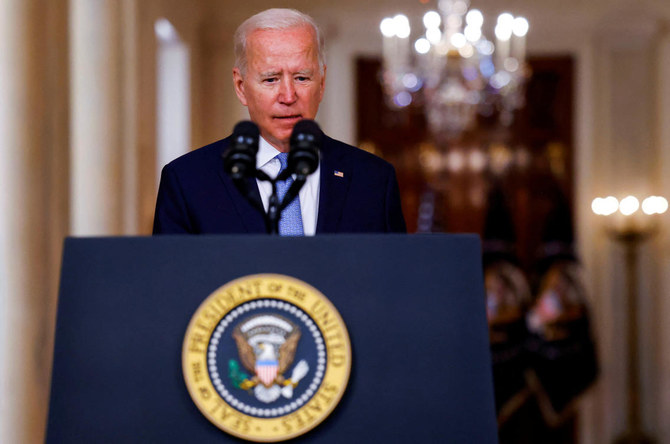
US State Department review of 2021 Afghanistan evacuation critical of Biden, Trump
Latest updates




Recommended


© 2026 SAUDI RESEARCH & PUBLISHING COMPANY, All Rights Reserved And subject to Terms of Use Agreement.