
KARACHI: Pakistan reached a staff-level agreement with the International Monetary Fund (IMF) to release $3 billion in critical bailout funds following a long drawn-out review process for the cash-strapped economy since November last year.
The agreement is under a Stand-By Arrangement (SBA), as the existing Extended Financing Facility (EFF) program signed in 2019 expires later on Friday.
Here are some facts about the lead up to the last-gasp agreement:
-May 2019: IMF approves a $6 billion, 39-month bailout package for Pakistan under the EFF struck with the government of then Prime Minister Imran Khan.
-April 2022: Khan’s government is removed in a parliamentary vote of no confidence. Shehbaz Sharif takes over as Prime Minister as the country reels from economic and political turmoil.
-July 2022: IMF and Pakistan reach staff-level agreement for the release of about $1.2 billion in the last successful EFF review until the SBA.
-Aug 2022: The IMF board approves the seventh and eighth reviews of the bailout program, allowing for a release of over $1.1 billion and an extension by a year.
-Sept 2022: Miftah Ismail resigns as finance minister, the fifth such minister to be replaced in less than four years.
Ishaq Dar takes over as finance minister for his fourth stint in the job, with Pakistan’s next staff review, the ninth under the EFF, and funds tranche due in November.
-Nov 2023: Pakistan, IMF begin virtual engagement for the ninth review of the loan program. A staff delegation visit does not materialize due to differences on program targets, and Dar hits out at the IMF for the delay.
-Jan 2023: Pakistan reiterates commitment to completing the IMF program in a meeting on the sidelines of a climate conference in Geneva.
An IMF staff delegation visits Pakistan after weeks of delays, but the 10-day visit concludes without an agreement to send the matter to the board, increasing economic uncertainty.
-Feb 2023: Pakistan, IMF decide to resume talks virtually on steps needed to secure an agreement for the ninth review.
-May 2023: IMF mission chief says continuing to work with Pakistani authorities to bring the ninth review to conclusion once necessary financing is in place.
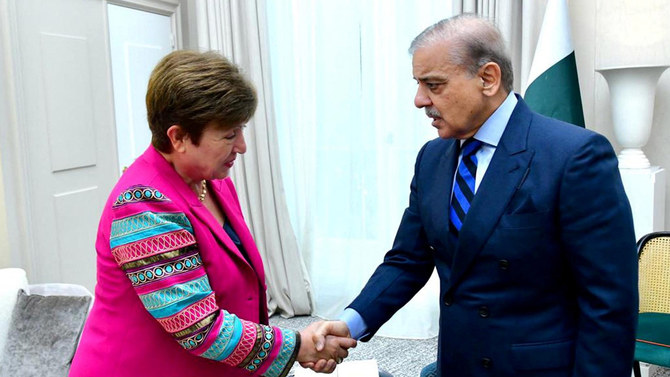
-June 22, 2023: Sharif meets IMF Managing Director Kristalina Georgieva in Paris, looking to secure a last minute release of the stalled funds before the program expires on June 30.
-June 24, 2023: Pakistan changes its budget for the financial year starting on July 1, including the latest fiscal tightening measures dictated by the IMF.
-June 26, 2023: Pakistan’s central bank raises its benchmark interest rate by 100 basis points to 22 percent at an emergency meeting days before IMF program expires.
-June 30, 2023: IMF reaches staff-level agreement with Pakistan on $3 billion funding, which is spread over nine months and is higher than expected. The country was awaiting the release of the remaining $2.5 billion from the $6.5 billion bailout package agreed in 2019, which was expiring on Friday.